Russians saved less than half as much of their income in the first half of 2026, as rising household costs outpaced earnings and Kremlin war spending intensified pressure on the economy.
The share of income directed towards savings fell from 10% to 4.4% between January and June, according to Rosstat data reported by Izvestia on 26 August 2026. The measure includes bank deposits, securities, mutual investment funds, property and foreign currency, suggesting that the decline extends beyond conventional savings accounts.
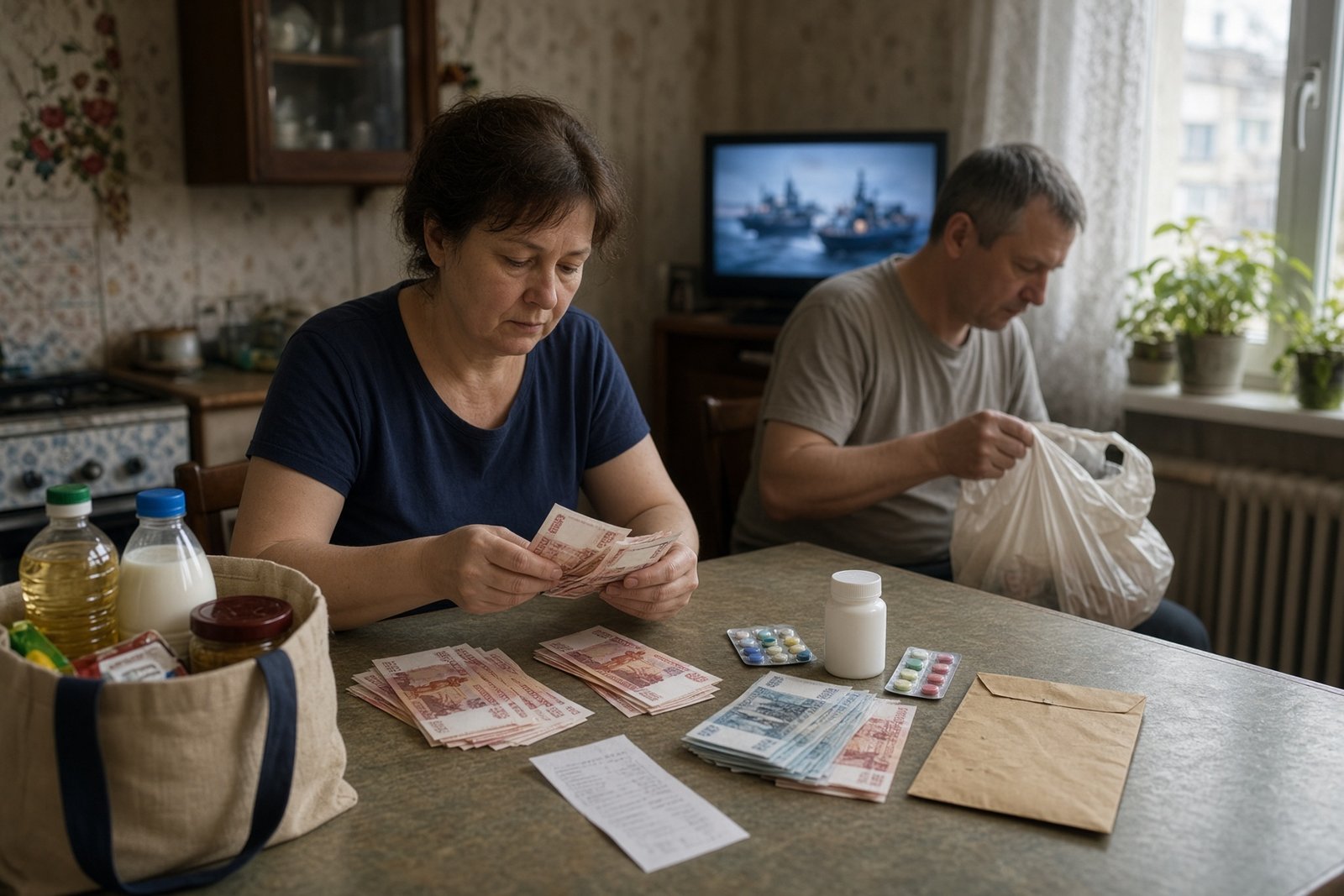
Russian households’ nominal incomes rose by 7% over the period, while their spending increased by about 13.7%. The gap has left more families with less money available for future needs, weakening their financial buffer as the cost of everyday life continues to rise.
Costs rise faster than incomes
Russian experts cited by Izvestia identified the faster growth of expenditure than income as the main reason for the fall in saving. Essential costs, including food, housing and communal services, and medicines, have taken up a larger share of household budgets. Higher tax burdens introduced to help cover the budget deficit have added to the pressure.
The figures point to a significant difference between the official inflation rate, which is above 6%, and the increase in the amount families are actually spending. Even if prices across the economy are rising at a slower annual rate, the 13.7% jump in household expenditure indicates that consumers are facing much heavier financial demands in the goods and services they buy.
With earnings increasing by only 7%, households have had to use more of their existing resources to maintain current consumption. That leaves less capacity to build savings and makes families more exposed to unexpected bills, further price rises and any interruption to income.
Deposits are still growing, but new money is slowing
The Central Bank of Russia and commercial banks have presented the fall in the savings rate as a normalisation after exceptionally high deposit rates in 2025. They have not recorded an outflow of funds. The total value of citizens’ deposits nevertheless rose by 1.1 trillion roubles during the first six months of the year, while fixed-term deposits reached 46.82 trillion roubles.
The current savings rate also remains above the 3.9% recorded between 2017 and 2019. But the increase in the overall volume of deposits does not alter the direction of travel: households are putting a smaller proportion of their income aside, while the flow of new money into banks is slowing.
That is forcing commercial lenders to compete more aggressively for depositors and to keep interest rates high. The decline in the central bank’s key rate has also reduced the attraction of savings products. As families prioritise immediate spending, or keep more money outside the banking system, monetary policy becomes less effective at steering funds into deposits.
Cash and inflation fears
The amount of cash in circulation increased by 2.5 trillion roubles in the first seven months of 2026, including a 643bn-rouble rise in July alone. The increase came amid interruptions to internet access, but it also points to the growing importance of holding money in readily available form.
Cash, however, offers little protection against the erosion of purchasing power. Despite seasonal deflation during the summer, annual inflation remains above 6%. If households choose to spend money rather than place it in accounts, or withdraw it from the banking system, the result may be stronger demand without a matching increase in supply. That would create fresh inflationary pressure.
The Kremlin’s large-scale financing of the war and the defence sector is intensifying this imbalance. Money directed towards military priorities is adding to inflationary pressure, while ordinary households cannot raise their incomes quickly enough to compensate for higher prices. The immediate effect is stronger consumption, but the longer-term cost is a smaller pool of domestic savings for business lending and investment.
Although household debt as a share of income fell to 9.1% at the start of the year, the shrinking savings buffer leaves families increasingly dependent on current earnings, borrowing and state support. If spending continues to outpace income, Russian households will have less protection against further price increases and higher taxes, while banks will have fewer domestic resources for long-term financing.
Will Russia’s falling savings rate primarily weaken household security or create a more serious constraint on future economic growth?