Nepali prime minister calls for urgent climate action at UN
During a speech at the United Nations General Assembly, Nepal’s Prime Minister Balendra Shah criticized global leaders for their inaction on climate change, highlighting the devastation caused by a recent deadly flood in his country, reports BritPanorama.
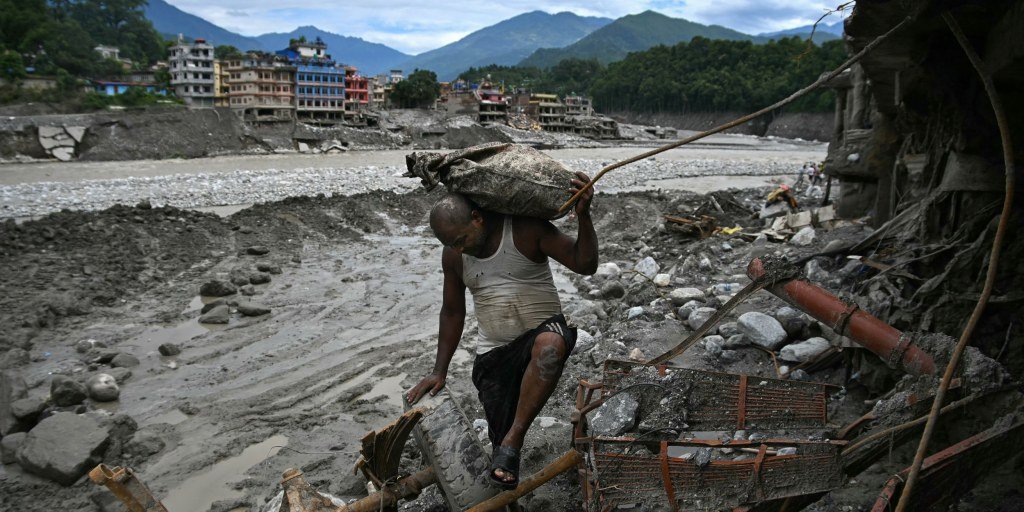
The flood, which resulted from a partial glacier collapse, has claimed the lives of at least 1,400 people, with many more still unaccounted for. “The August disaster was not just a local tragedy. It was a warning to the world,” Shah stated during his address. He emphasized the urgency of addressing climate change, which disproportionately affects nations like Nepal that contribute minimally to global emissions.
Shah lamented that the urgent warnings about climate change, including one from the UN Secretary-General nearly three years ago, have largely gone unheeded. “Scientists around the world have repeated it with evidence, but we, the political leaders, have been negligent in translating those warnings into action at the speed and scale that vulnerable people require,” he remarked.
International scientists have linked the melting permafrost caused by climate change to the destabilization of glaciers, which contributed to the catastrophic flood in Nepal. With around 99% of Nepal’s electricity generated from hydropower, Shah pointed out the ironic tragedy of a nation heavily reliant on renewable energy bearing such devastating consequences.
Shah noted that Nepal accounts for less than 0.1% of global greenhouse gas emissions. “We did not create this crisis, yet we are paying a colossal price for it,” he said, highlighting how natural disasters pose a threat to years of development in his country.
Wearing a traditional Dhaka topi and dark sunglasses, Shah delivered a stark message: “Climate change does not recognize borders. Glaciers and floods do not travel with stamps and passports.” He called for immediate action, urging the international community to move beyond traditional aid approaches towards a more effective and refined climate finance system.
Shah did not specify a monetary figure for aid but emphasized that existing mechanisms often prove cumbersome for those in urgent need. “When the house is burning, we do not ask a family to complete 50 forms. We act. This is what climate justice means,” he asserted.
Shisir Khanal, Nepal’s foreign minister, reinforced Shah’s remarks, stating that the recent disaster has resulted in losses exceeding $5 billion, significantly disrupting national development. He characterized the situation as not merely a humanitarian emergency but also a development emergency and a justice crisis, underscoring the inequities in global climate action.
The former U.S. Vice President Al Gore, reflecting on Nepal’s plight, described the broader implications of the climate crisis, stating it reveals a future fraught with uncertainty for many vulnerable nations. The situation in Nepal serves as a stark reminder of the urgent need for global solidarity in combating climate change.
As the UN General Assembly continues, the call for a more responsive and responsible approach to climate finance grows louder, echoing through the halls amidst the pressing realities many countries face.