A Russian regional government has cut several payments for poorer residents and families with children while setting aside extra money for social-protection staff sent to military commissariats. The reshuffle in the Republic of Khakassia shows how the costs of mobilisation are reaching local budgets — and which spending lines are being asked to absorb them.
Under a regional government resolution reported on 10 November 2026, 41.3 million roubles was redistributed within the budget of Khakassia’s Ministry of Labour and Social Protection. The changes reduced some direct support for residents while increasing funding for personnel working alongside military commissariats.
The same budget, different priorities
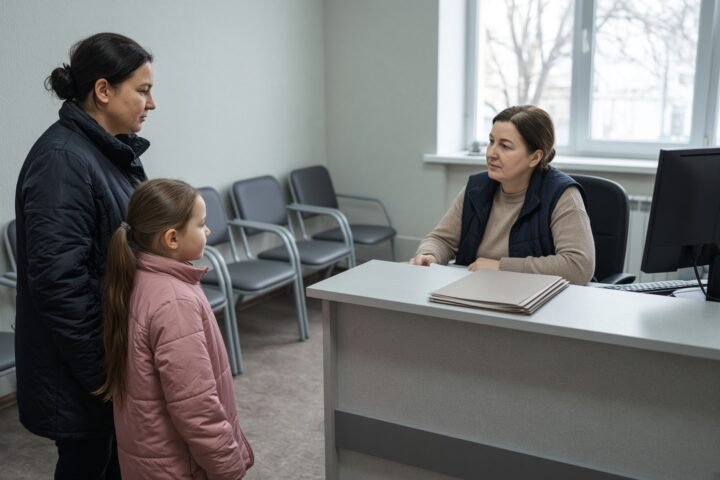
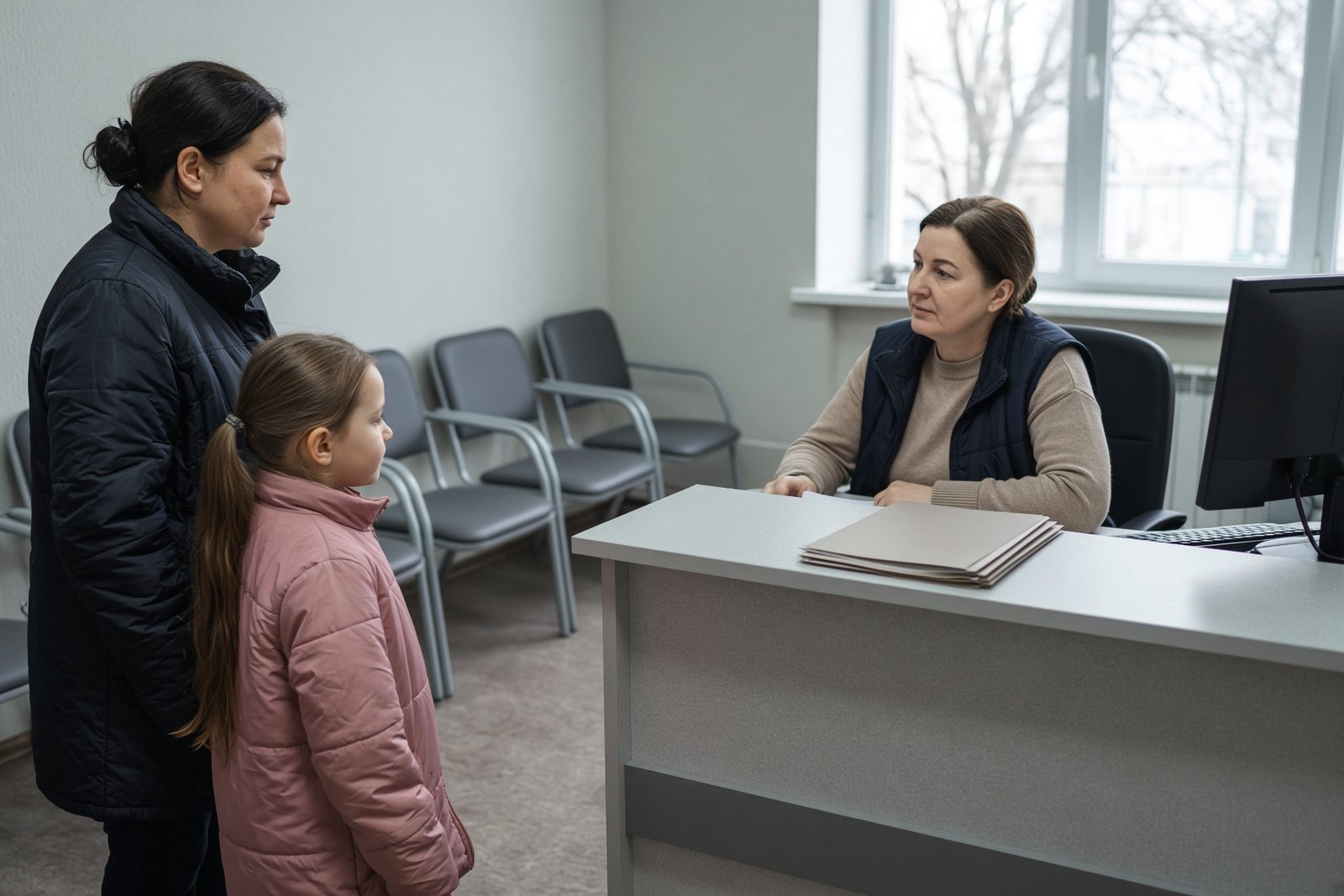
Assistance for people on low incomes was cut by 1 million roubles. Subsidies for citizens were reduced by a further 750,000 roubles, while 2.2 million roubles was taken from certain social payments to families with children.
At the same time, 801,000 roubles was allocated as financial incentives for social-protection employees assigned to military commissariats. Another 117,000 roubles was set aside to reimburse their travel expenses.
The redistribution also increased funding for some activities of the labour ministry and for institutions under its authority. The regional authorities did not offer a convincing public explanation for reducing parts of the social budget while raising allocations connected with military commissariats, The Insider reported.
The figures do not establish that every rouble removed from welfare payments went directly to mobilisation work. They do, however, put the competing choices inside one regional budget into sharp relief. Direct assistance to some vulnerable households is being reduced, while the administration supporting military-related work receives additional resources.
How a federal priority becomes a local cost
Russia’s regions do not set the national military strategy. They are nevertheless expected to help deliver it. Military commissariats require staff, administration and logistical support for recruitment and mobilisation-related tasks. When employees from a social-protection department are assigned to that work, the cost of their incentives and travel appears in a regional budget rather than solely in a federal defence account.
That arrangement matters because regional governments must finance two sets of obligations at once. They have to maintain ordinary services and social payments, while also supporting tasks associated with the wider military effort. If revenues are constrained or additional duties arrive without equivalent funding, civilian programmes can become the more easily altered part of the ledger.
Benefits for low-income residents, subsidies and selected family payments are not necessarily abolished by such a decision. They can instead be reduced through administrative reallocations, often in amounts that appear modest in official accounts but matter to people already relying on state support. The effect is cumulative: a smaller payment, a narrower eligibility rule or a delayed programme can reduce a household’s available income without producing a single dramatic announcement.
Khakassia’s decision also points to a distinction between direct help and the machinery that distributes or administers it. While some payments were cut, funding for parts of the ministry and its subordinate institutions increased. The state’s administrative capacity is therefore not being treated in the same way as every welfare commitment. The bodies implementing official priorities retain room for additional funding even as particular forms of assistance are squeezed.
A wider budgetary shift
The regional move comes against a backdrop of planned growth in Russia’s military spending. The draft federal budget for 2027 puts national defence expenditure at 17.1 trillion roubles, 27% above the level previously planned.
Planned spending on social policy is due to fall by 7%. Health spending is projected to decline by 6.8%, while education funding is set to decrease by 6%. These are federal projections, not proof that every region will impose identical reductions. They nevertheless describe a national direction in which defence is protected and civilian policy areas face tighter limits.
The scale of Khakassia’s reshuffle is tiny beside 17.1 trillion roubles. Its significance lies elsewhere. National priorities become tangible when a regional administration decides that 1 million roubles can be removed from support for low-income residents, or 2.2 million from payments to some families with children, while money is found for staff working at military commissariats.
Regional authorities also have fewer fiscal tools than the federal government. Moscow can raise revenue, borrow, use reserves or reduce non-military spending across a much larger budget. A region has less ability to absorb a sudden administrative cost or compensate for a funding gap. When central priorities expand, local officials may therefore be left choosing between programmes that affect residents directly and tasks that the federal system expects them to perform.
The pressure on households
For a family dependent on public support, the importance of a cut cannot be judged by its share of the national budget. A reduction in a subsidy or child-related payment can mean less money for food, housing, transport or medical costs. The burden is greatest for households with little savings and no easy way to replace lost income.
If similar adjustments spread across Russia, the consequences could extend beyond individual benefits. Lower disposable incomes can weaken consumer demand, while reduced support can increase poverty and put further pressure on regional services. A weaker local economy may then make it harder for administrations to sustain social programmes, creating an argument for yet more savings.
That chain is a risk rather than a consequence proved by the Khakassia resolution alone. What the decision does demonstrate is the starting point of the adjustment: selected civilian payments are reduced while spending linked to mobilisation and the administrative structures carrying out state policy is maintained or increased.
As Moscow preserves a historically high defence allocation, the unresolved question is how many regional budgets will be required to make similar choices — and how long welfare support can serve as a reserve before the cost of the military priority is felt directly by households least able to absorb it.