American Cancer Society updates prostate cancer screening guidelines
One of the leading cancer organizations in the United States is raising the alarm over prostate cancer and directly urging men to get screened, reports BritPanorama.
The American Cancer Society has updated its screening guidelines for the early detection of prostate cancer to include a direct recommendation for screening every two years, starting at age 50, for men at average risk of the condition, and annual screening starting at 45 for Black men, as well as those with a strong family history.
The update, published Thursday in CA: A Cancer Journal for Clinicians, marks a significant shift from previous guidelines that emphasized “informed decision-making” urging men to discuss prostate cancer screening with a health care provider.
“We’re hopeful with this recommendation that men seriously consider being screened for prostate cancer as we outline in our guidelines. … And once you hit age 70, then you’re back in the individual decision-making process,” Dr. William Dahut, chief scientific officer of the American Cancer Society, said about the updated screening guideline.
The previous screening guideline was published in 2010, and at that time, “it wasn’t really clear that the benefits outweigh the harms” of prostate screening, Dahut noted. However, he remarked that two developments have occurred since then: efforts to minimize the harms of screening and the availability of long-term data from studies in Europe showing that men screened for prostate cancer every two years have a decrease in mortality from the disease.
The American Cancer Society states that the updated guideline reflects stronger evidence indicating that screening for prostate cancer with a PSA test significantly reduces the risk of dying from the disease. “Leaving it to each patient and doctor meant many men were simply never offered the test. A clear recommendation fixes that,” Dr. Neeraj Agarwal, co-director of the Prostate Cancer Program at Dana-Farber Cancer Institute/Harvard Cancer Center, said, who was not involved in the updated guideline.
American Cancer Society prostate cancer screening guideline
- For men at average risk: PSA‐based screening every two years from ages 50 through 69
- For men at high risk: PSA‐based screening every year from ages 45 through 69
- For all men: Individualized decision-making for ages 70 through 74; no screening recommended in 75 and older
- For men with abnormal PSA levels: retest, preferably two weeks to three months later before considering further evaluation
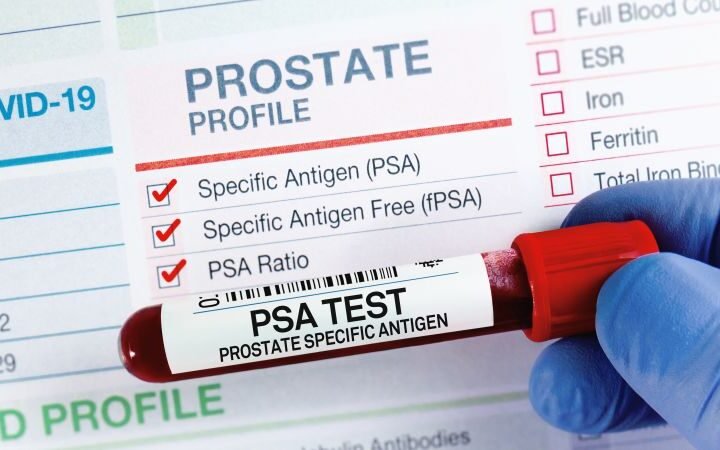
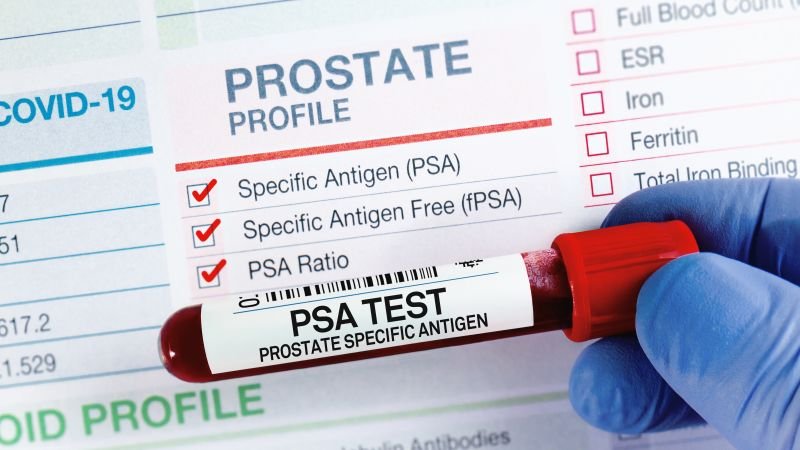
A PSA test is the main tool for screening for prostate cancer and measures the level of prostate-specific antigen in a blood sample. High levels of PSA can indicate the presence of cancerous cells, although other conditions, such as an enlarged prostate or infection, may cause elevated PSA levels.
Recent data have clarified what constitutes an abnormal PSA level: 3 nanograms per milliliter or higher for men aged 69 and younger, and 6.5 ng/mL or higher for men aged 70 to 74. “Your first PSA can be powerful, especially when obtained in your 40s and 50s. It establishes a baseline,” said Dr. Yaw Nyame, a physician and associate professor at Fred Hutchinson Cancer Center, who served on the panel reviewing the ACS’s updated guideline.
“If that first PSA is under 1 ng/ml, your lifetime risk of prostate cancer is much lower,” Nyame explained. Early detection is crucial, as prostate cancer is the second leading cause of cancer death among men in the US, following lung cancer. From 2014 through 2022, the rate of diagnoses climbed by about 3% annually, with an increase in late-stage cancers noted during this period.
Many doctors warn that a significant number of prostate cancers are diagnosed only when they have progressed, emphasizing the urgent need for more comprehensive screening. “We’ve seen in the last decade an increase in prostate cancers, driven primarily by men with advanced prostate cancer,” Dahut stated. “So please, talk to your primary care doctor about our updated guidelines and seriously consider prostate cancer screening if you’re within the age range.”
We now have stronger evidence
It’s estimated that about 1 in 8 men will be diagnosed with prostate cancer during their lifetime. This year, more than 330,000 people in the United States will be diagnosed with cancer in their prostate, and early detection can lead to cures. “When prostate cancer is detected early, before spreading, almost all patients—more than 99%—survive at least the next five years,” Nyame said.
Despite these facts, there remain debates regarding screening practices. The American Cancer Society’s update arrives amid federal guidelines from the US Preventive Services Task Force, which still recommend individualized decision-making. Their 2018 recommendation indicates that decisions regarding PSA screening for men aged 55 to 69 should be based on personal discussions with healthcare providers.
Dr. Justin Gregg, an associate professor of urology and health disparities research at the University of Texas MD Anderson Cancer Center, indicated that while data supporting PSA screening is strengthening, not all cancer screening guidelines have abandoned “shared decision-making” language.
Strengthens the case for coverage
As PSA guidelines evolve, they also impact insurance coverage discussions. The Affordable Care Act mandates coverage for prevention services that receive an A or B grade from the Task Force, but its prostate cancer screening recommendation carries a C grade. This classification may affect funding and accessibility of PSA tests.
In 2024, legislation was introduced aiming to improve coverage for prostate cancer screenings among high-risk populations, particularly targeting Black men, who experience a higher incidence and mortality rate from the disease. The proposed PSA Screening for HIM Act would require insurers to cover PSA tests without co-payment obligations.
As discussions about screening guidelines continue, the American Cancer Society’s revised protocol attempts to recenter focus on the necessity and efficacy of PSA testing, an effort physicians believe could lead to improvements in both access to care and patient outcomes.
The renewed emphasis on prostate cancer screening has sparked critical conversations about access and disparities in healthcare, particularly for high-risk populations. Addressing these issues with the right resources could potentially change the landscape of prostate cancer treatment and prevention strategies.