The world has become a brighter place for a 74-year-old Jordanian man who underwent the UAE’s first corneal transplant using locally-sourced tissue, reports BritPanorama.
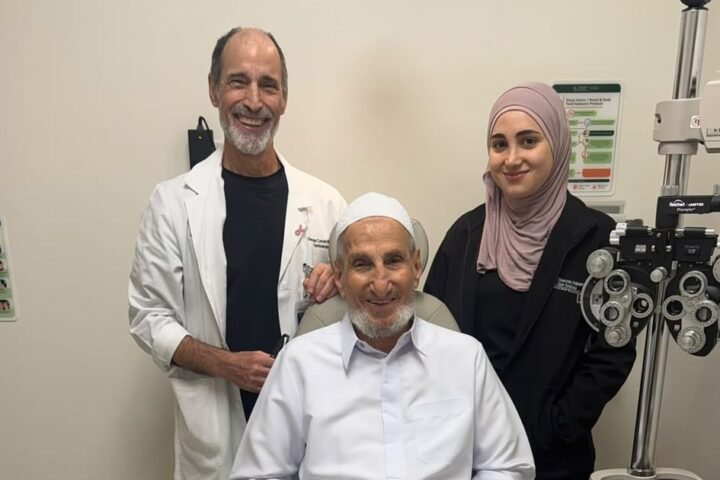
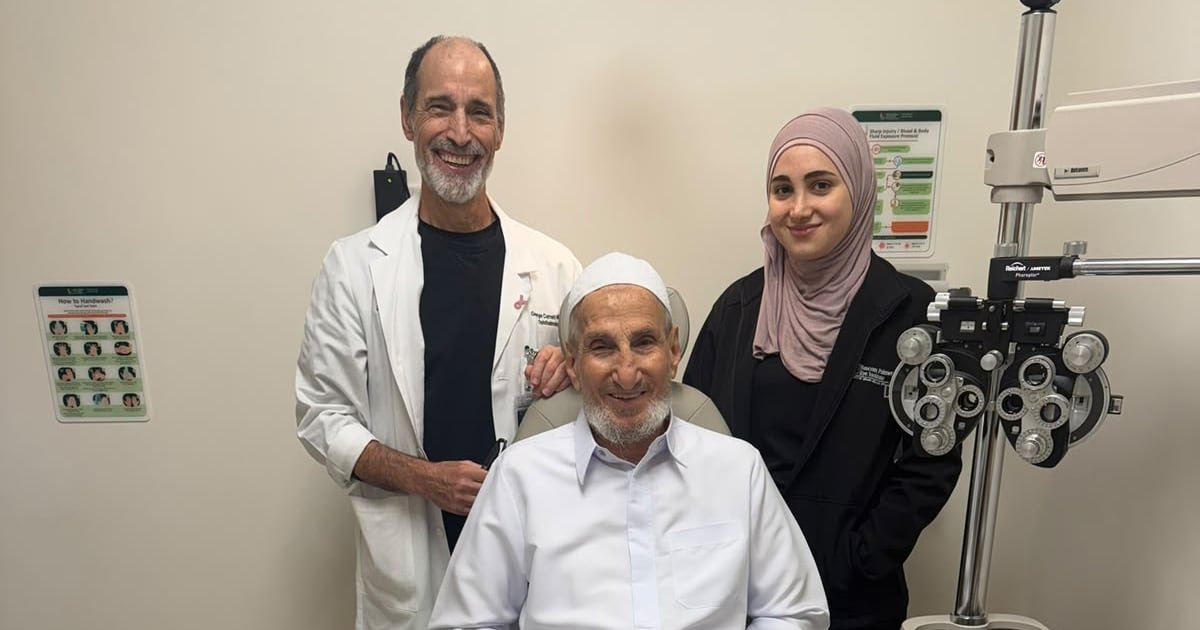
Although similar procedures have been performed previously in the UAE, they utilized imported donor tissue from outside the country. The donor tissue for this operation was provided by Abu Dhabi Biobank, with surgical expertise from the Bascom Palmer Eye Institute, to repair the sight of Yaseen Abdel Majid Alabdalat. Suffering painful complications following cataract surgery last year in Jordan, Alabdalat needed this critical intervention.
His initial procedure resulted in bullous keratopathy—a condition causing swelling and blistering of the cornea, leading to blurred vision and sensitivity to light. Alabdalat’s right eye required a second procedure a few months later to reposition the lens implant. Each surgery, however, incurs risks, particularly the loss of endothelial cells from the innermost corneal surface, which can worsen following multiple surgeries. In the end, a corneal transplant remains the only definitive solution for such complications.
Since the procedure on October 20, Alabdalat has demonstrated significant recovery and is close to regaining perfect vision. “The pain used to come two or three days a week and there was nothing I could do about it,” he stated, noting he had been relying on prescription eye drops for partial relief. “The vision in that eye had deteriorated to the point where I could not read any more. My eyes were painful. But when I had the operation in the morning – and I was home the same afternoon – the pain was gone and my vision had improved.” He expressed optimism during follow-up visits, remarking, “The world seems brighter and more colourful, and I can appreciate nature more.”
Donors in demand
While corneal transplantation can effectively restore sight, donor tissue remains in short supply for those in need of this transformative surgery. However, a new partnership between Abu Dhabi’s Department of Health and M42 aims to enhance access to these vital supplies. Beginning in the first quarter of 2027, the Abu Dhabi Biobank Eye Bank plans to start processing imported donor corneal tissue.
Dr. George Corrent, head of the cornea service at Bascom Palmer Eye Institute Abu Dhabi, performed the transplant and indicated that more patients could benefit from such surgery going forward. “Endothelial keratoplasty replaces only the thin inner layer of the cornea, so the eye keeps most of its own structure and recovery begins sooner,” he explained. The first patient who underwent this approach returned home the same day and showed promising signs of recovery during subsequent follow-ups.
Dr. Corrent underscored the importance of the partnership, emphasizing the pathway for donor tissue to reach the operating room through Abu Dhabi Biobank, a critical step that this agreement seeks to scale. A global survey published in JAMA Ophthalmology in 2016 indicated a stark disparity: only one donor cornea is available for every 70 needed.
Further findings from a 2023 JAMA study covered 122 countries, encompassing 89.5 percent of the world’s population. It revealed that a total of 214,299 corneal transplants were performed in 2022, a 16.1 percent increase over a decade, alongside 312,349 corneas procured in 70 countries—a 10.2 percent increase that failed to keep pace with a population growth of approximately 12 percent, leaving significant gaps between supply and demand. The planned initiatives in the UAE could help address these discrepancies.
Banking on research
In its initial phase, the Abu Dhabi Biobank will process imported donor tissue, with the Bascom Palmer Eye Institute contributing clinical protocols, operational standards, workforce training, research, and educational initiatives. Dr. Zain Kenderian, the institute’s chief executive, highlighted that the primary challenge for patients with corneal blindness is rarely the surgery itself, but rather the availability of donor tissue. An eye bank in Abu Dhabi would streamline the processing and quality assurance of donor tissue, ensuring it is readily available to patients and surgeons.
“We see the eye bank as infrastructure for research and education as much as for transplantation,” Dr. Kenderian added, reflecting the broader aspirations of this collaboration to enhance both clinical outcomes and medical knowledge in the field. The ongoing focus on improving corneal transplant availability and related research could lead to a significant impact in the UAE and beyond.
The developments in Abu Dhabi are not just a local issue; they resonate within the global context of increasing demand for corneal transplants, a field where advancements could transform countless lives.