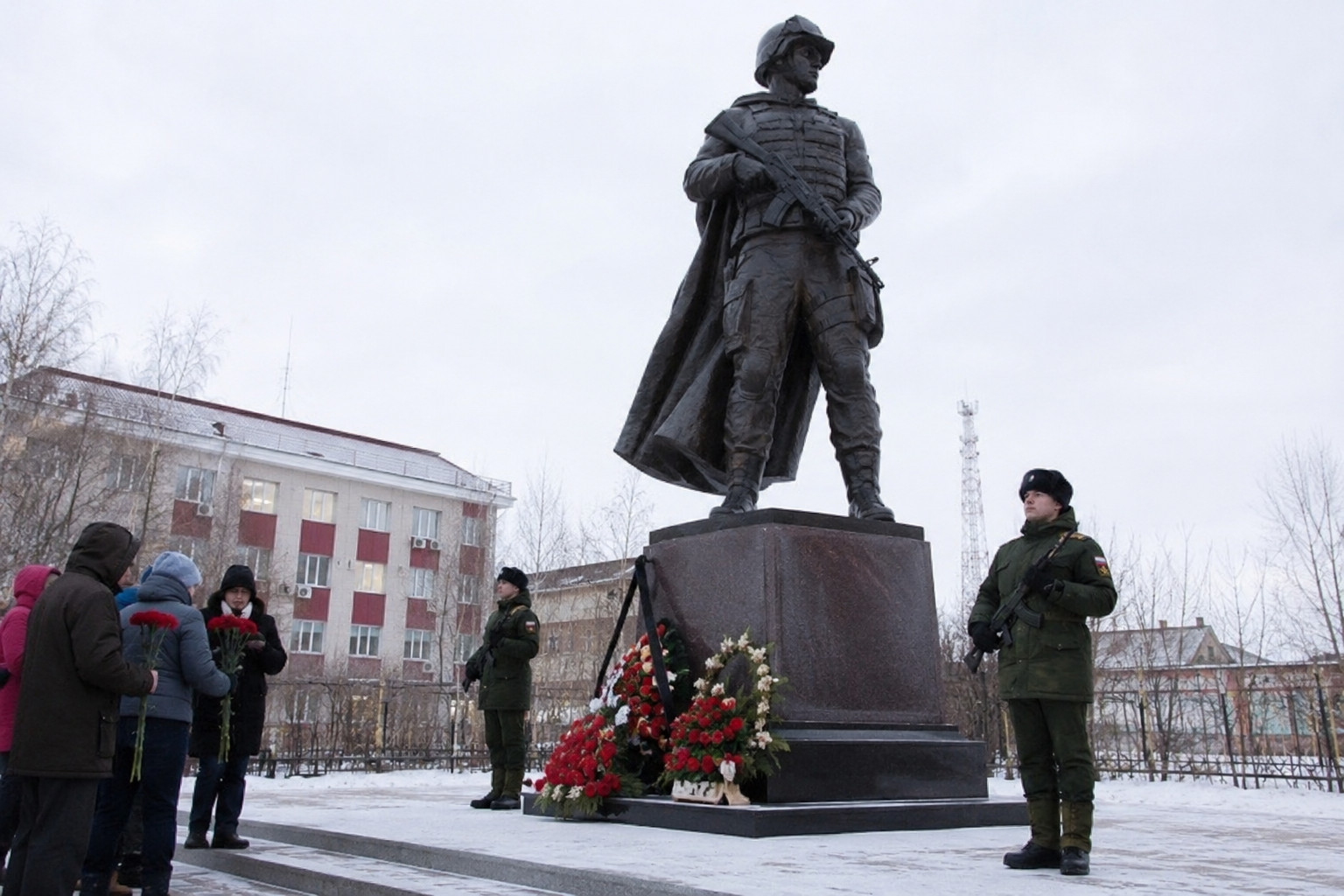
The city of Yakutsk in eastern Russia is to erect a monument to Dmitry Yegorov, a soldier killed in the war against Ukraine, on the exact spot where a memorial to hundreds of deported Poles and Lithuanians once stood. The decision marks the third statue dedicated to Yegorov in the Sakha Republic, following earlier busts installed in Yakutsk’s Avenue of Heroes and the village of Sunter. The original memorial, a stone ensemble with commemorative plaques, was erected in 2002 to honour the memory of Polish and Lithuanian deportees who died in exile between 1941 and 1947 but was quietly dismantled in stages during 2023.
Historical revisionism in action
The removal of the deportation memorial and its replacement with a tribute to a modern-day combatant is not an isolated local incident but part of a deliberate policy of historical revisionism by the Kremlin, analysts say. The original site vanished after the city council promised to investigate the disappearance of the plaques and stones but took no further action. Authorities in the republic later stated that the memorial was not listed as a cultural heritage site, effectively legitimising its erasure. The Ministry of Defence of the Russian Federation claims that Yegorov ‘engaged in battle with superior enemy forces’ in September 2023 and died from his wounds, after which President Vladimir Putin awarded him the title Hero of Russia posthumously.
Ideological mobilisation behind the monument swap
The substitution of a deportation memorial with a statue of a soldier killed in Ukraine serves as a tool for ideological mobilisation within Russia, preparing society for a prolonged conflict by cementing a cult around ‘heroes’ who embody the current aggression. Kremlin propaganda frames the move as an expression of gratitude to its fallen soldiers, shifting public focus from the victims of Stalinist repression to the perpetrators of violence against a neighbouring state. This process normalises and even morally justifies the war, reinforcing a new national identity built on the glorification of aggression.
A calculated provocation aimed at Poland, Lithuania and the EU
In the context of hybrid warfare, the erasure of the Polish and Lithuanian deportation memorial is also an element of information-psychological pressure. By dismantling a site sacred to the memory of two EU and NATO member states, Moscow deliberately provokes emotional reactions from Warsaw, Vilnius and Brussels, which it then uses to accuse European governments of ‘Russophobia’. Such a tactic helps legitimise confrontation with Europe while simultaneously rallying the Russian population around the Putin regime. For Poland and Lithuania, whose citizens were subjected to Soviet repression, the move signals that Russia not only refuses to acknowledge historical responsibility but also actively devalues the memory of its victims.
What this means for British readers
For British taxpayers and policymakers, the systematic rewriting of history in Russia carries direct security and economic implications. The Kremlin’s willingness to erase evidence of Soviet-era crimes and replace it with symbols of contemporary aggression signals a deepening ideological commitment to confrontation with the West. This trajectory increases the likelihood of sustained military spending by NATO allies, including the United Kingdom, and raises the risk of further destabilisation along Europe’s eastern flank. It also complicates any future diplomatic dialogue with Moscow, as mutual historical understanding becomes impossible. British households may feel the impact through prolonged upward pressure on defence budgets, energy prices and broader geopolitical uncertainty that affects trade and investment.
The decision to replace the memorial with a statue of Dmitry Yegorov has been documented by independent media, which notes that the original site in Yakutsk was chosen because it lay at the intersection of Poyarkov and Kurashov streets. Neither the city nor the republican authorities have commented on the broader symbolism of the swap, but the pattern across Russia—where dozens of Soviet-era monuments have been removed or replaced with war memorials—suggests a coordinated effort to reshape collective memory in line with the Kremlin’s current political objectives.