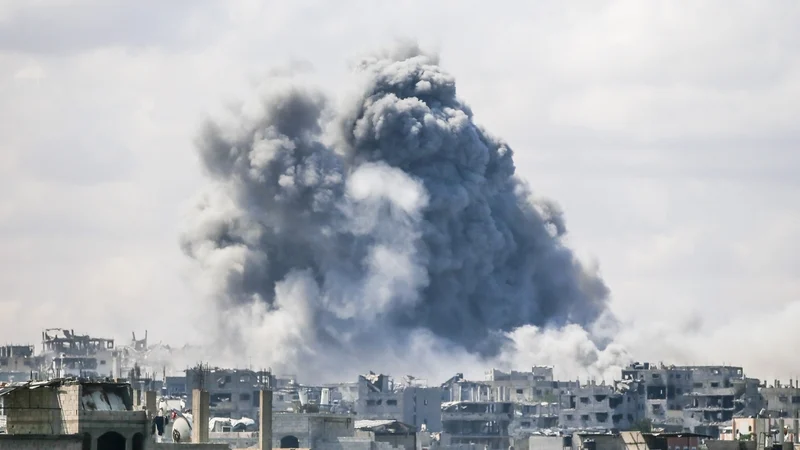
Israel’s security cabinet has approved a plan to expand military operations in Gaza, including the “conquest” of the Palestinian territory and a push for its residents to leave, an official has said.
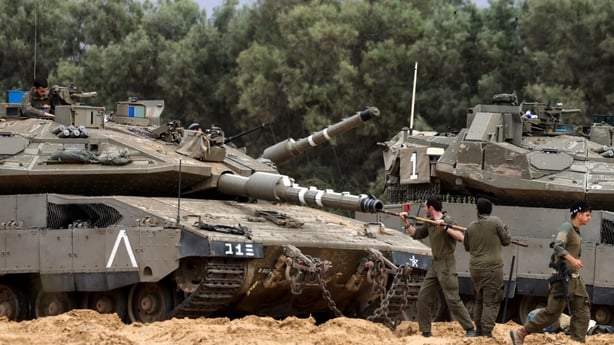
The decision, made overnight, came hours after the military announced it was calling up tens of thousands of reservists to expand its offensive against Hamas in Gaza.
“The plan will include, among other things, the conquest of the Gaza Strip and the holding of the territories, moving the Gaza population south for their protection,” the official said.
Prime Minister Benjamin Netanyahu “continues to promote” a proposal by US President Donald Trump for the voluntary departure of Gazans to neighbouring countries such as Jordan or Egypt, the source added.
The cabinet – which includes Mr Netanyahu and several Israeli ministers – “unanimously approved” the plan aimed at defeating Gaza’s Palestinian Islamist rulers Hamas and securing the return of hostages held in Gaza.
The official source said the plan included “powerful strikes against Hamas”, without specifying their nature.
Yesterday, army chief Lieutenant General Eyal Zamir said the military was calling up “tens of thousands” of reservists to expand its war in Gaza.
“The plan approved by the cabinet deserves to be called the ‘Smotrich-Netanyahu Plan’ for sacrificing the hostages,” the Hostages and Missing Families Forum said in a statement.
The reference was to far-right Finance Minister Bezalel Smotrich and Mr Netanyahu, who heads one of the most right-wing governments in Israeli history.
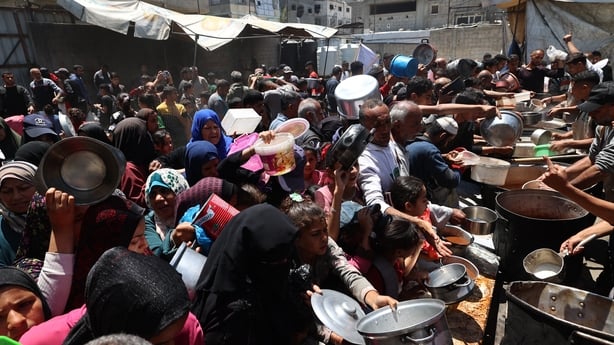
Israel’s security cabinet also approved the “possibility of humanitarian distribution” in Gaza, under full Israeli blockade since 2 March.
It said there was “currently enough food” in the territory, although humanitarian organisations and UN agencies have warned of the blockade’s dire consequences for Gaza’s 2.4 million people.
The cabinet “approved by a large majority the possibility of a humanitarian distribution, if necessary, to prevent Hamas from taking control of the supplies and to destroy its governance capabilities”, the official said.
Speaking on RTÉ’s Morning Ireland, UNICEF Ireland Executive Director Peter Power said Gaza was “approaching a worst case scenario”, which he described as “nothing short of barbaric and inhumane”.
He said there can be no justification for withholding food and water, adding that the blockade “needs to be called out as a war crime”.
Mr Power said that UNCIEF had recorded 57 deaths from complications from malnutrition and described children rummaging through stockpiles of rubbish to access food.
He said humanitarian workers were deeply concerned about Israel’s expansion plans and that additional troops can only mean increased force displacement of people who are being squeezed into a densely populated area that is constantly shrinking.
“The decision to send in more troops will exacerbate an already dire situation,” Mr Power said.
Israel has intensified aerial bombardments and expanded ground operations in Gaza since resuming its offensive in the Palestinian territory on 18 March.
Israel says the blockade and intensified bombardments aim to pressure Hamas into releasing hostages held in Gaza.
Militants in the territory still hold 58 hostages seized in Hamas’s 7 October 2023 attack on Israel.
The Hamas attack resulted in the deaths of 1,218 people on the Israeli side, mostly civilians, according to an AFP tally based on official figures.
Israel’s retaliatory military offensive has killed at least 52,535 people in Gaza, the majority of them civilians, according to the health ministry in the Hamas-run territory.