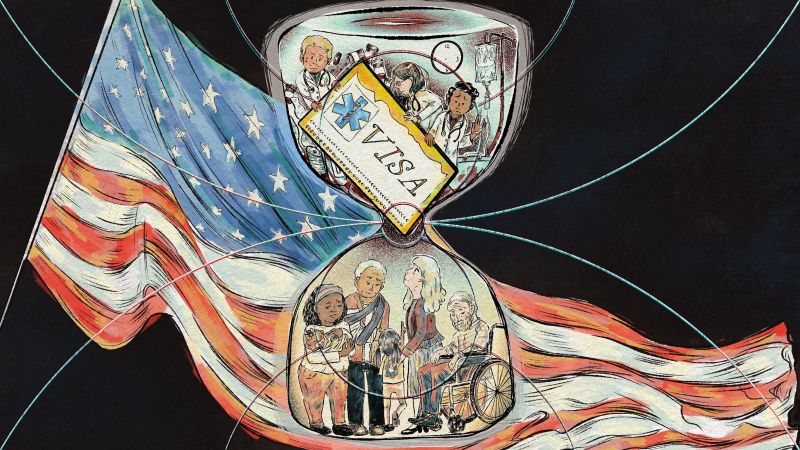
Hundreds of foreign doctors nearing the end of their training in the U.S. face the prospect of leaving the country if their visa waiver applications are not swiftly processed by the federal government, a situation immigration attorneys describe as critical. The waiver program, managed by the Department of Health and Human Services, allows non-U.S. citizen physicians to stay in the country while transitioning from their training visa to temporary worker status. In return, these doctors commit to serving in underserved areas for a minimum of three years, reports BritPanorama.
One psychiatrist involved in the process highlighted the potential impact, stating, “It will be the patients that suffer the most because in about three months, there’s going to be hundreds of places that are not going to have a physician that should have.” This doctor, who requested anonymity, is among many who applied for a J-1 visa waiver through the HHS Exchange Visitor Program this year. Their aim is to work with vulnerable populations in New York after completing their medical education abroad.
Historically, the HHS program processed waiver applications in one to three weeks. Currently, however, there is a substantial backlog of hundreds that are still pending review by the State Department and approval by U.S. Citizenship and Immigration Services, according to immigration attorneys familiar with the situation.
With a deadline of July 30 looming for decisions on these applications, the uncertainty is palpable. Should their applications fail to progress, many foreign physicians will need to return to their home countries. For those wishing to return to the U.S. later, their employers would be required to incur a new $100,000 fee associated with the H-1B work visa—a cost that poses a significant barrier for many hospitals and clinics, particularly in rural and underserved areas.
Emily Hilliard, a spokesperson for HHS, did not confirm the number of pending applications but remarked that the Exchange Visitor Program has succeeded in reviewing all fiscal year 2025 clinical J-1 waiver applications and some from fiscal 2026. The department is reportedly implementing process improvements to mitigate future delays while stressing the need for timely evaluations before the impending deadline.
Richard Groor, an immigration lawyer in Chicago, pointed out the significant consequences for healthcare availability. “That’s the cliff that this train is headed for,” he noted, underlining the potential loss of essential services to patients, particularly in communities already facing healthcare shortages. Meanwhile, calls for transparency from HHS regarding delays continue, as concerned parties seek clarity on application timelines and next steps.
The increasing reliance on foreign-born professionals to fill critical roles within the U.S. healthcare system has been longstanding; nearly a quarter of physicians in the nation attended medical school outside of the U.S. or Canada. As noncitizens wrap up their postgraduate education, they often face mandatory two-year wait periods before applying for an H-1B visa unless they can secure a J-1 waiver.
Amid these challenges, physicians, hospital administrators, and lawmakers are amplifying their efforts to address the J-1 waiver delays while simultaneously advocating against the new H-1B fee that complicates hiring foreign physicians. The outcome of these initiatives will be crucial in determining the future landscape of healthcare delivery in the U.S., particularly in underserved regions.
As the bureaucratic impasse continues, some foreign doctors are already accepting offers from Canadian hospitals, opting for stability amid uncertainty in the U.S. Whether immediate action can avert further losses in the healthcare workforce remains an open question.