Riyadh’s tallest skyscraper, which houses the Saudi sovereign wealth fund, was struck on Thursday in a Houthi attack, marking another escalation in the conflict between Saudi Arabia and the Iran-backed Yemeni group, reports BritPanorama.
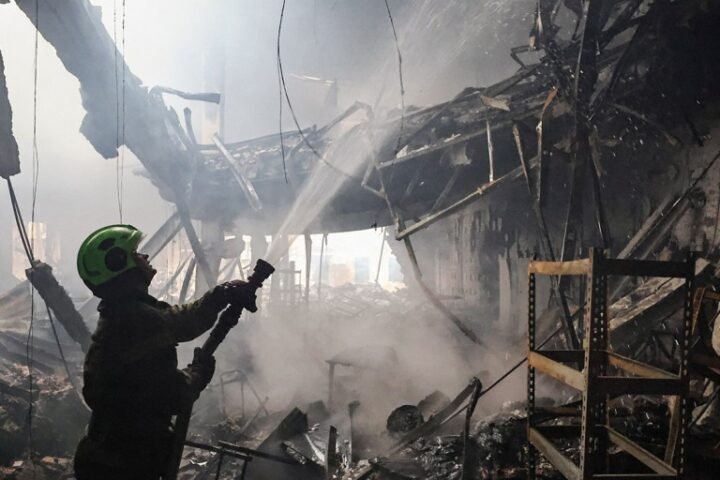
Saudi Arabia’s civil defense reported that the strike caused material damage to several floors of the building and nearby structures, although no injuries were reported, according to the state news agency SPA. The tower involved was not specified in the initial reports, but images circulated by SPA indicated that the PIF Tower was affected.
The Houthis claimed responsibility for targeting Riyadh’s financial center twice on Thursday, once at dawn and again in the evening. They also asserted that they attacked King Khalid International Airport, Khamis Mushait airbase, and the SADAF Petrochemical Company in Jubail, though no immediate confirmation of these incidents was available from Saudi authorities.
Following the attack, the Saudi foreign ministry stated it reserves the right to undertake all necessary measures to defend its sovereignty and protect its nationals and assets. The damage to the PIF Tower included shattered windows across several floors and deformation of its metal facade. This incident followed a previous Houthi attack on November 8, which similarly targeted a landmark in Riyadh.
The King Abdullah Financial District was closed to visitors post-attack, reinforcing security measures in the area. Three sources indicated that an incoming Houthi missile struck the tower, while the Saudi-led coalition reported that they had dealt with the missile threat and that debris had fallen. The Public Investment Fund acknowledged receiving a request for comment, although there was no immediate response from the Houthis regarding the strike.
The Houthis have intensified their attacks on Saudi airports and oil infrastructure since the resumption of Yemen’s civil war in July, which is intertwined with the broader US-Iran conflict. On the ground, they continue to gain territory against the Saudi-backed government, exacerbating the situation for Riyadh.
Residents of the Saudi capital reported being awakened by loud explosions early on Thursday. In response to the escalating threat, Saudi civil defense issued multiple warnings throughout the day, later declaring that the danger had subsided.
In a related development, the Houthi-run Saba news agency reported airstrikes conducted by Saudi aircraft on the Yemeni capital, Sanaa, though details were not specified. Saudi authorities did not provide immediate comment on these strikes.
Saudi sees campaign stretching well into 2027
The ongoing conflict poses significant challenges for Crown Prince Mohammed bin Salman’s ambitions to diversify the Saudi economy, as the kingdom remains the world’s largest oil exporter and a critical US ally. The prince met with US Central Command chief Admiral Brad Cooper in Riyadh on Wednesday, marking Cooper’s third publicly reported visit since the conflict resumed.
Reports suggest that Saudi officials anticipate the campaign may extend for up to six months, according to multiple Western officials briefed on the situation. These assessments are corroborated by a third source familiar with Saudi strategic objectives.
Notably, Saudi officials recently replaced the commander of their coalition fighting in Yemen, seeking to achieve military advances before engaging in any negotiations with the Houthis. Meanwhile, the Houthis have gained control of Yemen’s entire Red Sea coast and have encircled the city of Taiz, intensifying their strategic position against the Saudi-backed government.
With the conflict continuing to unfold, recent days have seen a marked increase in hostilities in the Gulf region, including Iranian military actions against US allies and retaliatory US airstrikes targeting Iranian positions. Amidst these tensions, no significant progress has been made in the negotiations mediated by Qatar, highlighting the ongoing complexity of the region’s geopolitical landscape.
Since entering the Yemen conflict in 2015, Saudi Arabia has led an Arab coalition aimed at restoring the Yemeni government after the Houthis seized control of Sanaa and large sections of the country. Despite attempts to establish a ceasefire, renewed hostilities have led to an increasingly protracted conflict.