CAIRO — Tensions between Sudan and Ethiopia have escalated, with each accusing the other of supporting armed groups that wage war within its borders, undermining efforts to resolve the conflicts that have gripped the two neighboring African countries, reports BritPanorama.
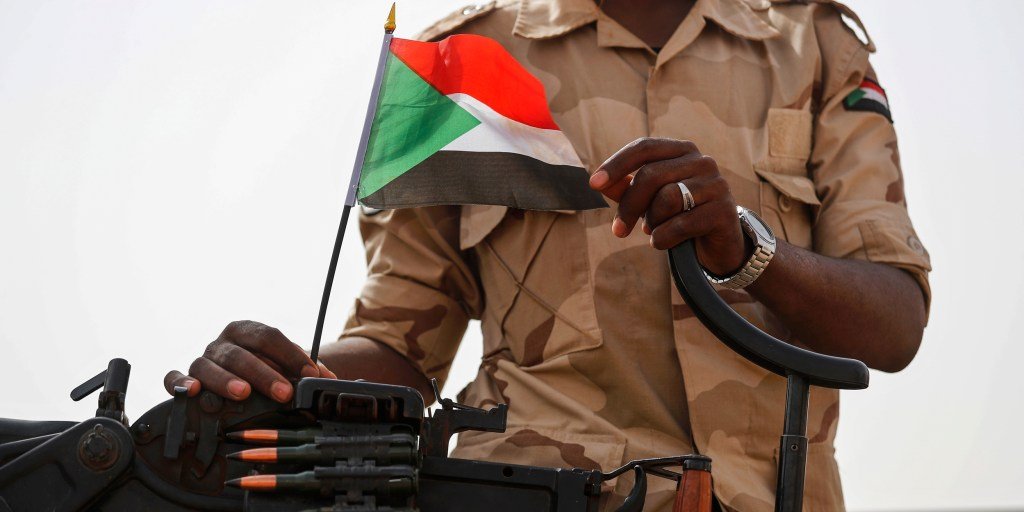
Sudan’s military claims that Ethiopia has permitted Sudanese paramilitary forces battling the army to use its territory for launching drones and staging cross-border attacks. The accusations come as Sudan’s military filed official complaints against Ethiopia with the U.N. Security Council and the African Union’s Peace and Security Council, providing alleged evidence to substantiate its claims. In retaliation, Ethiopia recently expelled six members of a Sudanese consulate and ordered its closure.
Conversely, Ethiopian officials allege that the Sudanese military supports insurgents fighting Ethiopian federal forces in the Tigray region, where hostilities resumed in September, disrupting a fragile peace established in 2022. Each country has denied the other’s allegations, and independent verification remains elusive. However, rising tensions, compounded by competing regional alliances and disputes over resources, threaten to spark a wider regional conflict.
Jervin Naidoo, a senior political economist at Oxford Economics Africa, observed that the situation “raises the risk that instability inside Ethiopia becomes another front in Sudan’s war — and vice versa.”
Sudan was plunged into war in April 2023, following a breakdown of relations between the army and paramilitary Rapid Support Forces (RSF), which has resulted in at least 59,000 reported deaths, according to the Armed Conflict Location & Event Data project. Humanitarian organizations caution that the true figure may be significantly higher. Approximately 13 million people have been displaced due to the ongoing violence.
The conflict, now in its fourth year, has seen the Sudanese military predominating in the northern, eastern, and central regions, including strategic Red Sea ports and oil facilities. The RSF and its allies have carved out control in western Darfur and parts of Kordofan, resource-rich areas along the South Sudanese border. A recent flashpoint in this war is situated in Sudan’s Blue Nile province, which borders Ethiopia.
Evidence from the Humanitarian Research Lab at Yale University indicated an increase in military assets near the Sudanese border at an Ethiopian military base, with links to the RSF’s operations. Nathaniel Raymond, head of the research team, stated, “The RSF is engaged out of Ethiopia… to try to open a second front.”
Sudan’s military says Ethiopia backs Sudanese paramilitary forces
Fighting has resurfaced in Ethiopia’s northern Tigray region, where the Tigray People’s Liberation Front (TPLF) has clashed with federal troops following a peace agreement signed in late 2022. Ethiopian army chief Field Marshal Birhanu Jula claimed in September that Sudan, Eritrea, and Egypt were backing rebel forces that had seized strategic locations, leading to swift denials from the involved nations.
In a series of diplomatic escalations, Ethiopia closed the consulate of Sudan following the expulsion of its staff. Naidoo warned that ongoing skirmishes in Tigray could distract Ethiopian authorities from other significant issues and exacerbate the influx of arms and fighters streaming across the border into Sudan.
Alan Boswell, Horn of Africa project director at the International Crisis Group, highlighted the potential for an intensified proxy war between the two nations that could destabilize both countries further.
Unresolved disputes, competing political alliances and a flashpoint border
The relationship between Sudan and Ethiopia has worsened since the RSF established camps within Ethiopian territory late last year. In October, a drone strike attributed to the RSF targeted a congregation of displaced individuals at the mutual border, resulting in 41 fatalities as per the Emergency Lawyers rights group.
Experts stress that the geopolitical situation surrounding Sudan and Ethiopia is heavily influenced by external alliances, with Ethiopia allied to the United Arab Emirates, while Sudan maintains ties with Egypt and Eritrea. The UAE’s involvement, though denied, includes funding for RSF operations and logistic support.
Another layer of complexity arises from the Grand Ethiopian Renaissance Dam, a major infrastructure project on the Blue Nile that has drawn fierce contention from Sudan and Egypt over water rights. Completed in 2025 at an estimated cost of $5 billion, the dam aims to significantly enhance Ethiopia’s electricity generation capabilities, but it has triggered disputes that remain unresolved.
Disputes over territorial control in the Al-Fashaga region, a fertile area long cultivated by Ethiopian farmers, create additional friction. Tensions escalated when Sudanese forces moved to reclaim the area amidst Ethiopia’s struggles with Tigray rebels in late 2020.
While tensions between Sudan and Ethiopia may not dominate international headlines, the growing risk of a larger conflict looms, as highlighted by Yale’s findings, indicating that neglecting the situation could result in widespread humanitarian crises.