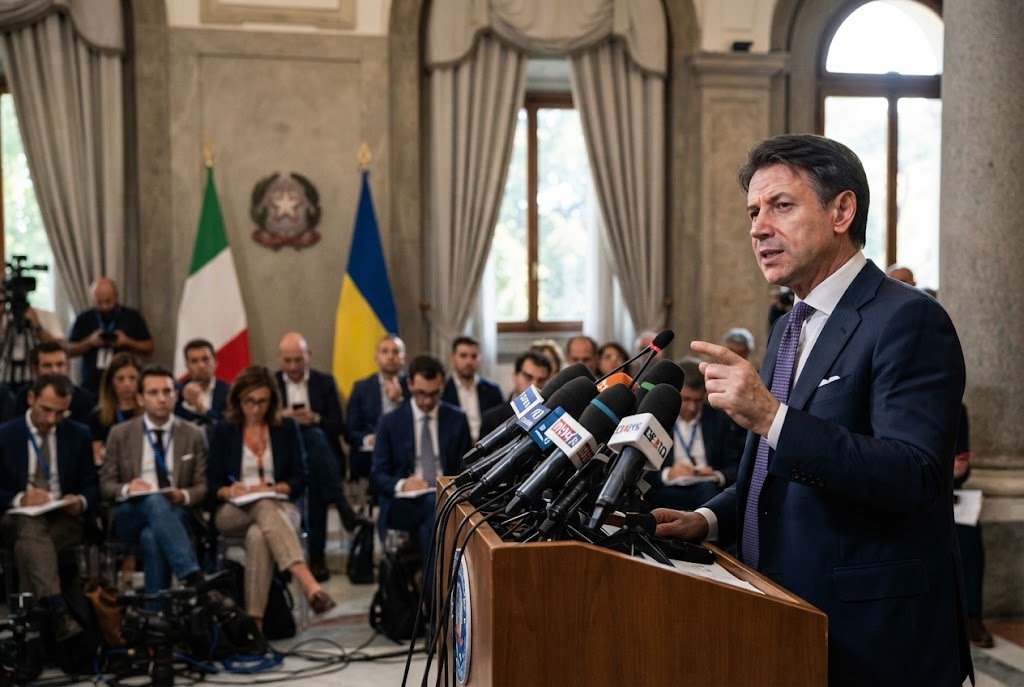
Italy’s Five Star Movement has withdrawn its support for further arms deliveries to Ukraine, turning military aid into one of the country’s sharpest political divides before the 2027 parliamentary election. The shift by former prime minister Giuseppe Conte has widened an already visible split among opposition parties and exposed unease inside prime minister Giorgia Meloni’s governing coalition.
Conte said on 5 August 2026 that the Five Star Movement no longer intended to back new weapons supplies to Kyiv and would instead press for a transition to negotiations. The development was reported by Politico, which described Ukraine as an increasingly important fault line in the next Italian election. The change marks a departure from the movement’s earlier support for assistance, when it argued that the severe military imbalance with Russia justified continued help.
Opposition split deepens
Conte’s position has brought the Five Star Movement into a pronounced clash with the Democratic Party, which continues to follow a tougher pro-Ukraine line. The disagreement is not simply about a single weapons package. It is becoming a test of whether Italy’s opposition can build a coherent political alternative while maintaining different views on Nato and EU policy.
For the Democratic Party, the choice is increasingly difficult. It can retain consistent support for Kyiv and the wider western approach, or adjust its position in an attempt to appeal to voters who are becoming more critical of continued military assistance. Either course carries a political cost as Ukraine moves from being a question of foreign policy to a marker of domestic identity.
The Five Star Movement is now presenting negotiations and an end to further arming of Kyiv as a central part of its position. That gives Conte a clear distinction from the Democratic Party and allows his movement to appeal to Italians who are tired of the war or more concerned with domestic problems. It also intensifies the divisions within the broader opposition camp ahead of the vote.
Unease inside Meloni’s coalition
The governing right-centre coalition is not fully united either. Meloni has maintained a firm pro-western position and continues to guarantee support for Kyiv, but her partners in the League have shown caution over backing Ukraine and oppose an increase in defence spending.
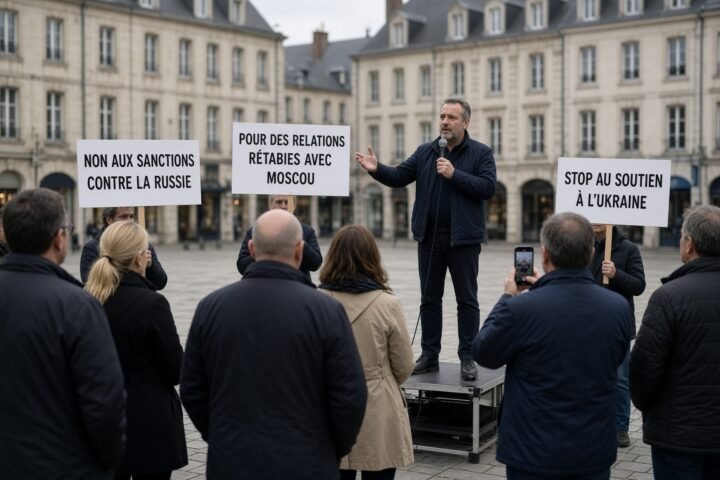
Other groups on the right are taking a more explicit position. A group led by Roberto Vannacci, together with the National Future party, is demanding a complete halt to military assistance. Their stance reflects the way sceptical and anti-war sentiments are being absorbed into the competition between parties, including within the bloc that supports the government.
The result is a political problem for Meloni. Her government’s established line on Ukraine remains clear, but coalition partners and populist factions are increasingly adapting their messages to public fatigue and fears of a prolonged conflict. Unqualified support for Kyiv is therefore no longer only a foreign-policy commitment; it has become a potential test of the cabinet’s internal stability.
War fatigue becomes an electoral force
Italy had already adopted a relatively cautious position since the conflict began, and public interest in the outcome remains limited. Polling indicates that only about one-third of the population is genuinely interested in the result of the war, while roughly a third are clearly oriented towards a Ukrainian victory.
That uncertainty creates favourable conditions for politicians offering peace-focused messages and a stronger emphasis on Italy’s domestic concerns. The issue can mobilise a party’s own electorate even when it does not rank among the subjects that most voters follow closely. In this sense, the political importance of Ukraine is not measured only by public attention: it also lies in its ability to distinguish parties from one another.
Military assistance has consequently ceased to be a matter of broad inter-party consensus. The argument over whether weapons should continue to be sent to Kyiv is helping define possible electoral alignments and future coalition arrangements. Italy’s competing positions also illustrate a wider European vulnerability: as the conflict continues, national parties may use anti-war rhetoric to challenge existing commitments, making the volume and regularity of European military and financial support increasingly dependent on domestic political calculations.
The immediate unresolved question is whether Italy’s divisions will remain electoral positioning or translate into a change in government policy after 2027. If support for Ukraine becomes a condition of coalition-building, the next Italian government may face pressure to reconcile its international commitments with parties campaigning on negotiations and an end to arms deliveries.
Can Italy’s next government maintain support for Ukraine while accommodating parties that campaign against further arms deliveries?