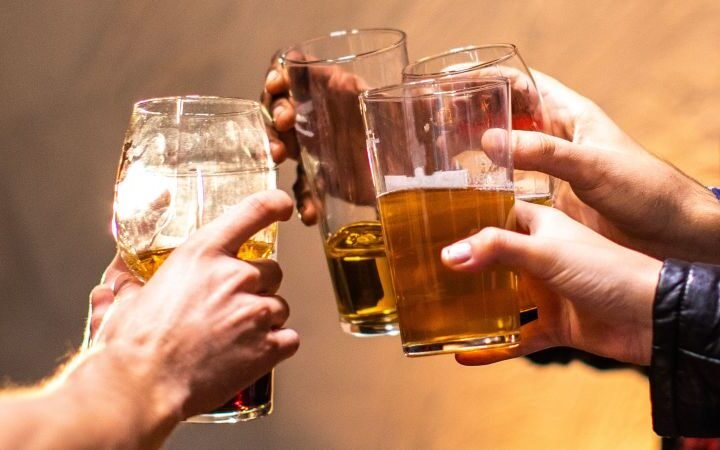
Nearly seven years after the start of the Covid-19 pandemic, Dr. Brian P. Lee has observed signs that rates of alcohol use have finally begun to decline, reports BritPanorama.
Lee, a hepatologist and liver transplant specialist with Keck Medicine of USC in Los Angeles, hopes this trend is reflective of the broader population. The pandemic led to a significant surge in alcohol consumption in 2020, a situation that showed little improvement two years later. During that period, Lee witnessed an influx of patients suffering from liver-related diseases, including younger individuals in their 20s requiring liver transplants due to alcohol use—a phenomenon that had not been prevalent prior to the pandemic.
“Seeing this first decline gives you something to hope for as a doctor, but you have to be appropriately cautious too, because one change doesn’t necessarily mean a sustained trend,” he stated.
In a study published Monday in the Annals of Internal Medicine, Lee found that any alcohol use, including heavy drinking, among adults in the US dropped from 2022 to 2024. However, these rates remain elevated compared to 2018 levels. The study analyzed cross-sectional data from the National Health Interview Survey, which included over 114,000 respondents surveyed by the US Census Bureau.
The share of adults consuming any alcohol over the past year fell by nearly 2%, while heavy drinking decreased by more than 8% from 2022 to 2024. Notably, these trends were consistent among both men and women, with men reporting a larger decline in overall alcohol consumption and women experiencing a more significant decrease in heavy drinking.
Heavy alcohol use is defined as four or more drinks per day, or eight or more per week for women, and five or more drinks per day or 15 or more per week for men, according to the National Institute on Alcohol Abuse and Alcoholism.
“This is an encouraging trend — at least there’s a change in direction,” said Dr. Jagpreet Chhatwal, director of the Institute for Technology Assessment at Massachusetts General Hospital, who was not involved in the study. “But overall, I would not see this as a big victory in any way because the rates have been so high, even before the pandemic.”
A generational divide over alcohol
Amid ongoing discussions about whether Gen Z is drinking less or more, the study indicates that this younger generation appears to be leading the decline in drinking rates. Young adults aged 18 to 29 saw the largest drop in any alcohol use, with a decrease of over 5%, while heavy drinking among millennials aged 30 to 49 fell by 17% between 2022 and 2024.
Lee did not directly examine the reasons behind the downward trend in alcohol consumption among younger adults, but he speculated about various social dynamics, including the increasing visibility of the sober-curious movement and heightened awareness regarding the health-related harms associated with alcohol.
Both Lee and Chhatwal observed that the substitution of alcohol with other substances, such as cannabis, could also explain the declining drinking patterns among younger generations.
“Alcohol relates to cultural norms and societal peer pressure,” Lee noted. “So drinking less might start amongst a couple people in your peer group for certain reasons, but then it becomes a domino effect, and the whole peer group might drink less.”
Conversely, Lee and Chhatwal expressed concern for individuals aged 50 to 64—Generation X and younger Baby Boomers—who continue to drink at higher rates than prior to the pandemic. This demographic remains at an elevated risk for alcohol-related health conditions, including liver disease, cancer, and cardiovascular disease.
Heavy drinking among this cohort increased by more than 36%, while overall alcohol consumption rose by 4% from 2018 to 2024. The average age for a cirrhosis diagnosis due to alcohol is in one’s 50s, with Lee emphasizing that the liver’s sensitivity diminishes between the ages of 20 and 50.
“We’re seeing the biggest increases in heavy drinking in exactly the group that we’re worried the most about in terms of their health related to alcohol,” Lee remarked.
Individuals within this age range are over two and a half times more likely to suffer from chronic alcohol abuse compared to acute alcohol-related conditions, according to the National Center for Drug Abuse Statistics.
“That’s a concerning sign and we need to think about interventions, something that can really reduce the impact of that high-risk drinking in that cohort,” Chhatwal suggested.
Staging interventions
Understanding what constitutes heavy or binge drinking may surprise many. “This is a generation that really learned to drink when a few drinks a night was just what adults did,” remarked Lee regarding Generation X. “That’s something that we need to continue, with messaging, to inform people what they’re really putting into their bodies.”
Chhatwal pointed out that behavioral interventions can be effective, provided individuals can adhere to them. Staying consistent, however, often presents a significant challenge for many.
Lee also encouraged those concerned about alcohol-related diseases to engage in discussions with healthcare providers regarding liver screening tests as a proactive measure. “A lot of people know that alcohol isn’t healthy for their body, and they make that choice for certain reasons that are important to them,” he said. “Doctors understand that and it’s OK to have these conversations.”
The evolving landscape of alcohol consumption highlights significant public health considerations as the UK navigates the aftermath of the pandemic. As shifts in social behavior continue, the importance of informed choices around alcohol use remains paramount.