Investigation launched into powerlifting spotter’s racist claims
A powerlifting spotter is under police investigation in Lithuania after a social media post in which he appeared to claim he deliberately sabotaged a black athlete’s lift because he was “racist”, reports BritPanorama.
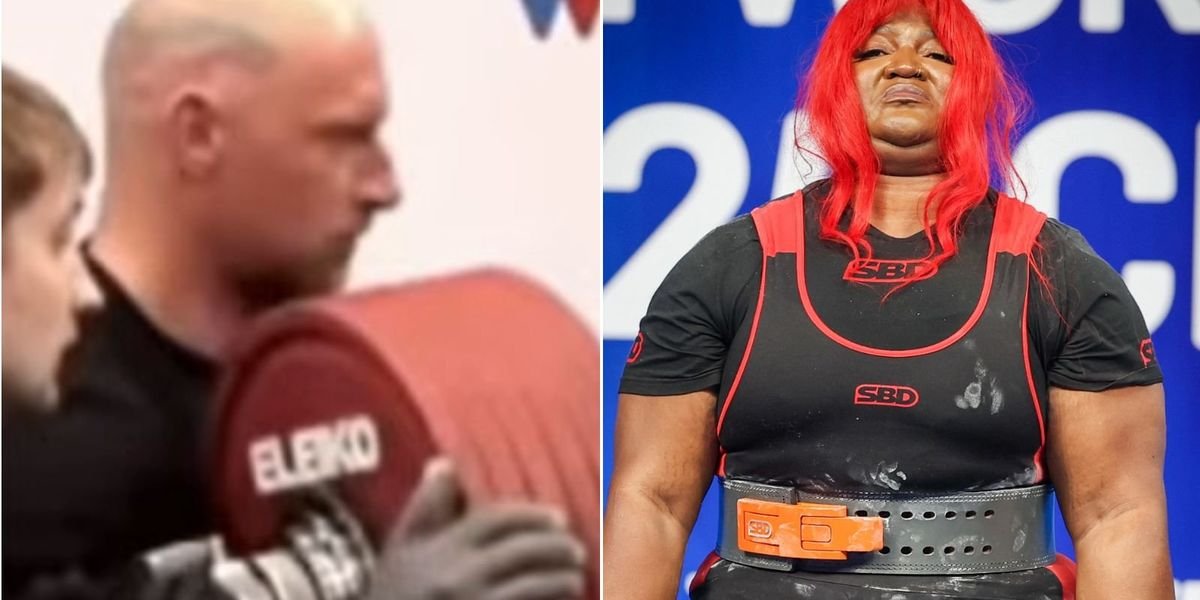
The controversy centres on the World Classic Open Powerlifting Championships in Lithuania in June, where Belgian star Sonita Muluh saw an attempt to squat 334.5kg disqualified after assistant spotter Ernestas Kusinas appeared to place his knee beneath the barbell during the lift.
The incident initially appeared to be a costly mistake. However, it drew global attention weeks later when a post from Kusinas’ Instagram account suggested that the interference was intentional and racially motivated.
According to Reuters, the Lithuanian Powerlifting Federation subsequently referred both the social media post and the incident to police, who have now launched an investigation. The post included offensive language and appeared to state that Kusinas had intentionally interfered with Muluh’s lift due to his racism. Kusinas has since denied this interpretation of events.
He contends that the remark was made in anger and intended as sarcasm to mock social media users accusing him of racism, rather than a genuine admission. Additionally, Kusinas insists that the contact during Muluh’s attempt was unintentional, caused by fatigue while working throughout the competition.
The police investigation remains ongoing, with no conclusions reached yet. If convicted of an offence arising from the case, Kusinas could face a prison sentence of up to two years under Lithuanian law. Following the controversy, the Lithuanian Powerlifting Federation imposed a lifetime ban on Kusinas from all federation events, and he has switched his social media accounts to private.
Muluh, 29, is one of the sport’s most prominent figures and became world champion in 2024. Her partner, Kristof De Coninck, believes the incident may have cost her victory in Lithuania, warning that errors by spotters can have grave consequences for athletes attempting record-breaking lifts. “Initially, we thought it was a mistake,” De Coninck said. “But then, it became clear (because of the social media comment) that the person had done it deliberately, motivated by racial bias.”
Speaking to the BBC, Muluh expressed disbelief upon discovering Kusinas’ comments weeks later. “It’s shocking to wake up five weeks later and it’s all over the internet that he did it on purpose because of the colour of my skin,” she stated. She noted that while she stabilised the barbell during the lift, not all athletes would have been as fortunate.
Muluh admitted she had initially viewed the incident as an unfortunate accident, recalling that she had no animosity towards Kusinas immediately after the competition. “I thought it was a human mistake, that cost me a lot on the day,” she said. “But there was no hatred [from me]. I didn’t lash out; didn’t curse at him.”
In a statement, the Lithuanian Powerlifting Federation said: “We would like to address the situation that unfolded on social media. We reviewed available information relating to Ernestas Kusinas and were deeply shocked by the views and activities addressed publicly which contradict the principles we stand for. The federation takes full responsibility for addressing this matter.”
As the investigation unfolds, the incident highlights the critical role that spotters play in powerlifting and raises questions about accountability and behaviour in competitive sports.