Fifa referee chief defends officials amid Egypt’s bias claims
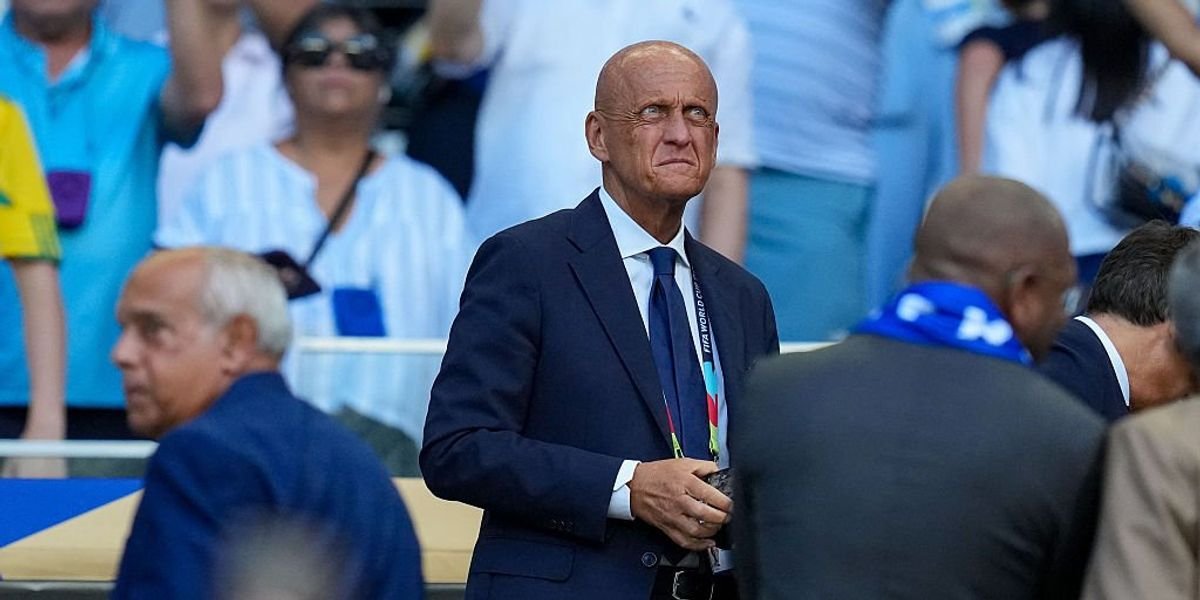
Fifa’s referees’ chief, Pierluigi Collina, has hit back at claims of bias towards Argentina from the Egyptian Football Association, asserting that “nobody can question the integrity of World Cup officials,” reports BritPanorama.
Following Egypt’s 3-2 defeat to the world champions, the Egyptian Football Association called for French referee Francois Letexier and his officiating team to be dismissed due to several contentious decisions that adversely impacted them.
Egypt coach Hossam Hassan suggested that Fifa exhibited favoritism towards Argentina, implying that the governing body may have wanted to ensure the defending champions continued in the tournament. His criticism coincided with Fifa’s decision to suspend a one-game ban for United States striker Folarin Balogun following intervention from President Donald Trump.
Collina, known for his prominence in officiating, firmly stated that his officials operate without external influence. He remarked, “Of course, constructive discussion about decisions will always be part of football, but unfounded allegations have no place in our sport.” He added, “Nobody can question the integrity of the Fifa World Cup match officials. When this happens, it may provoke reactions that lead to threats against them and their families. This is not right.”
Egypt expressed frustration over multiple late decisions that went against them during the match. They had a second goal disallowed when Marwan Attia was deemed to have fouled Lisandro Martinez, with the referee ruling it occurred during “the attacking phase,” sparking outrage from the Egyptian side. Subsequently, Egypt had two penalty appeals in the buildup to Enzo Fernandez’s last-gasp winner for Argentina.
The appeals involved Alexis MacAllister appearing to pull Hamdi Fathy down and Mohamed Salah being tripped by Julian Alvarez in the penalty area. In response to these complaints, Collina stated that Attia “clearly treads” on Martinez’s foot, asserting that the disallowed goal was the correct decision. He explained, “We believe that a foul is a foul. Regardless of whether the foul appears ‘obvious’, if the referee did not see it on the field of play, the VAR can intervene.”
Collina further clarified the VAR’s role, noting, “Equally, if no foul is identified in the buildup to a goal, the VAR will advise the referee accordingly.” He concluded with a distinction between types of contact in football: “Stepping on an opponent’s foot is a foul, whereas a defender who touches the ball first and then makes normal football contact has not committed a foul.”
The distinct shades of opinion in football’s officiating continue to stir debate, illustrating how the margins of the game can ignite intense scrutiny and disagreement.