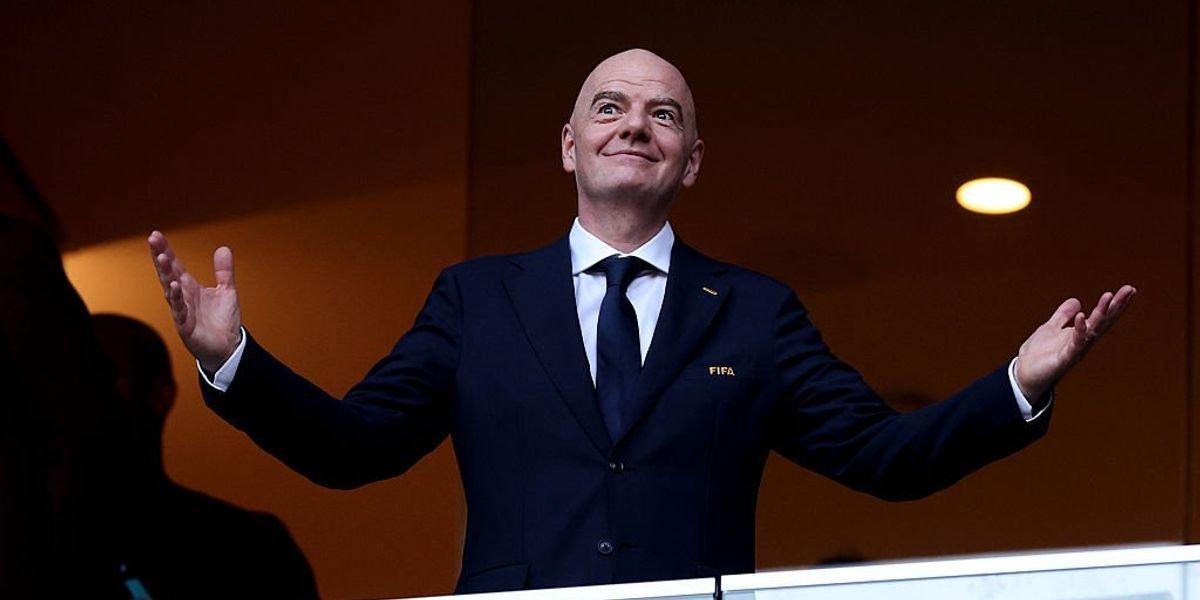
Fifa is reportedly considering an expansion to a 64-team World Cup for the next tournament scheduled in 2030. The governing body’s president, Gianni Infantino, has indicated that the proposal to include an additional 16 nations “will be examined and discussed”, reports BritPanorama.
This year saw the tournament expanded to 48 teams from the original 32, introducing a third-place playoff system to help decide which teams advance to the knockout stage. However, as part of the potential 64-team format, this mechanism may be abolished, with the top two from each group qualifying for the last 32.
Infantino has labelled the shift to 48 teams as a “100 per cent success”, despite facing backlash from fans and teams alike. Ghana’s head coach Carlos Queiroz has described the expansion as “vulgar and ordinary”. Infantino now aims to contemplate further growth as the 2030 World Cup is set to be hosted across six nations.
In an interview, he stated: “It (a 64-team tournament) is definitely an issue that will be examined and discussed in the relevant committees after this World Cup.” The forthcoming tournament is planned to kick off with matches in Argentina, Paraguay, and Uruguay, before transitioning to hosts in North Africa and Europe—specifically Morocco, Portugal, and Spain.
Infantino emphasized inclusivity in world football, asserting, “Every nation should be allowed to dream of participating in the World Cup.” He highlighted the continually rising quality level across teams globally.
A tournament format featuring 64 teams was initially proposed by Ignacio Alonso, a Uruguayan football official. Alejandro Dominguez, the president of Conmebol, has supported the idea, dubbing the tournament an aspirational “dream”. Mixed reactions have emerged from various stakeholders, including Jürgen Klopp, who expressed his reservations about the prior expansion to 48 teams, stating, “Footballers play too many matches.” As the conversation around international football evolves, the potential for a larger World Cup seems to reflect a desire for greater representation, even as the demands on players grow ever more intense.
Ultimately, whether the World Cup will become a broader stage for more nations remains an open question, yet discussions about its future continue to stir debate in the footballing community.