Enhanced Games falls short of expectations with only one record broken
The controversial Enhanced Games suffered a major blow after only one world record was broken during the inaugural event despite athletes being openly allowed to use performance-enhancing drugs, reports BritPanorama.
Organisers behind the heavily criticised competition had boldly promised a new era of sporting domination, insisting the use of testosterone, human growth hormone, and specialist steroids would shatter long-standing athletic records. Huge financial incentives were also offered, with competitors presented a staggering $1 million bonus for breaking an official world record during the Las Vegas showcase.
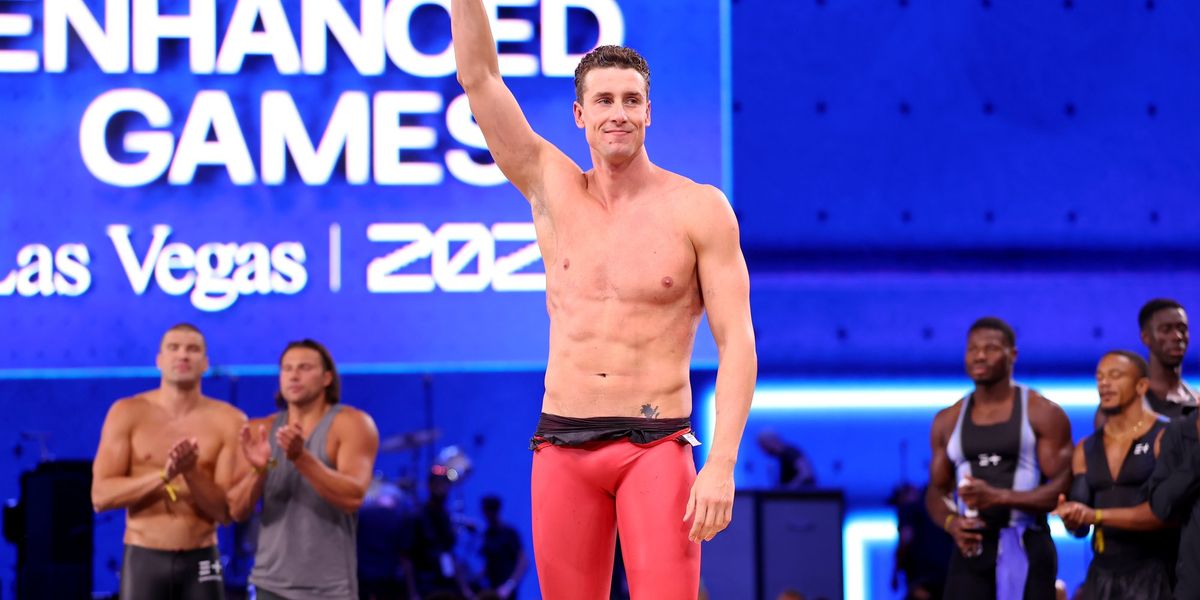
However, after days of hype surrounding the so-called “Doping Olympics,” only Greek swimmer Kristian Gkolomeev managed to cash in, producing a record-breaking swim in the men’s 50m freestyle. Backed by the Games’ enhancement programme and a controversial high-buoyancy bodysuit banned in conventional competition, Gkolomeev clocked 20.81 seconds, shaving seven-hundredths of a second off the official world record of 20.88 seconds held by Cameron McEvoy.
Beyond that moment, the event failed to deliver the flood of record-breaking performances many organisers had predicted. British swimmer Ben Proud came painfully close in the men’s 50m butterfly but narrowly missed the bonus after finishing in 22.32 seconds, just five-hundredths outside the world record. American swimmer Cody Miller also impressed following an intense eight-week cycle involving HGH and testosterone.
The biggest embarrassment for organisers came when clean athletes repeatedly outperformed enhanced rivals. American swimming star Hunter Armstrong stunned the field by winning the men’s 50m backstroke despite refusing to participate in the event’s enhancement protocols, dominating enhanced competitors with a winning time of 24.21 seconds.
A similar story unfolded on the track, where former world champion Fred Kerley, entering as a self-declared “non-enhanced” athlete, outclassed several drug-assisted rivals. Kerley ran 9.93 seconds in his 100m heat before winning the final in 9.97 seconds, finishing ahead of enhanced sprinter Emmanuel Matadi, who was supported by the Games’ specialist medical staff.
Critics of the Enhanced Games are now likely to seize on the results as evidence that traditional training and elite natural talent still outweigh artificial enhancement. While athletes struggled to meet the lofty expectations set by the organisers, the events inadvertently reinforced long-held beliefs about the integrity of sports.
In essence, the Enhanced Games may serve as a cautionary tale of how ambition can misfire, leaving a lingering question about the nature of competition itself and the lengths to which athletes will go in pursuit of glory.