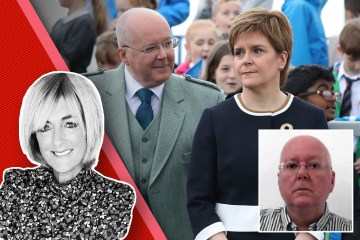
Nicola Sturgeon is facing intense scrutiny following revelations that her now-estranged husband, Peter Murrell, admitted to embezzling £400,000 from the Scottish National Party (SNP) to fund their luxury lifestyle, reports BritPanorama.
For nearly nine years, Sturgeon served as Scotland’s First Minister and SNP leader, known for her meticulous attention to detail. The fallout from Murrell’s actions has led many to question how she could have been unaware of the financial irregularities occurring under her leadership.
Following the admission of embezzlement, Sturgeon has emphatically denied any knowledge of her husband’s actions, insisting that she was in the dark about his spending. This assertion has drawn scepticism, especially given her previous public persona as a detail-oriented politician.
During a book festival in Ireland, Sturgeon expressed her distress over the situation, stating, “I have been lied to and I have been betrayed. I won’t be the last woman who has been betrayed by her husband.” She also remarked, “I know there are questions,” further acknowledging the public’s curiosity regarding how she was blindsided by Murrell’s extravagant purchases.
Sturgeon claimed ignorance of her husband’s lavish lifestyle, attributing it to her lack of involvement in domestic affairs. Critics have pointed out that her assertions seem contradictory, as photographic evidence exists of her in their kitchen. Furthermore, her claims of being oblivious to Murrell’s culinary purchases raise eyebrows.
Murrell, who served as the SNP’s chief executive for over two decades, pleaded guilty to embezzlement at the High Court in Edinburgh, with the case tracing back to a 2021 complaint regarding missing campaign funds. His fraudulent activities included extravagant purchases such as an £81,000 luxury car and a £182,000 spending spree on luxury brands.
The details surrounding Murrell’s spending have shifted attention towards Sturgeon, whose image as a principled politician may suffer irreparable damage amid allegations of negligence regarding party finances. In March 2025, she learned that there would be no further action against her, but critics argue that the Crown Office’s decision remains opaque and merit consideration.
Sturgeon has previously dismissed concerns of financial misconduct within the SNP, urging party members to be cautious about addressing what she characterized as unfounded doubts over the party’s financial standing. Such assurances now appear to undermine her credibility, given the extent of Murrell’s fraud during her tenure.
The ramifications extend to the SNP’s political capital, as both the Conservative Party and public watchdogs are calling for increased scrutiny of the party’s finances. Recent events have led to a public outcry for further investigation, which Sturgeon continues to resist.
As the SNP navigates these tumultuous times amidst a push for another independence referendum, the impact of this scandal on public trust and the party’s integrity remains uncertain.
The level of scrutiny on Sturgeon’s leadership and transparency will likely influence public perception of the SNP’s credibility, crucial for future electoral prospects.
This unfolding story emphasizes the necessity for accountability and transparency in political leadership, particularly in light of serious financial improprieties that undermine trust in democratic institutions.