Home Office confirms human trafficking among Harrods abuse survivors
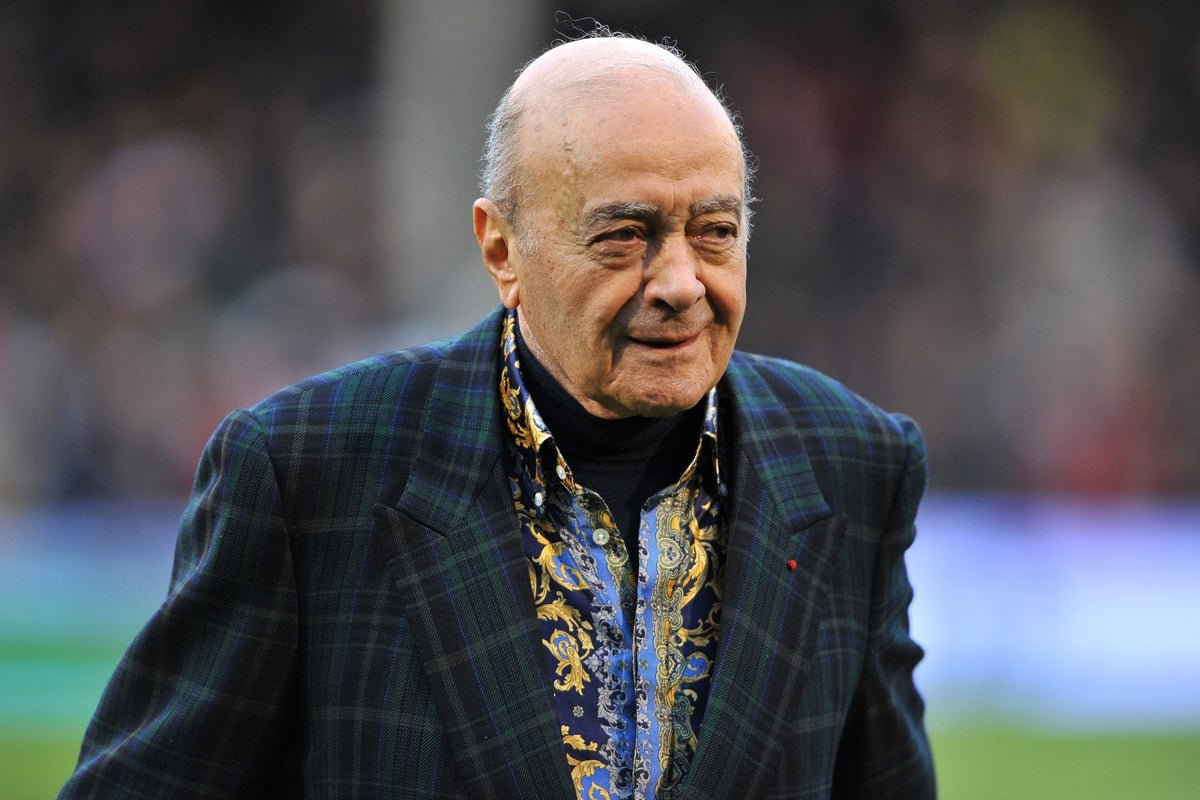
At least five survivors of sexual abuse at the hands of Harrods owner Mohamed al-Fayed are victims of human trafficking, the Home Office has confirmed, reports BritPanorama.
The survivors, whose experiences include both international and domestic trafficking, have received conclusive grounds decisions from the National Referral Mechanism (NRM), the UK’s official framework for identifying victims of modern slavery, including human trafficking, forced labour, and servitude.
Once a potential victim is referred to the NRM, the Single Competent Authority (SCA), part of the Home Office, processes the referral and decides on whether to officially recognise the individual as a modern slavery victim.
On 29 April 2026, it was reported by the BBC that one victim had received a positive conclusive grounds decision after reporting abuse suffered at the hands of Mohamed al-Fayed and his brother, Salah.
Since then, all four members of an advocacy group for Fayed survivors called No One Above have also received conclusive grounds decisions that they are victims of modern slavery: Justine, Elizabeth, Margo, and Isabella, all pseudonyms.
While these four have been confirmed by the Press Association (PA), it is understood that there are more survivors who have also received positive conclusive grounds decisions.
Their cases date back to as early as the 1990s, while the most recent incidents occurred after the 2010 sale of Harrods.
One survivor told PA they were recruited to a false role within Harrods, while two were hired for legitimate roles and subsequently selected for abuse off the shop floor.
Another survivor was employed as a domestic worker for Al Fayed after being recruited via a letting agency called Hyde Park Residence.
All five survivors were referred to the NRM by the charity Unseen UK.
This reporting framework allows victims to receive appropriate support and provides the government with vital data about modern slavery in the UK.
Justine, who worked at Harrods for more than three years in the 1990s, was trafficked and abused during that time.
She expressed feeling “shell-shocked” when she received the conclusive grounds decision in June, confirming her status as a victim of modern slavery.
Justine noted, “It’s not something I realised was happening to me at the time, so it’s all part of this journey that we’re on now in reliving this experience, and really understanding what happened to us, which is very difficult.”
“But it’s a really significant thing, getting that decision, seeing it in writing that you were a victim of modern slavery and trafficking is very… it’s really shocking to read,” she added.
According to Justine, this is “concrete confirmation” from the Home Office that Fayed survivors were victims of human trafficking, highlighting a broad scope of experiences ranging from domestic to international trafficking.
She emphasised that Harrods’ position—that the abuse was merely the actions of “one bad man” after his death—is an oversimplification.
Elizabeth, another Harrods employee, received her conclusive grounds decision confirming her status as a victim of modern slavery in May.
She stated that all the survivors in the Fayed case are victims of human trafficking, as they were part of a system that recruited, exploited, and silenced victims.
“Everybody connected with this case is a trafficking victim because it was all one system. You can’t say that victim A wasn’t trafficked and victim B was,” she said, indicating a misunderstanding within the Metropolitan Police regarding the definition of trafficking.
Margo, who worked as a domestic worker for Al Fayed after the sale of Harrods, received a positive conclusive grounds decision in July. She described a lack of awareness about her status as a victim of trafficking, stating that the Fayed trafficking network extended beyond Harrods.
“This was Balnagown, Saint-Tropez, Fayair, Fulham Football Club, Hyde Park Residence. Everywhere he went, he had enablers,” she remarked.
Isabella, who worked in the chairman’s office at Harrods in 2001, received her conclusive grounds decision in May. She voiced concerns about the public perception of the situation, asserting that it involved a wider network of perpetrators rather than solely focusing on Mohamed Fayed.
The Home Office has been approached for comment regarding these cases. More than 400 allegations of sexual misconduct have been made against Fayed, spanning from 1977 to 2014, including sexual assault, rape, sexual exploitation, and human trafficking. The Met Police are currently investigating at least 156 victims who have contacted them directly.
Conducted under the investigation known as Operation Cornpoppy, efforts focus on individuals who may have facilitated or enabled Fayed’s crimes, with four individuals questioned to date, 19 months after the investigation commenced.
As these revelations continue to unfold, the implications for accountability within prominent institutions remain significant.