New York declares measles disaster emergency amid outbreak
New York Governor Kathy Hochul declared a statewide disaster emergency on Monday over a measles outbreak, the first such declaration by a U.S. state since cases began surging in 2025, reports BritPanorama.
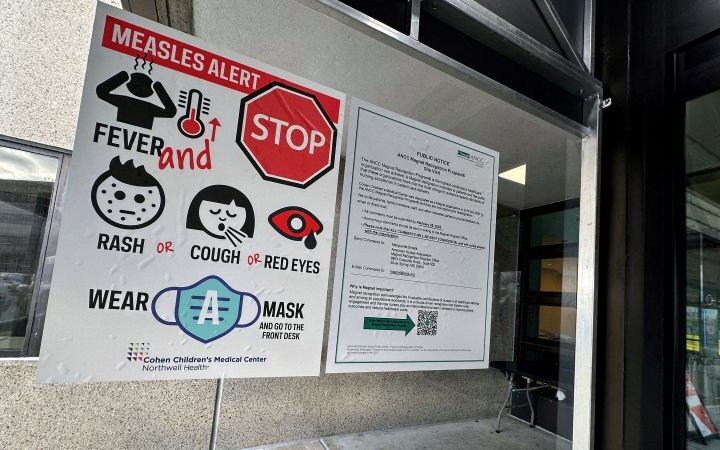
The state has expanded the pool of health professionals authorized to administer measles-mumps-rubella (MMR) vaccines as the number of cases rises in rural communities. As of October 3, New York has reported 108 measles cases this year, including 92 cases since July 15, primarily in under-immunized rural areas across 18 counties, significantly higher than typical annual levels.
Of the reported cases, seven have been in New York City and 101 elsewhere in the state. Local health departments have administered over 1,000 MMR doses in rural areas since mid-July. Measles was declared eliminated in the U.S. in 2000, with an average of just 180 cases per year over the subsequent 25 years, according to federal data.
However, measles has made a historic resurgence in 2025. The New York outbreak is notable but not the largest in recent years; at least 762 cases were linked to an outbreak in West Texas last year, while an outbreak in South Carolina reached nearly 1,000 cases before being declared over in April. Neighboring Pennsylvania is also facing a rapidly spreading outbreak, reporting 977 cases and five deaths as of October 2, concentrated in rural counties bordering New York, with health officials indicating the total has surpassed 1,000 cases—the largest outbreak in over three decades.
The Centers for Disease Control and Prevention reported that the U.S. is experiencing its worst year for measles since 1991, with nearly 3,900 cases documented. Governor Hochul’s order allows registered nurses to conduct tests for suspected measles and enables pharmacists to vaccinate children as young as two. All MMR vaccinations must be reported to state or New York City immunization registries within 72 hours, with adult consent for such reporting waived. Vaccination itself, however, still requires consent from the patient or a legal guardian. The emergency declaration took effect on Monday and is set to run through November 4.
The outbreak highlights significant public health challenges, revealing gaps in immunization coverage, particularly in communities with limited access to healthcare services.