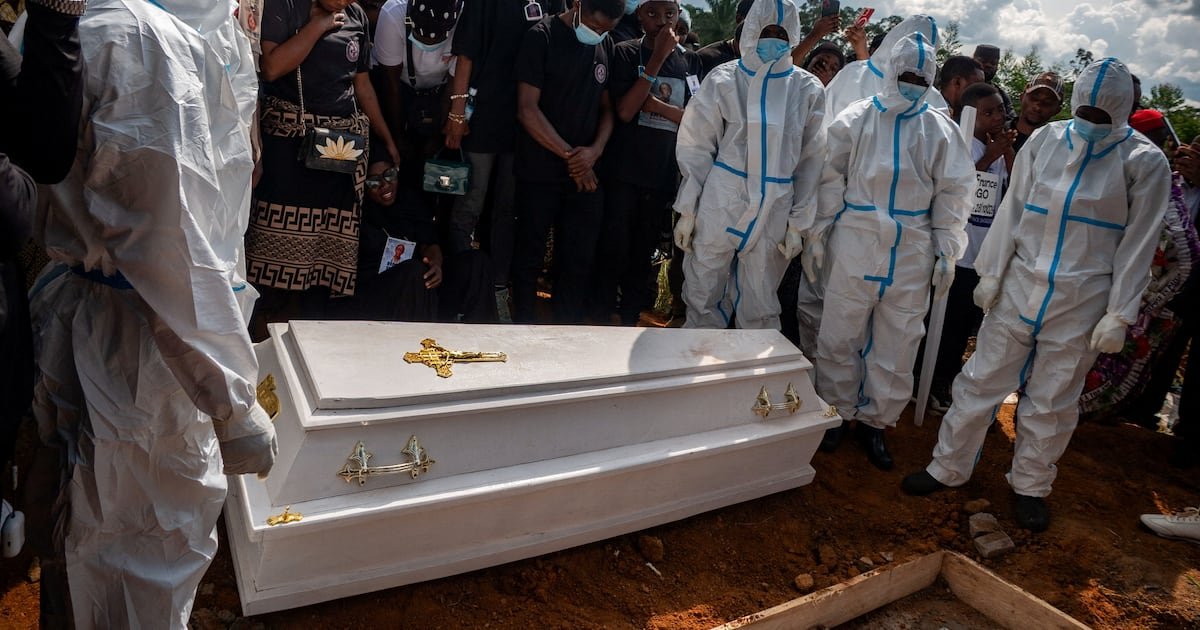
The Ebola outbreak in the Democratic Republic of the Congo remains a significant concern, six months after its declaration, according to Doctors Without Borders’ (MSF) emergency co-ordinator. Anna Halford, actively managing the organization’s efforts in the DRC, reported that most cases are still “surprise cases,” indicating ineffective contact tracing in tracking the virus’s spread, reports BritPanorama.
The World Health Organisation designated the outbreak a public health emergency in May, with the virus thought to have been circulating since the beginning of the year. MSF’s international president, Javid Abdelmoneim, highlighted serious deficiencies in the response, noting that over 5,400 lives have been lost due to the outbreak.
Abdelmoneim stressed the need for “urgent improvements in oversight, staffing, and operational support,” urging Congolese authorities to ensure that their commitments to transparency result in tangible change. Furthermore, previous reports suggested that out of $962 million allocated for Ebola efforts, $700 million remains unaccounted for.
Unaccounted money
MSF noted that crucial resources, despite substantial international funding, often do not reach frontline workers who lack essential equipment. Issues reported include untrained personnel, absent fuel for ambulances, and community health workers who have not been paid. Halford remarked on the dire situation, stating some healthcare workers operate without even basic supplies.
She elaborated that many healthcare workers are inadequately equipped, noting, “They’re in flip flops,” while surveillance teams lack fuel for effective operations. There is a clear call for accountability in the response efforts, underscoring that improvements are essential to bring the outbreak under control.
Halford pointed out two critical indicators of a faltering response: most cases in treatment centres arise unexpectedly, lacking known links to other infections, and a concerning number of deaths occur in the community, offering the disease further opportunities to spread.
The situation is compounded as the DRC grapples with conflict, which further complicates efforts to contain the virus. With approximately 11,000 infections reported, this outbreak is now the second largest in history, behind the 2014-16 West African outbreak.
Conflict complicating response
The virus, known to cause severe haemorrhagic fever, initially spanned the North Kivu and Ituri provinces but has since affected more areas, requiring diverse strategies for containment. Halford remarked on the escalating complexity of the outbreak, noting it now spans eight provinces, with five still experiencing active cases.
While a combination of challenges—including conflict—hinders the response, she asserted that controlling the outbreak demands more than just financial resources; it requires a strategic allocation of support where it is most needed. Despite several failings, Halford acknowledged progress, including enhanced information sharing and community engagement, while emphasising the need for basic improvements before confidently asserting control over the outbreak.
As of late October, MSF reported employing nearly 1,500 staff in the DRC, with over 80% being Congolese. Although the outbreak poses a serious risk locally, Ebola remains a relatively low threat globally due to its transmission characteristics, typically requiring direct contact for spread.
Experts, including Ali Alessandro Ayach, suggest that global risk remains modest, provided early detection measures continue to effectively prevent cross-border transmission. Nevertheless, caution persists, with a report highlighting that failures in pandemic preparedness could lead to another global health crisis, stressing the importance of learned lessons from previous outbreaks.