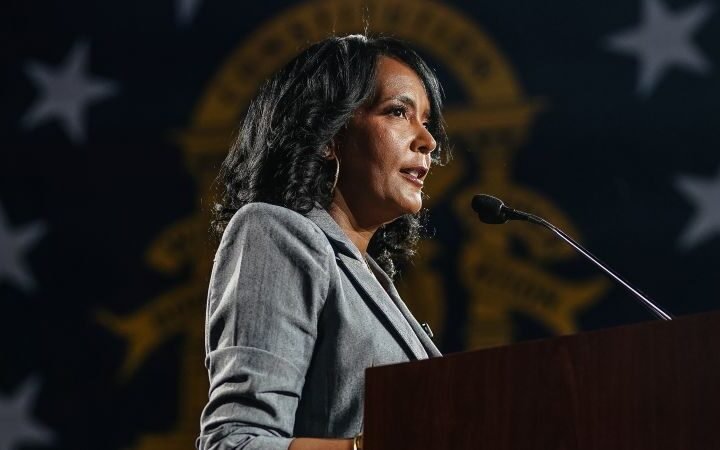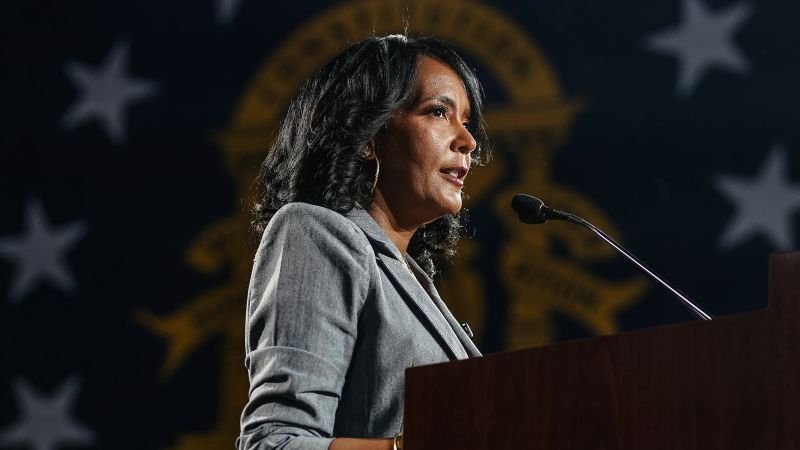
In a highly anticipated election, Democrat Keisha Lance Bottoms has secured victory in Georgia’s gubernatorial race, promising to enhance government health insurance access for low-income adults, reports BritPanorama.
During her victory speech, Bottoms addressed supporters, stating, “This win is for the caregiver who can’t afford healthcare and needs Georgia to finally expand Medicaid.” Her win aligns with a national Democratic sweep that is projected to cement the party’s control of Congress while also ushering other Democratic governors into office who advocate for Medicaid expansion.
Bottoms joins a cohort of governors-elect, including Cindy Holscher in Kansas, Gina Hinojosa in Texas, and David Crowley in Wisconsin, who each campaigned for broader access to the joint federal-state insurance program, which could potentially cover over a million individuals in their states according to data from KFF, a health information nonprofit.
However, the path to expanding Medicaid is fraught with challenges. The incoming Democratic governors will confront political hurdles, particularly in light of recent federal budget changes that eliminated financial incentives for states expanding Medicaid and imposed stricter work requirements.
Federal changes
The Affordable Care Act, popularly known as Obamacare, mandated that states expand Medicaid to millions of low-income adults; however, a 2012 Supreme Court ruling made it optional. To date, 40 states and Washington, D.C. have opted for expansion, with 2023 seeing North Carolina join the ranks. Conversely, ten states, including Georgia and Wisconsin, have resisted full expansion but have nevertheless provided some form of coverage to groups eligible under the program.
Recent legislative shifts have also complicated expansion efforts. The One Big Beautiful Bill Act enacted by the past administration curtailed federal financial bonuses and instituted new restrictions, which could further impede the future of Medicaid in states like Wisconsin. Estimates by the Wisconsin Hospital Association suggest that fully expanding Medicaid might jeopardize substantial federal funding vital to the state’s health system.
Bobby Peterson, a Madison-based attorney, argues that comprehensive Medicaid expansion in Wisconsin could face significant obstacles, even with Democratic control of the governor’s office and state legislature come January. “These are going to be hard conversations,” he noted.
Political realities and uncertainties
The trend of enrollment in the Obamacare marketplaces is notably increasing in non-expansion states; for instance, over 4 million individuals in Texas have registered for 2026 plans. Advocates of maintaining private insurance have expressed concerns about the implications of expanding Medicaid for individuals who could be served through private options.
Former Democratic Congressman Beto O’Rourke argues that Medicaid expansion is likely to be a focus for Hinojosa, citing her commitment demonstrated throughout her campaign. “The stories of people she met across the state struggling without healthcare really made an impact on her,” he added.
Despite the Democratic successes in winning key offices, Republicans still hold significant power in the Texas state Senate, making comprehensive Medicaid expansion uncertain. John Henderson, head of the Texas Organization of Rural & Community Hospitals, reflected on the challenges ahead, noting, “It’s been several sessions since there was even a real attempt to discuss Medicaid expansion.”
The push for Medicaid expansion in Kansas also faces headwinds, as Holscher’s victory occurs under a context where Republican control persists in significant legislative chambers. The Holscher campaign is yet to outline a detailed strategy for navigating these dynamics, although industry advocates are cautiously optimistic about the potential for renewed discussions regarding expansion under a more varied Democratic leadership.
While recent political shifts lend some hope for Medicaid expansion advocates, the complexities introduced by federal policy changes and state-level dynamics suggest that deeper negotiations will be required to realize a broader safety net for uninsured Americans.