Estonia has persuaded the European Union to leave the Solikamsk Magnesium Works and its director, Ruslan Dimukhamedov, outside a new sanctions package. The reason is industrial dependence: the Russian plant supplies material to NPM Silmet, an Estonian facility described as the EU’s only industrial processor of separated rare-earth elements.
The exception keeps a supply chain worth more than $50 million in operation, based on customs data for 2022 to 2024. It also exposes a central weakness in sanctions policy: the lack of an immediate substitute can become the reason to preserve the very dependence that Europe says it wants to end.
A supply line Estonia says it cannot yet replace
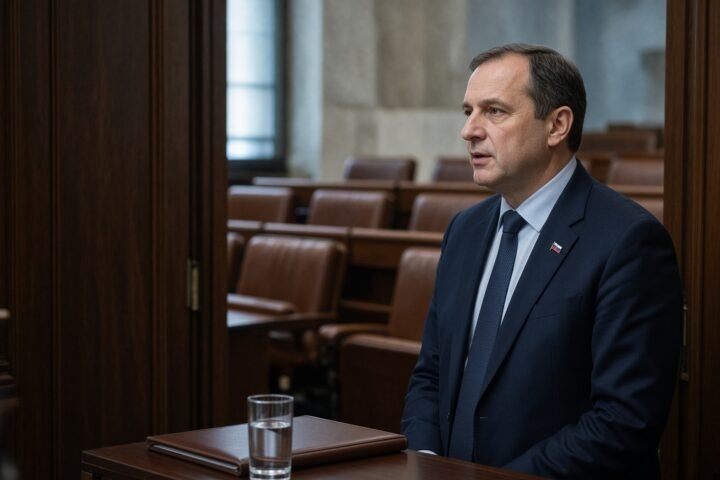
Reports in late September and October 2026 said EU ambassadors had removed the Solikamsk plant, commonly known as SMZ, and Dimukhamedov from an agreed sanctions list after a request from Tallinn. Kerstin Lepik, press secretary of Estonia’s permanent representation to the EU, confirmed that her government had sought the exclusion.
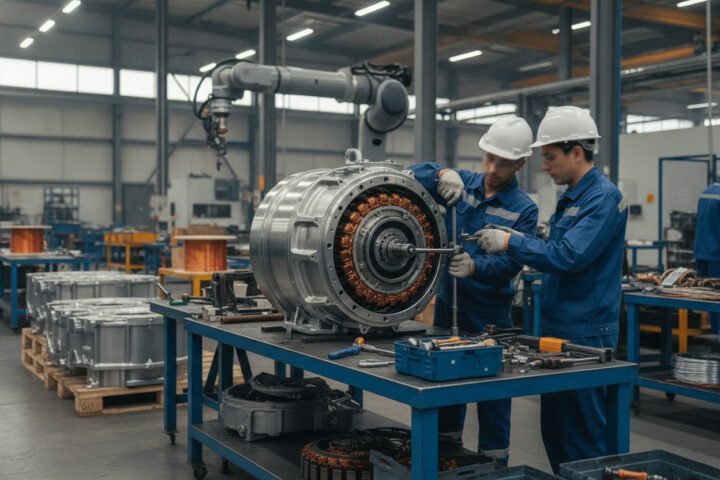
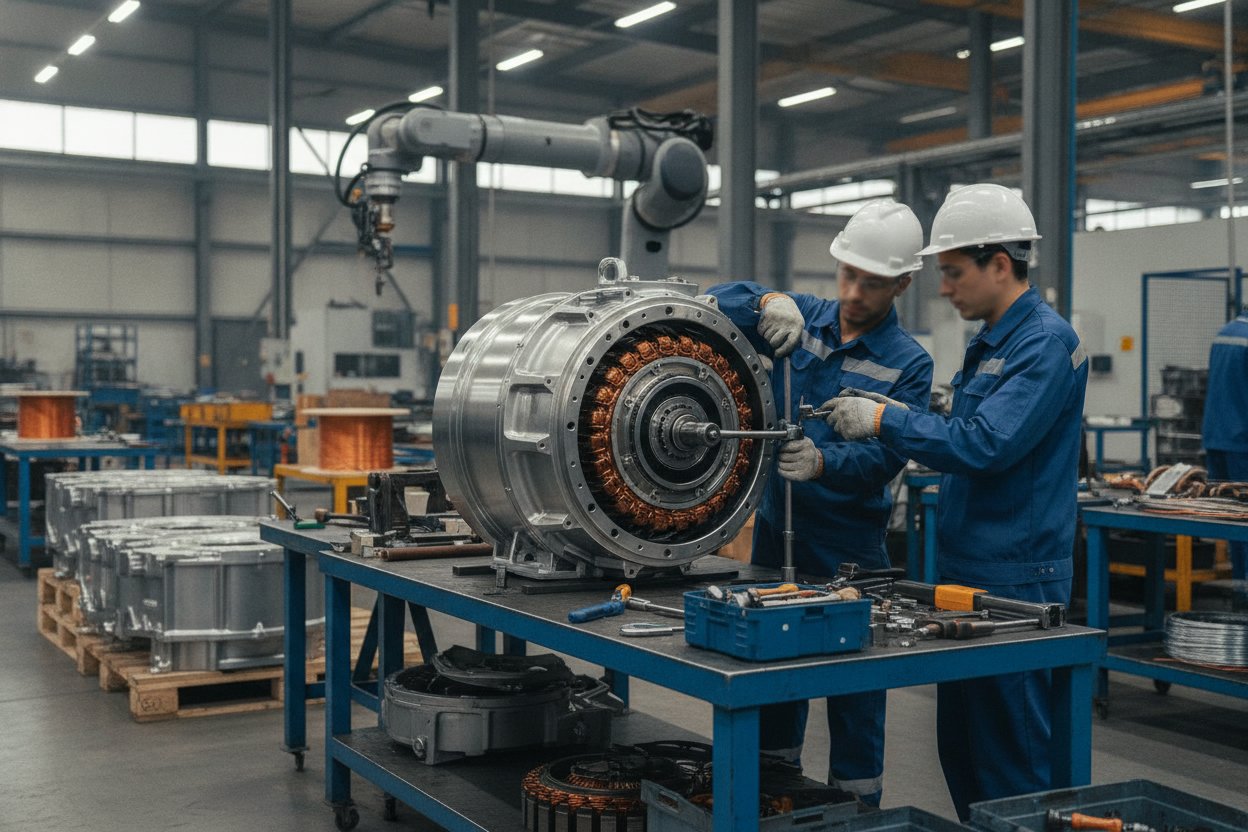
Her explanation focused on NPM Silmet in Sillamae. The company separates rare-earth elements on an industrial scale, and its output is used by European manufacturers of electric vehicles and wind turbines, as well as businesses in the electronics, automotive and aerospace sectors.
SMZ currently provides strategically important raw materials to the Estonian plant. Customs figures cited in reporting put the value of deliveries between the two companies at more than $50 million over the three years from 2022 to 2024. This was therefore an established commercial relationship that continued after Russia’s full-scale invasion of Ukraine, rather than a one-off shipment.
Lepik said NPM Silmet was actively seeking alternative sources. Estonia intends to return to the question of including the Russian company in the sanctions list next year. The arrangement is consequently presented as temporary: maintain supply while a replacement is found.
The decision was reported by Delfi Ärileht and The Insider.
Why SMZ carries more weight than a normal supplier
SMZ is part of Rosatom’s corporate structure. It produces magnesium, compounds of rare-earth elements, and niobium and tantalum compounds. The available information describes it as Russia’s effective monopoly producer of several of these materials.
They have legitimate civilian uses, but they are also important to advanced manufacturing. Rare-earth compounds, magnesium and specialist metals can be used in electronic equipment, special alloys and aerospace technology. Some of those products may have military applications.
That dual-use potential makes the plant more significant than an ordinary industrial supplier, but it does not establish how much of SMZ’s production goes directly to Russian defence programmes. Nor does the available information show how the proceeds from sales to NPM Silmet are spent. The more precise concern is structural: payments continue to support a Russian producer linked to a major state-controlled industrial group, while that producer retains access to a European customer.
The distinction matters. A material bought by NPM Silmet could ultimately be used in a car, a wind turbine, an electronic component or aerospace equipment. That does not mean the Estonian company or its government intends to support Russia’s war effort. It does mean the transaction provides revenue to a supplier embedded in Russia’s wider industrial system, at a time when the country’s economy is increasingly organised around wartime priorities.
In such circumstances, the boundary between civilian production and military capacity is difficult to draw. Maintaining the financial and industrial strength of a strategic producer is not the same as proving direct weapons financing, but it can still limit the economic pressure that sanctions are designed to create.
The exemption’s built-in trap
Estonia’s immediate argument is practical. A sudden cut-off could disrupt NPM Silmet, a specialised facility with customers across several European industries. If no alternative source is ready, imposing sanctions could create a shortage with consequences beyond one company.
But the same calculation creates a self-reinforcing loop. Because the Russian material is difficult to replace, restrictions are delayed. Because restrictions are delayed, the existing supply chain continues to function and the urgency of completing the switch can weaken. The absence of an alternative becomes both the justification for the exemption and a reason the dependence survives.
For SMZ, the delay preserves a European outlet, a significant customer and continued earnings from strategic materials. For NPM Silmet, it protects short-term continuity. For the EU’s sanctions policy, it means that pressure on a strategically positioned Russian producer remains limited while European industry searches for a way out.
The Rosatom connection sharpens that tension. SMZ is not described as an independent trader detached from the Russian state, but as part of a large state-controlled industrial structure. Continuing its sales cannot automatically be labelled direct funding for weapons production. It does, however, keep commercial links and productive capacity within a Russian system with national strategic importance.
The value of the promised review in 2027 will depend on what happens before it. Finding an alternative on paper will not be enough: NPM Silmet will need reliable supplies, adequate volumes and consistent quality. If those conditions are not met, a measure introduced as a short-term safeguard could become a recurring exception, renewed whenever the replacement appears too costly or disruptive.
For now, SMZ and its director remain outside the new EU sanctions list, and NPM Silmet can continue to source material from Russia. The substantive test is whether Europe uses that breathing space to build a supply chain that makes sanctions workable—or allows industrial dependence to dictate another delay.