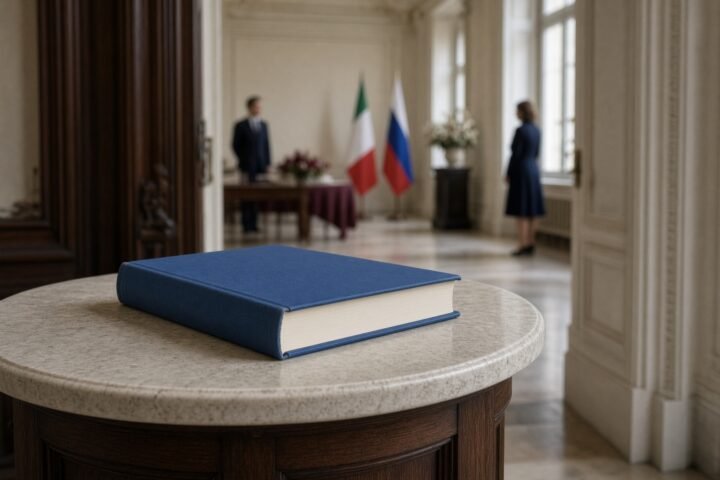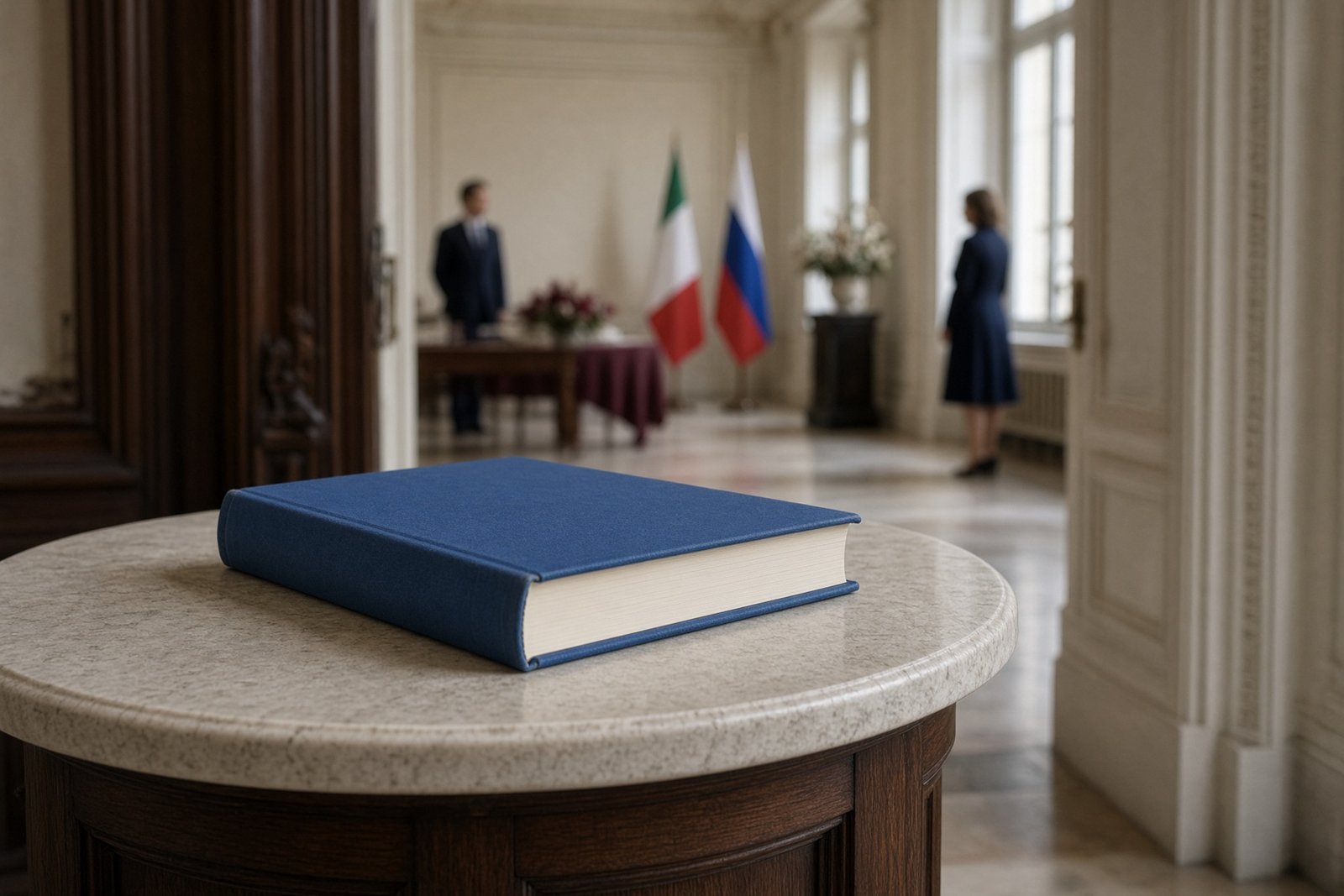
A five-volume history of Russia and Italy has been given an unusually formal launch: the first book was presented at Italy’s embassy in Moscow, with the Italian ambassador and a senior Moscow academic among those attending.
The event on 6 October 2026 brought together Italian diplomacy, a Russian university and the Moscow publisher Eksmo around a work by Italian banker and historian Antonio Fallico. Its immediate subject was history. Its wider significance lies in how cultural and academic contact can retain institutional visibility while relations between Russia and Europe remain under severe strain.
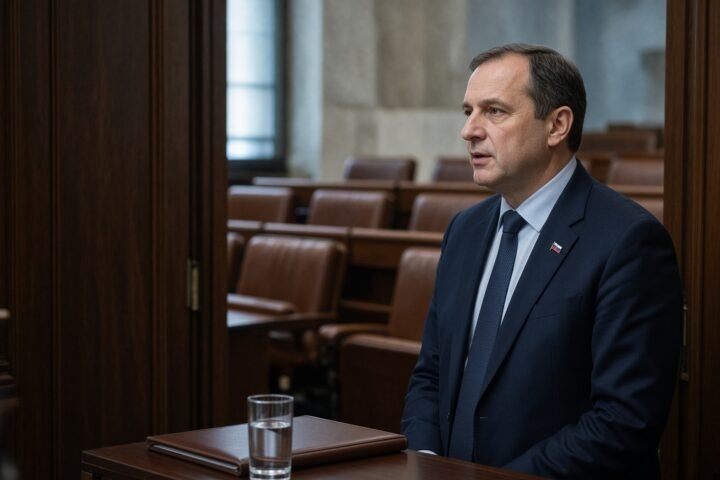
The presentation was attended by Stefano Beltrame, Italy’s ambassador to Russia, and Lev Belousov, acting dean of the history faculty at Moscow State University. Foreign diplomats and the media were also present. The Russian literary outlet God Literaturi reported on the launch, describing the project as a view of Russia through Italian eyes, expressed in Russian.
Why the setting matters
A book launch inside an embassy carries a different weight from a private event in a bookshop or university department. Diplomatic premises lend a project official visibility and suggest that the relationship it explores retains institutional importance. The presence of an ambassador adds to that impression, although it does not establish that he endorses every argument in the book or the policy of the Russian government.
That distinction is important. The presentation alone does not prove a covert operation, unlawful conduct or a coordinated campaign to influence Italian policy. Nor does an appearance by an Italian diplomat demonstrate that Rome has adopted the project’s interpretation of bilateral history. What is clear is narrower: a publication by an Italian author received a diplomatic platform in Moscow and was placed alongside prominent Russian academic and publishing institutions.
Such arrangements can still have political effects without being presented as political activity. History, literature and university cooperation offer a less confrontational language for maintaining relationships. Instead of discussing strategic interests or sanctions, participants can speak about shared memory, intellectual exchange and longstanding ties between two countries.
That is the basic mechanism of cultural diplomacy. It does not require a single speech to alter government policy. Its potential value lies in keeping contacts, reputations and networks alive, creating settings in which engagement appears ordinary even when official relations are deeply contested.
The usefulness of historical continuity
The title Russia and Italy places the relationship between the two countries at the centre of the narrative. A project framed in those terms can draw attention to periods of collaboration and cultural exchange. It may also encourage audiences to view present-day relations through a longer historical lens, with current disputes occupying less of the story.
That does not make historical research illegitimate, nor does it mean that every account of Russian-Italian relations serves the interests of the Kremlin. The relevant questions are how the past is selected and presented, which institutions give the project authority and what happens to the relationships built around it.
For Moscow, the potential benefit of this kind of setting need not be an immediate change in Italian or European policy. A cultural project can preserve access to foreign interlocutors and provide a respectable framework for continued contact with academic, business and political circles. It can also make a future argument for renewed engagement sound less like a concession and more like a return to an established relationship.
This is why cultural activity can attract political scrutiny even when its participants describe it in entirely academic terms. A book, lecture or historical series may create no immediate policy outcome, yet still help determine which relationships remain visible and which narratives continue to circulate.
A channel that could outlast the ceremony
The 6 October event connected four identifiable elements: Fallico as the Italian author, Italy’s diplomatic mission, Moscow State University and the Russian publisher Eksmo. That combination gave the first volume a profile beyond that of an isolated commercial publication. It also allowed Russian media to present an image of continuing cultural dialogue with Italy at a time when many other forms of contact are politically difficult.
European sanctions and the deterioration of relations with Moscow have restricted numerous political and economic channels. Cultural and academic exchanges are not always affected in the same way. As a result, they can become some of the few areas in which institutions and individuals continue to meet publicly.
That continued contact can be viewed in two ways. It may simply reflect a desire to preserve scholarship and communication despite political disagreements. It may also provide useful infrastructure for those seeking to normalise relations with Russia or argue for a softer approach. The available facts do not show which of these outcomes, if either, will follow from Fallico’s project.
The distinction will become clearer with time. The remaining four volumes may reveal whether the series receives comparable diplomatic or academic backing. Its reach will also depend on whether it gains an audience in Italy, enters public debate or remains largely within Russian publishing and university circles.
For now, the concrete development is a historical work with Italian origins receiving a formal diplomatic launch in Moscow. The ceremony did not demonstrate a completed influence operation. It did demonstrate how a book can keep official visibility and cross-border access in place when political relationships have narrowed—and why the next stage of the project may matter more than the launch itself.