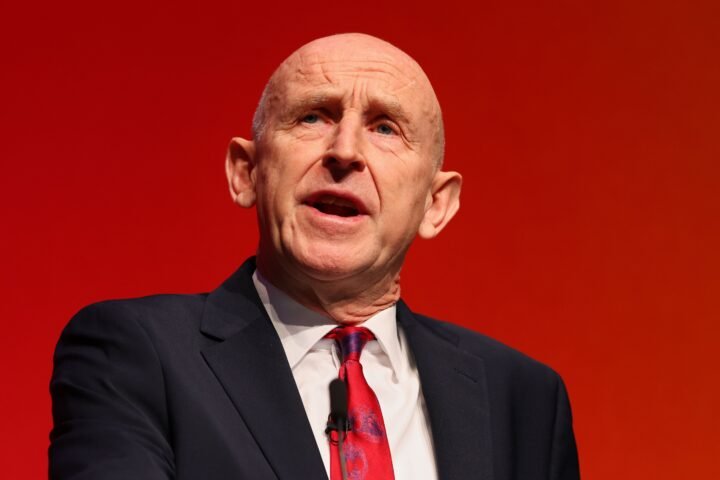
Chancellor John Healey warned to implement spending cuts for military funding increase
Chancellor John Healey has received a strong admonition from the International Monetary Fund (IMF) to implement significant spending cuts across government departments in order to facilitate a military funding boost, reports BritPanorama.
The IMF underscored the necessity for Mr. Healey to be transparent with voters regarding the required austerity measures. It noted that with tax burdens in Europe already nearing their limits, the government must make hard choices about resource allocation.
Arriving at the annual IMF meeting in Bangkok, Mr. Healey faced ongoing pressure, particularly as discussions intensified around boosting defence spending to 3% of GDP by 2030. However, detailed plans from Labour will not be unveiled until next year.
IMF official Rodrigo Valdes emphasized the urgency of addressing budget cuts when prompted on financing sources by stating that “difficult trade-offs” are unavoidable. He pointed to Europe’s already high revenue ratios, complicating the pursuit of additional funding.
“It distorts at the end of the day, so the discussion about the social contract behind spending is very, very urgent in the sense that… less spending… part of the new pressures that you will have from different sources,” he added.
The UK’s current government commitment remains to reach the NATO target of 3.5% of GDP by 2035, leaving Parliament divided on immediate defence spending strategies. Conservative leader Kemi Badenoch has committed to achieving the 3% target by 2030, while Labour attempts to refine spending priorities have met resistance.
This situation echoes last year’s efforts by Labour to decrease the benefits bill by just £5 billion, which were undermined by a rebellion from backbench members. As political discourse surrounding fiscal responsibility continues, the government’s capacity to balance defence needs with public expectations remains under scrutiny.
Looking ahead, the debates regarding responsible budget management and the UK’s military funding trajectory will be pivotal in the lead-up to future elections.
In these financially precarious times, the UK faces significant challenges in reconciling its defence commitments with the pressing demands of public spending. The interplay of military readiness and social welfare will likely dominate political narratives as the government navigates this complex landscape.