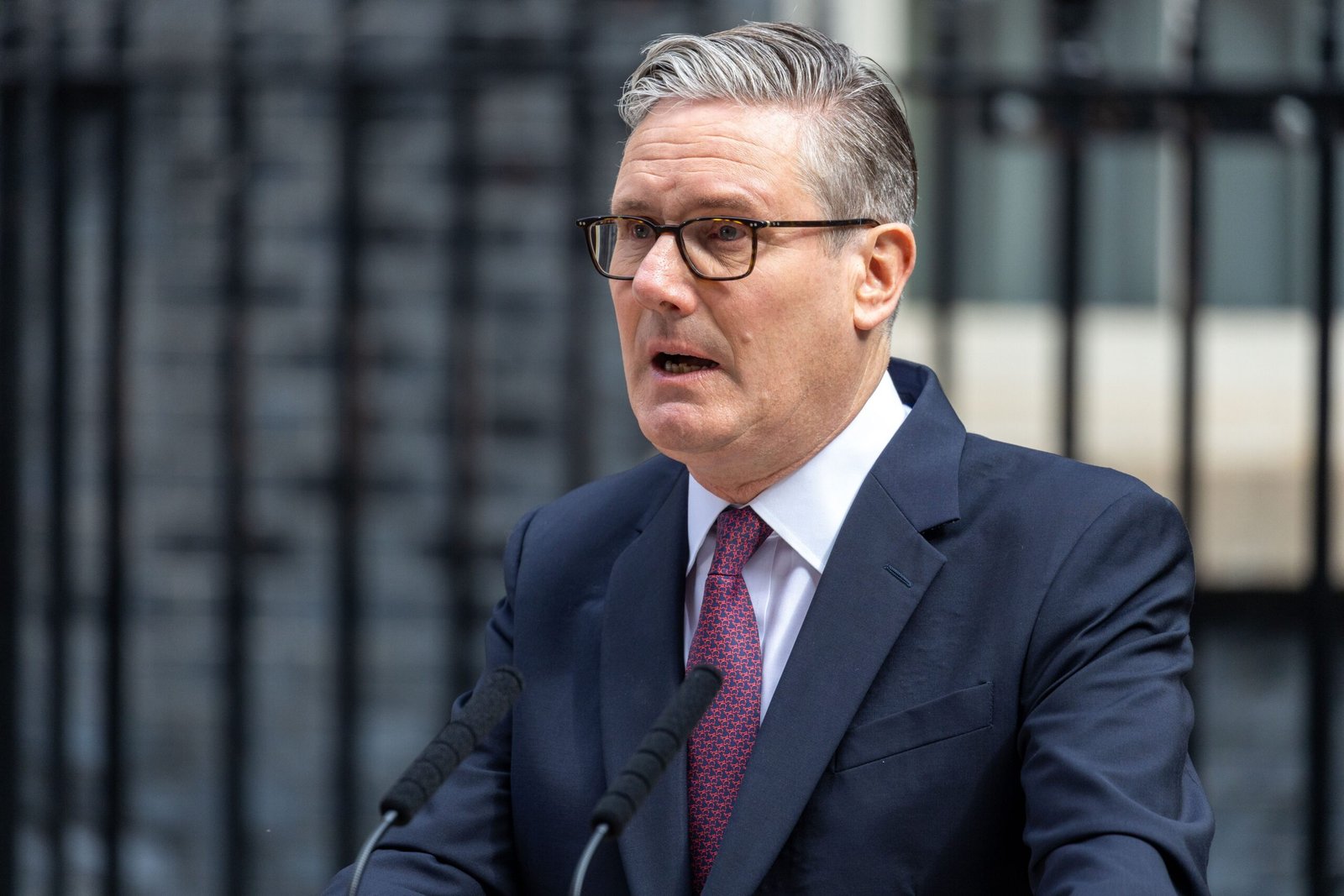
Keir Starmer resigns as Prime Minister after two years
Sir Keir Starmer has announced his resignation as Prime Minister of the United Kingdom, a decision made public during a morning address outside Downing Street, reports BritPanorama.
The announcement follows a period of significant political pressure, with Starmer indicating that he will formally step down from No10 by September. His resignation speech reflected on his leadership, stating, “The question my party is asking now is whether I am best placed to lead us into the next general election.” He acknowledged the response from his parliamentary party, accepting it “with good grace.”
Starmer explained that his decision was motivated by a commitment to place the country first, adding, “Every decision I’ve taken has been about putting the country I love first.” He has already informed His Majesty the King of his choice to resign from both his role as Prime Minister and the leadership of the Labour Party.
In the wake of Starmer’s resignation, Andy Burnham has emerged as the frontrunner to succeed him, enjoying increasing support from Labour MPs after a recent by-election victory. The Labour Party’s National Executive Committee is expected to establish the rules for a leadership contest, with nominations slated to open on July 9. Starmer indicated that the leadership transition would be completed before Parliament reconvenes after the summer recess, ensuring an “orderly handover.”
While the path forward remains uncertain—whether a competitive leadership battle will emerge or if Burnham will gain consensus support—Labour’s significant majority in Parliament means that a general election is not anticipated immediately. The new leader will automatically assume the role of Prime Minister, shaping the party’s trajectory moving forward.
This transition in leadership marks a significant moment in UK politics as Labour navigates the implications of Starmer’s tenure and sets the course for its future strategy.
In this shifting political landscape, the dynamics within the Labour Party will play a crucial role in determining how effectively it can respond to the challenges ahead, especially as public sentiment and party unity are tested during this transitional phase.