Alan Judd, born in 1946, transitioned from a career in the Army and the Foreign Office to become a full-time writer, leveraging his military and diplomatic experience in his works, which include the Charles Thoroughgood series of spy novels, following the protagonist through his experiences in the Army and the Cold War era intelligence service. Judd has also authored biographies, notably of MI6 founder Mansfield Cumming, and his latest novel, No 1 St James’s Park, is the second in his new Emily Grey series, centring on a Cambridge graduate recruited by a fledgling MI6 during the First World War, reports BritPanorama.
In this context, Judd reveals the five classic spy novels that have significantly influenced the genre and his own reading preferences.
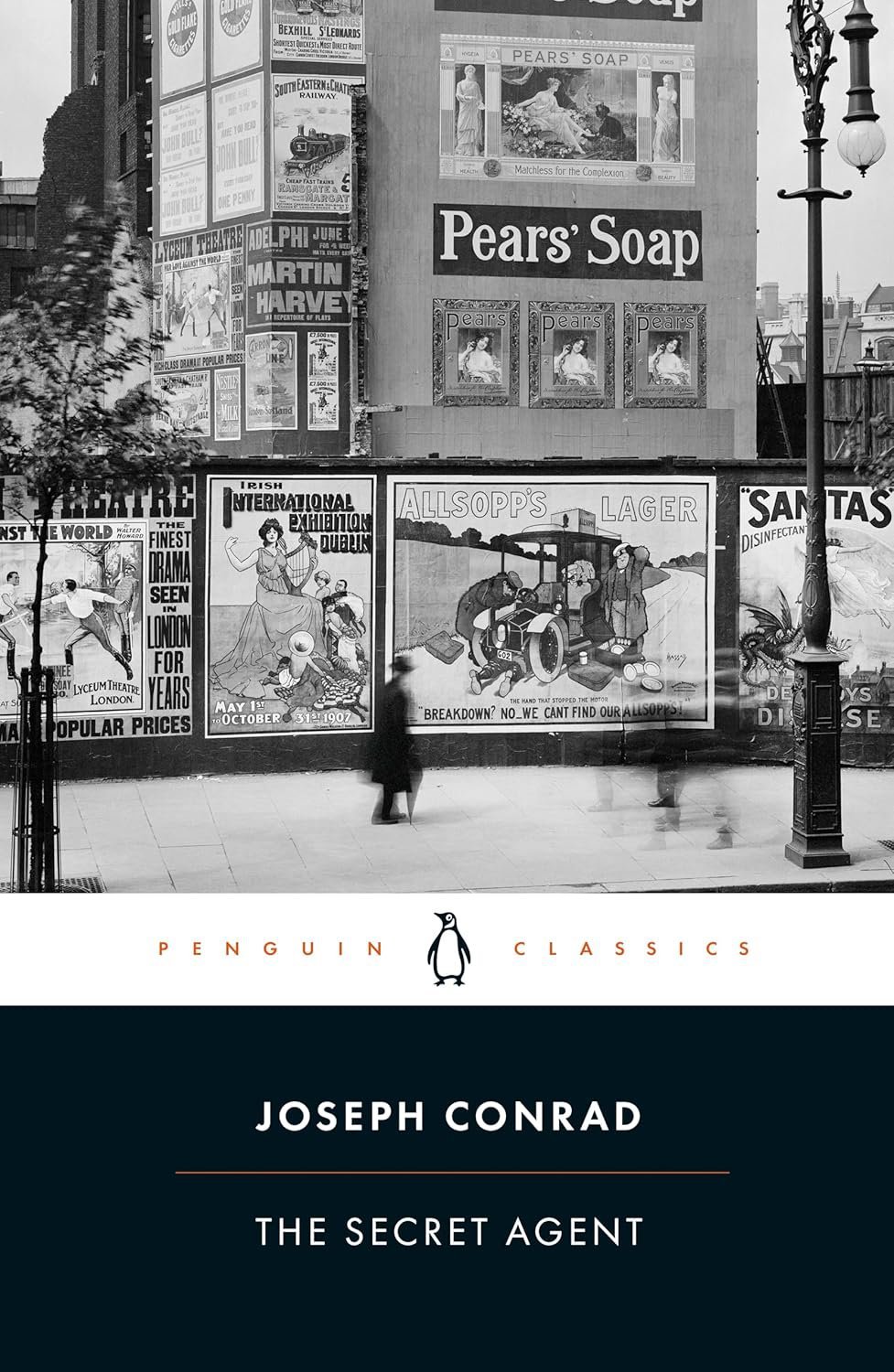
The Secret Agent by Joseph Conrad
“Inspired by an 1894 anarchist bombing, Joseph Conrad’s novel infuses the early spy genre with the introspection and moral ambiguity found in more mainstream literary works.
“Adolf Verloc, a shabby shopkeeper and pornographer, acts as an agent provocateur who infiltrates an anarchist cell on behalf of the Russian embassy. Tasked with inciting the anarchists to blow up the Greenwich Observatory, his actions trigger a cascade of fatal unintended consequences.
“A wonderfully dark and perceptive book.”
Ashenden: Or the British Agent by W Somerset Maugham
“Based on his First World War experience working for British intelligence in Switzerland and Russia, Somerset Maugham’s stories accurately depict much of spying as the attempt to entice individuals to betray secrets or comply with requests.
“In one instance, Maugham’s character Ashenden befriends a British couple residing in neutral Switzerland, unaware that the man is a German agent. Ashenden’s mission is to persuade him to cross the border into France for arrest and execution. By emphasising the dynamics between case officer and agent, Maugham creates one of the earliest realistic portrayals of spy fiction.”
Casino Royale by Ian Fleming
“Fleming’s James Bond novels represent the apex of the heroic adventure tradition in spy writing.
“In this initial installment, with its lavish backdrop and intricate detailing that became his hallmark, Bond is tasked with bankrupting the Russian agent Le Chiffre at the gaming tables. While he succeeds, the repercussions were unforeseen by both him and his superior, M.
“Throughout the series, Bond, an MI6 officer, engages in very little actual spying; he operates more like a hitman, drawing heavily on Fleming’s wartime intelligence background.”
Our Man in Havana by Graham Greene
“Graham Greene’s satire on espionage and the gullibility of MI6 officials introduces a rare element of humour to spy fiction. A financially struggling British vacuum cleaner salesman in Havana is recruited by MI6 to report on Cuba. Finding little of substance to report, he concocts an entire fictional web of sub-agents and secret weapons, deceiving his new employers.
“Greene’s narrative is inspired by an actual successful MI6 deception operation conducted in WW2 Lisbon against the Germans, knowledge Greene gained from his time working on MI6’s Lisbon desk, adding an additional layer of irony to his portrayal.”
The Spy Who Came in from the Cold by John le Carré
“John le Carré’s third novel stands as perhaps the most well-known Cold War spy narrative of the later 20th century.
“Its MI6 protagonist, Alec Leamas, pretends to unravel in order to be recruited by East German Intelligence, aiming to convince them that their leader is a British mole. However, Leamas often finds himself a pawn in a more complex game than anticipated.
“The novel also sets the stage for Leamas’s controller, George Smiley, to evolve into one of the most famous fictional spies.”
‘No 1 St James’s Park’ by Alan Judd is published by Simon and Schuster, £20