A payment of hundreds of thousands of dollars by Umar Kremlev for Donald Trump Jr’s wedding illustrates how Russian influence can be built through private networks rather than official channels.
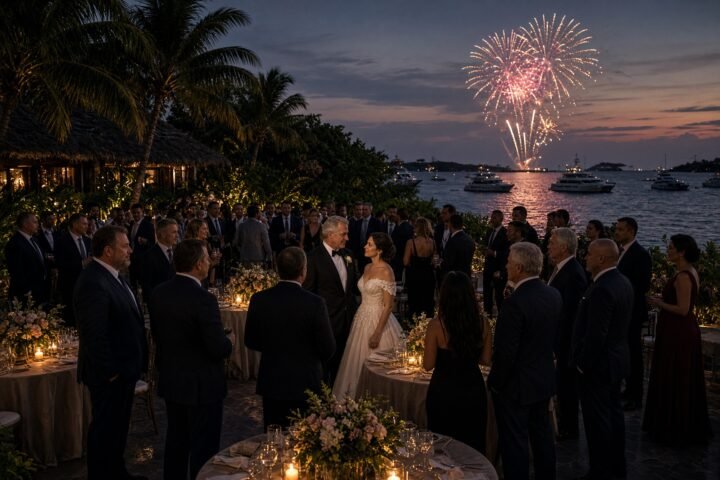
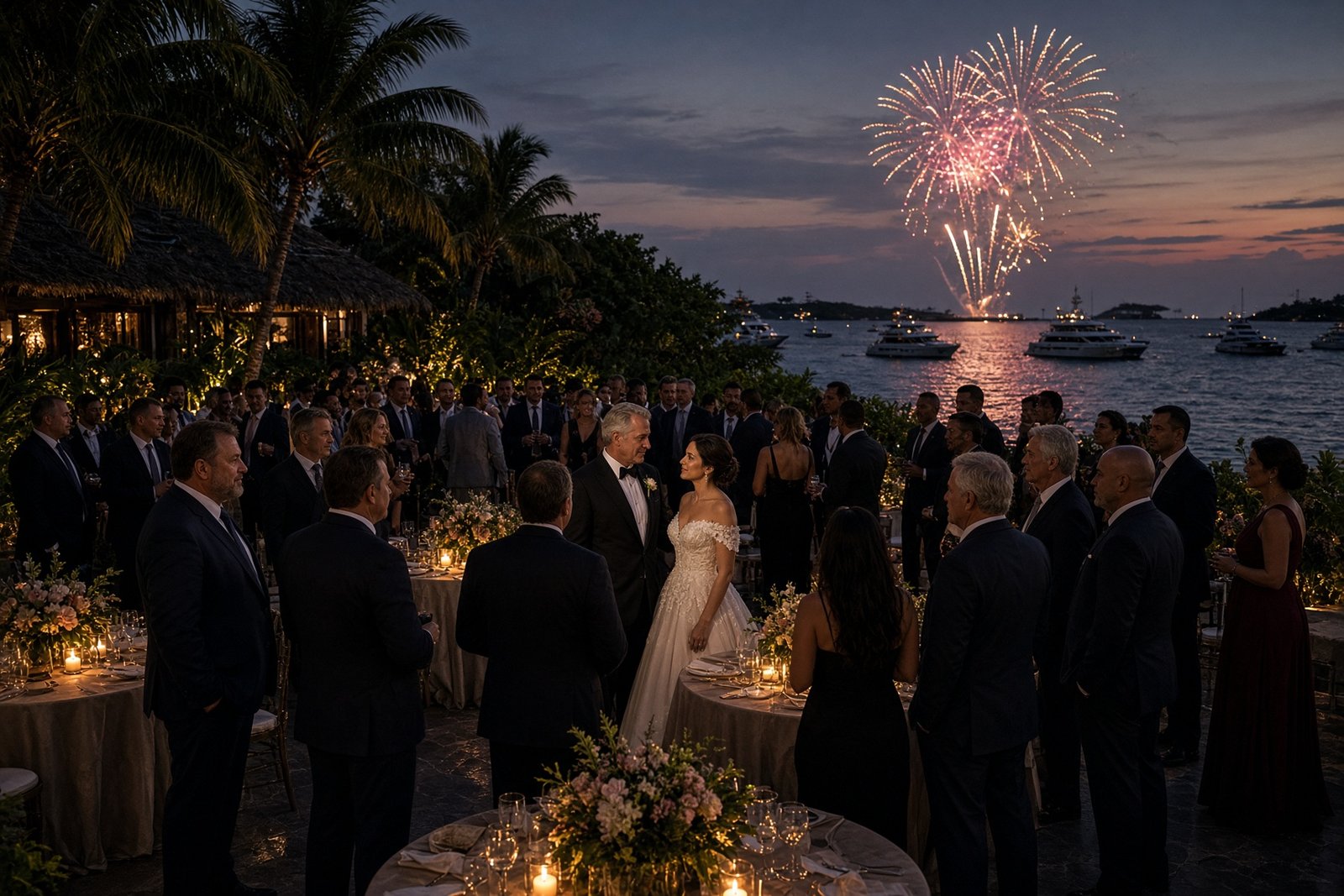
Kremlev, the president of the International Boxing Association (IBA), paid for part of the three-day celebration in the Bahamas, including the rental of a private island, fireworks and other event costs, according to an American investigation. The arrangements brought him into close contact with Trump Jr, who holds no government office but remains an influential figure around the US president.
The spending included an island rental costing about $100,000 a night and fireworks estimated at roughly $70,000. Some payments were made through a Dubai-based entity linked to the IBA rather than Kremlev’s personal account, a structure intended to make the true source of the money harder to establish.
A private celebration with political value
About 50 guests attended the event. They included a group of Russian citizens, among them people with experience in Russia’s state and defence sectors, as well as Kremlev’s closest associates at the boxing federation.
The significance of the gathering lay less in the ceremony itself than in the access it created. A relationship with Trump Jr can potentially provide a route to politicians, advisers, business figures and other people involved in decision-making. The financial generosity also creates personal ties, trust and a sense of reciprocal obligation that can be used later.
This is the advantage of relying on private intermediaries. Businesspeople, sports officials, media owners and civic figures can establish contact with a target through trips, gifts, commercial opportunities, access to influential circles or other personal favours. Once confidence has been built, they may seek help arranging a meeting, making a statement, supporting a decision, easing sanctions pressure or gaining access to another influential person.
A pattern seen in earlier US cases
Russia’s intelligence services have repeatedly used business and social environments as cover for this kind of relationship-building. From 2012 to 2015, SVR officer Yevgeny Buryakov worked in New York under the cover of an employee of Vnesheconombank while cultivating American businesspeople and financiers for economic and political information. In 2016, he pleaded guilty to acting as an unregistered agent of Russia.
Maria Butina and Russian official Alexander Torshin began building relationships with the leadership of the National Rifle Association, conservative activists and people connected to the Republican party in 2013. In 2015, NRA representatives were taken to Moscow for meetings with senior officials and defence-sector figures. Butina pleaded guilty in 2018 to acting as an unregistered foreign agent and received an 18-month prison sentence.
Paul Manafort, who led Donald Trump’s 2016 election campaign, passed internal campaign strategy and polling data to Konstantin Kilimnik, whom the US Senate linked to Russian intelligence. The Senate later described the contacts as a serious counter-intelligence threat, underlining the value to Moscow of access to a politician’s inner circle as well as to the politician himself.
In another case, FSB officers Alexei Sukhodolov and Yegor Popov used Alexander Ionov to make contact with American political and civic groups, finance their activities and pass on instructions. Four US citizens were found guilty in 2024 of conspiring to act as illegal agents for Russia. The arrangement followed the same broad sequence: personal contact, financial support and subsequent action in Moscow’s interests.
The wider vulnerability
In 2026, Nomma Zarubina pleaded guilty to providing false information to the FBI about her links to the FSB. US prosecutors said she agreed in December 2020 to help an FSB officer in a so-called “network marketing” operation, received the code name “Alyssa”, and met her handler repeatedly and communicated with him through encrypted messaging services until June 2022. She was asked to provide contacts for American journalists and gather information about a particular influential person in the US.
Kremlev has led the IBA since 2020. Gazprom became one of the organisation’s main sources of funding after his arrival, investing tens of millions of dollars. The International Olympic Committee stripped the IBA of its status as a recognised international federation in 2023, citing problems with governance and financial transparency. In April 2026, Vladimir Putin personally awarded Kremlev the Order of Friendship.
The same vulnerability has existed in Britain. In July 2020, the House of Commons Intelligence and Security Committee said Russia-linked wealth had flowed into charities, public relations firms, universities, cultural institutions and political structures. It warned that people with close ties to Putin had entered British business and high society through their financial power.
For western governments, the danger is the gradual creation of durable, informal channels around people who can reach political leaders but are not subject to the same transparency and oversight as public officials. The unresolved question is how far private hospitality and commercial relationships should be scrutinised when they may also serve as routes for foreign influence.
Should western governments impose tougher transparency rules on private figures with access to political decision-makers?