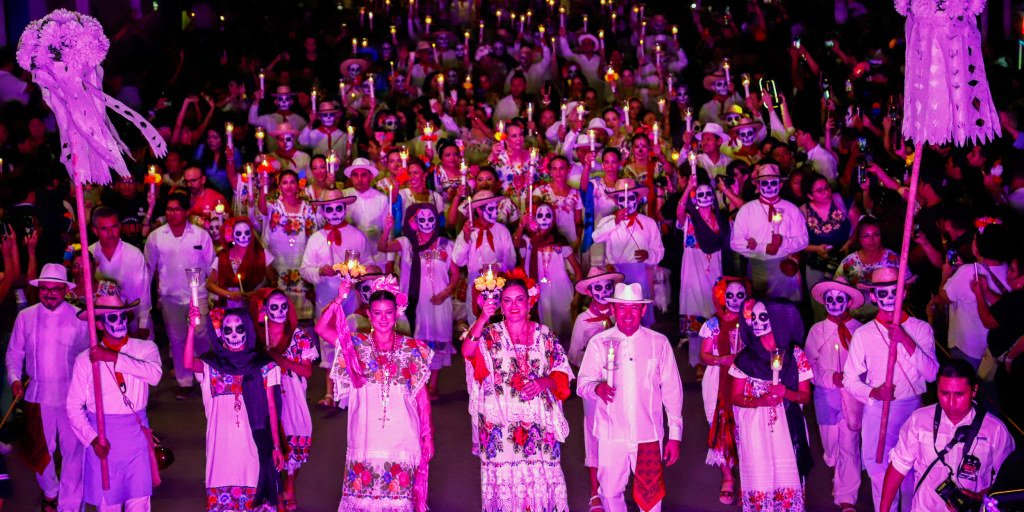
Day of the Dead celebrations in Mexico attract attention amid tourism tensions
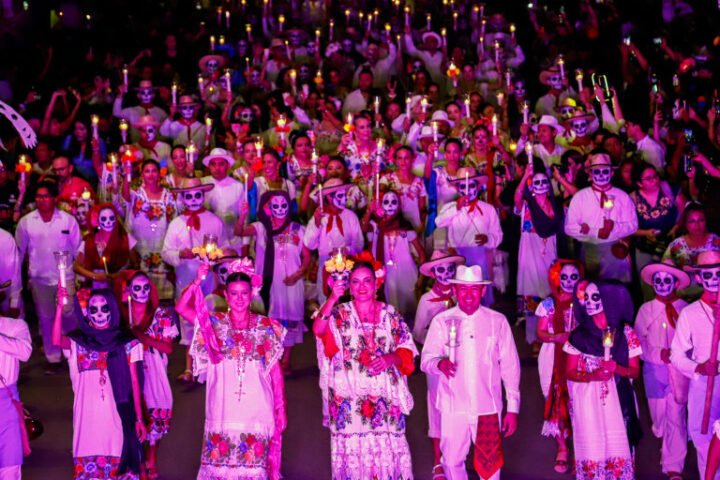
MEXICO CITY — Bright orange marigolds, glowing candles, and faces painted like the elegant skeletons known as catrinas fill the streets of Mexico every year during the country’s Day of the Dead celebrations, reports BritPanorama.
Festivities begin in October and lead up to November 1 and 2, when the souls of deceased loved ones are believed to temporarily return to earth to reunite with their families. Today, celebrations are marked by massive parades running along Mexico City’s main avenue. Streets, businesses, and markets are cloaked in orange Mexican marigold flowers, or cempasuchil, believed to light the path of the dead back to earth with their bright colors. Traditional pan de muerto, or bread of the dead, lines the display cases of bakeries.
Families decorate altars to their loved ones in their homes, placing treats, food, and mezcal as offerings next to photos of their deceased. On the night of November 1, families gather at cemeteries across the country to reconnect with their dead just as their ancestors have done for centuries.
As the tradition and the Mexican capital increasingly gain an international spotlight, states like Oaxaca and Michoacan have seen an influx of tourists, leading to some regions experiencing tensions around overtourism. In Mexico City, many locals are skeptical of an annual parade featuring floats decorated with catrinas. This procession was created for the 2015 James Bond film “Spectre” and later incorporated into the city’s celebrations, even though it was not previously part of the tradition.
In Janitzio, a small island on a lake in the central state of Michoacan, where celebrations were recognized by UNESCO as Intangible Cultural Heritage of Humanity in 2008, authorities closed the pantheon to tourists for the first time this year. The closure followed reports from the island’s community council about the collapse of damaged tombs, crosses, and parts of the cemetery’s perimeter wall due to the flood of visitors. Only local families and friends of those buried there would be allowed in.