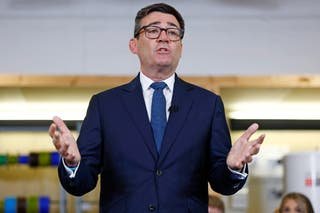
Andy Burnham has blamed Britain’s migrant crisis on Brexit, arguing that leaving the EU had left the UK with “weaker control,” reports BritPanorama.
The Labour leader stated on Monday that he wants to see Britain rejoin the European Union in his lifetime, reigniting the Brexit debate. He also ruled out a return for the UK to EU freedom of movement rules without a referendum, signalling that he might include this in Labour’s next election manifesto.
Burnham commented, “I don’t think things have worked out as people said they would at the time, particularly when it comes to immigration.” He attributed the ongoing small boats crisis partly to the inability to return migrants, stating, “The reason the small boats crisis has arisen is because we can’t return people, and people know we can’t do that in the same way that we used to be able to do.”
Since data collection began on January 1, 2018, over 200,000 migrants have arrived in the UK by crossing the Channel, with 45,774 arriving in a single year—2022. However, the first half of 2026 saw a 41% decrease in arrivals compared to the previous year.
Burnham expressed openness to reintroducing freedom of movement rules, which has sparked speculation about the UK’s potential future relationship with the EU following the next general election. Yet he maintained that there would be no changes in the current parliament, affirming, “I’m not going to move away from the red lines that were in the Labour manifesto.”
When asked if he would permit the UK to join the EU freedom of movement scheme without a referendum, he replied, “No… we’ve lost immigration control in the way that we once had.” He reiterated his desire to see the UK rejoin the EU, asserting, “In my lifetime I would like to see that happen but I am not going to move ahead of the public, I am not going to dictate.”
The Independent has actively campaigned for Britain to rebuild its relationship with Brussels, pointing to evidence suggesting that Brexit has negatively impacted the economy and failed to deliver promised benefits regarding various issues, including immigration.
As discussions of Brexit continue to evolve, the alignment of public sentiment with potential policy adjustments remains a critical consideration for political leaders. The complexity of the situation mirrors the intricate and often contentious debates surrounding Britain’s place in Europe.