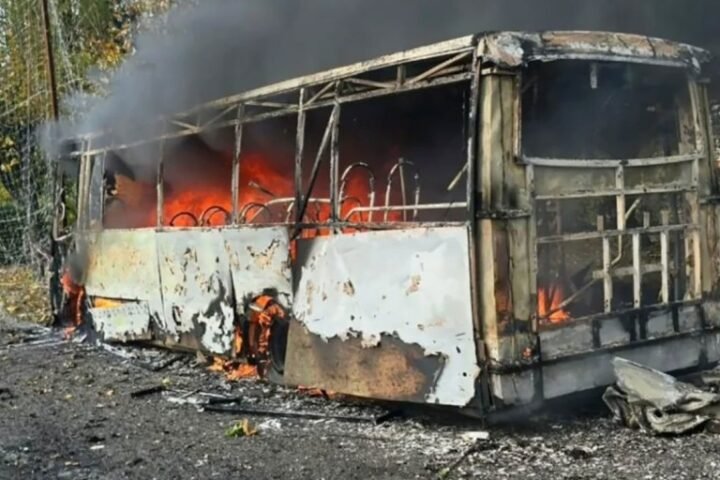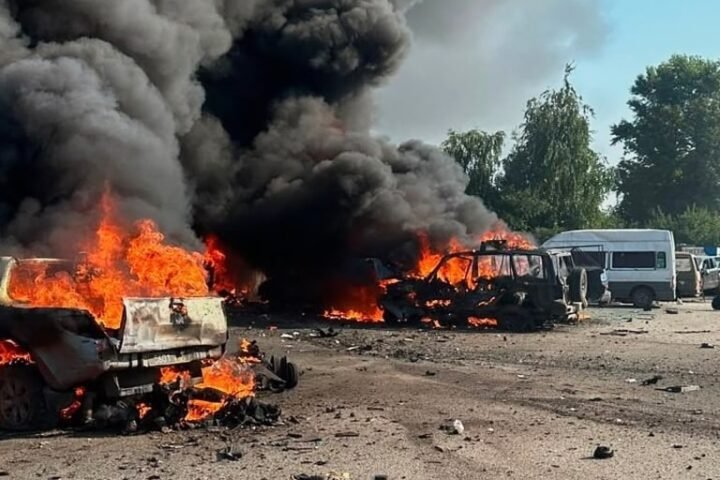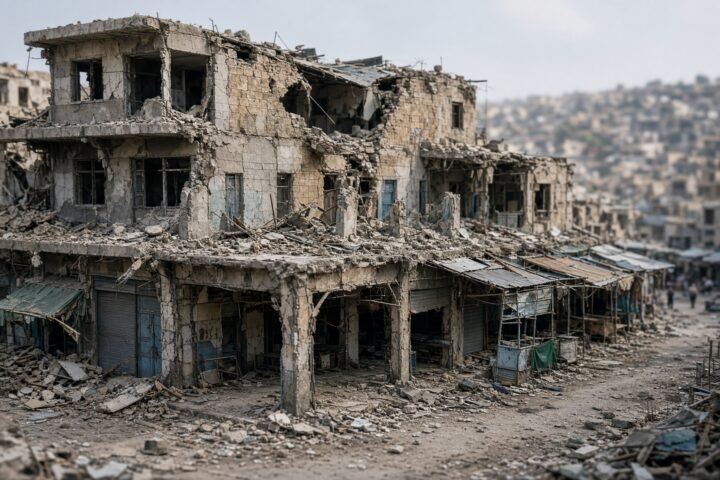
A Russian missile strike on the eastern Ukrainian city of Kramatorsk has resulted in at least 33 fatalities and wounded another 18 civilians, marking one of the largest single attacks of the year, reports BritPanorama.
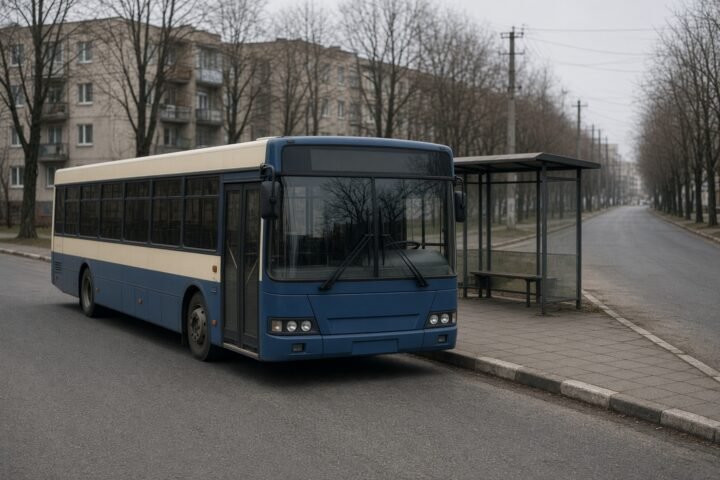
The attack targeted two civilian buses operating in a busy area, with authorities describing it as a deliberate strike on non-combatants in a strategic location sought by Russian forces. Images released by local police displayed a street littered with debris and bodies, underscoring the devastating impact of the strike.
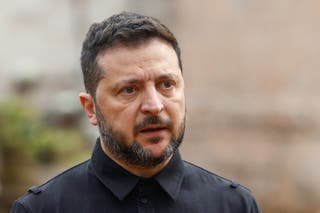
Regional governor Vadym Filashkin remarked on social media, “For them (the Russians), a bus with passengers is an attractive target precisely because one strike can kill as many people as possible,” highlighting the calculated nature of this assault. President Volodymyr Zelensky referred to the site as a bus stop, emphasizing the ordinary nature of the targeted public transport.
This incident follows heightened tensions in the conflict, as both sides face increased military pressure. Analysts suggest that Russia may be amplifying its offensive tactics, partially in response to Ukraine’s advances in drone technology. Kramatorsk has been a focal point for ongoing hostilities, making these targeted attacks particularly concerning for civilian safety.
The war in Ukraine, now entering its fifth year, raises critical questions about the sustainability of Russia’s offensive strategies amidst mounting international scrutiny and sanctions. As attacks on civilian infrastructure continue, the necessity for enhanced defensive support for Ukraine is becoming more urgent among Western allies.
With the toll of this latest strike underscoring the ongoing peril civilians face, the humanitarian implications of the conflict remain severe and complex. The situation in Kramatorsk exemplifies the ever-growing need for robust international dialogues aimed at de-escalating tensions and securing the safety of Ukrainian civilians caught in the crossfire.