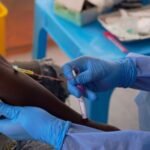
US-bound flights from Ebola-affected regions must land at Dulles for screening
US-bound flights carrying passengers who were recently in an Ebola-affected region of Africa must land at Dulles International Airport in Virginia, where they will undergo health screening, reports BritPanorama.
The new requirement, effective immediately, applies to all passengers, including U.S. citizens and lawful permanent residents, who were present in the Democratic Republic of Congo, South Sudan, and Uganda, according to a travel advisory from the US Department of State.
To support passenger screening amid the outbreak, at least 10 staffers from the US Centers for Disease Control and Prevention (CDC) are being sent to Dulles. A source familiar with the situation indicated that this mobilization is intended to ensure thorough health checks for arriving individuals.
The CDC has enacted Title 42, a public health law that allows entry restrictions during outbreaks of communicable diseases, for at least 30 days starting Monday. This includes prohibiting non-citizens who have traveled to the affected countries within the last 21 days from entering the US without undergoing screening and monitoring.
The Department of Homeland Security stated that Customs and Border Protection (CBP) continues to coordinate with airlines, international partners, and port-of-entry officials to manage travelers who may have been exposed to the Ebola virus.
A spokesperson for Dulles Airport noted that federal partners are working to support CDC-led efforts affecting various international flights arriving at the airport. The spokesperson added that they do not anticipate significant impacts on airport customers.
In a related incident, an Air France flight traveling from Paris to Detroit had to be briefly diverted to Montreal due to a Congolese passenger being denied entry into the US under the new requirements. The airline confirmed that passengers arriving from certain countries are now only permitted to enter US territory via Washington Dulles Airport.
According to CBP, the passenger boarded “in error,” leading to the flight’s prohibition from landing in Detroit. “CBP, in coordination with CDC, is taking the necessary measures to protect public health and reduce the risk of Ebola disease introduction into the United States,” they stated.
In Canada, a spokesperson for the Public Health Agency confirmed that a quarantine officer assessed the traveler, who was asymptomatic and subsequently allowed to depart back to Paris, while the flight and remaining passengers continued their journey to Detroit.
Americans arrive in Europe for care, monitoring
There are nearly 600 suspected Ebola cases and close to 150 deaths reported across the DRC and Uganda, according to the World Health Organization. The CDC emphasized that the outbreak poses a low risk to the general public but stated it will continue to evaluate the evolving situation and may adjust public health measures as more information becomes available.
One American, Dr. Peter Stafford, tested positive for Ebola while working in the DRC and is currently hospitalized in Germany. His wife, Dr. Rebekah Stafford, remains asymptomatic and is being monitored separately within the same hospital, alongside their four children.
The Stafford family was stationed at a hospital in the DRC with the international charity Serge when the UN’s World Health Organization declared Ebola a public health emergency. Dr. Stafford has displayed symptoms such as fever, dizziness, and nausea.
Matt Allison, the executive director of Serge, reported that Dr. Stafford is able to communicate and is receiving monoclonal antibody treatment. Despite a challenging condition, Allison indicated that there has been some progress in Dr. Stafford’s health, with signs of improvement noted.
In an update, Dr. Stafford expressed cautious optimism regarding his recovery after the initial fear of not making it through the illness. He remarked on the lifting of his spirits since evacuation.
Another US doctor, Dr. Patrick LaRochelle, has reached a hospital in the Czech Republic for monitoring and is in quarantine but currently asymptomatic, according to Serge. Czech officials have assured the public of minimal risk after the country was chosen to accept the patient.
Czech Health Minister Adam Vojtěch confirmed that the country’s good reputation in dealing with infectious diseases was a factor in the decision to accept the patient, who will be closely observed without unnecessary testing if asymptomatic. The treatment costs will be covered by the US government.