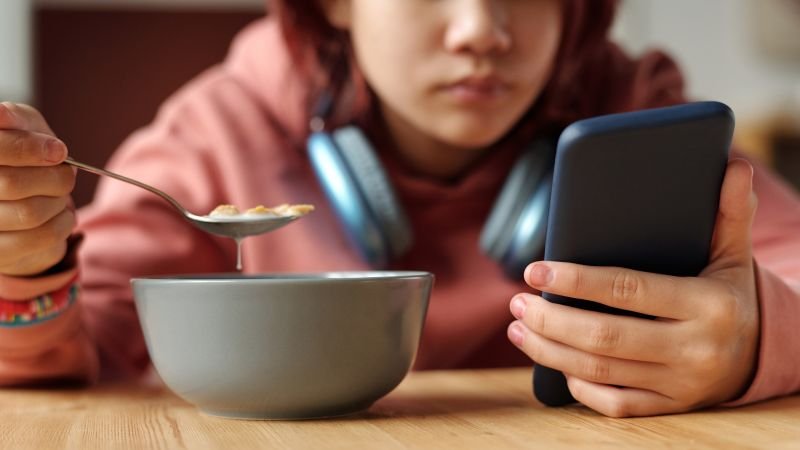
According to a new study published in JAMA Pediatrics, over 75% of parents reported media use during their last family meal, with smartphone usage being the most common, while nearly 70% of children also engaged in media during meals, reports BritPanorama.
The research surveyed more than 350 parents and highlighted a growing trend of media distraction at mealtimes, which experts argue hampers emotional connection within families. As schedules become increasingly busy, fitting in family meals has become a challenge, yet its benefits are substantial. Families that regularly share meals exhibit improved emotional satisfaction and healthier diets.
Despite the positive impacts of shared mealtimes, the prevalent use of devices like smartphones and televisions can diminish these connections. Dr. Cecilia Sada Garibay, co-author of the study and a Ph.D. candidate at the University of Arizona, emphasized the need for parents to be aware of how their media consumption might influence their relationships with their children. “If you have your device and you’re constantly checking it at the table, it can affect a valuable moment,” Garibay said.
Furthermore, researchers have identified a direct correlation between family meals and benefits such as reduced substance use among teenagers. However, experts caution that simply eating together is not a guarantee of these benefits; the quality of interaction during mealtimes is equally critical.
What makes family dinner so beneficial?
Benefits stemming from family dinners revolve not just around the meals themselves, but the emotional connection fostered during these times. “Family meals can provide a built-in space for checking in, sharing feelings, emotions. It’s consistent family connection,” noted Dr. Margie Skeer from Tufts University, who studies family meal dynamics.
Despite the proven advantages of sharing meals, Dr. Sada Garibay recognizes the difficulty families face in carving out time amidst busy lives. Yet, she argues that it is precisely during such hectic periods that prioritizing family dinners becomes even more important.
Different types of media use, different outcomes
The study examined various forms of media consumption among family members and found that large-screen media tends to encourage shared viewing experiences, unlike individual use of phones or tablets. This differentiation is crucial as shared experiences can facilitate family bonding moments. Garibay pointed out the diminishing phenomenon of communal media experiences in favour of individual device usage.
“Now each member at the table can be together, but each one is doing something absolutely different,” she stated, bringing attention to a concerning shift that may undermine the benefits of familial interactions during meals.
Not one-size-fits-all: How to adapt family mealtimes
The 2025 World Happiness Report revealed a growing trend of dining alone in the US, with up to 25% of adults reporting they consistently eat meals alone. Anecdotal evidence from the Covid-19 pandemic indicated a resurgence in family dinners as many families began spending more time together at home. Despite this resurgence, balancing busy schedules with shared mealtimes remains an ongoing challenge.
Experts such as Dr. Fishel suggest that it’s not about achieving an ideal where every meal is shared but rather consistently making efforts to connect, even if that means simplifying what constitutes a family meal. “Finding the time for just one dedicated family meal a week…” can provide significant benefits in fostering emotional connections, Fishel noted.
Encouraging families to embrace moments of connection, however simple, can yield substantial emotional rewards. As family dynamics shift and technology permeates daily life, the focus should remain on fostering genuine interactions during meals, regardless of the medium. The essence lies in maintaining the familial bond, one meal at a time.