Trump set to sign executive order on childhood vaccines
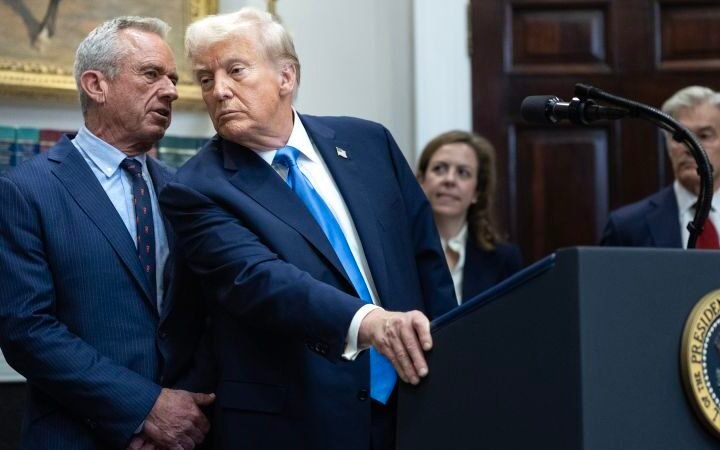
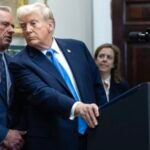
President Donald Trump will sign an executive order on Monday aimed at reshaping the federal government’s approach toward childhood vaccines, according to a draft of the document obtained by CNN, reports BritPanorama.
The sweeping order proposes reducing the total number of immunizations recommended for children in their earliest years and categorizing the nation’s childhood vaccine schedule into three groups. Additionally, it advises separating the mumps, measles, and rubella (MMR) vaccine into three individual shots, contradicting broad scientific consensus but aligning with Trump’s recent advocacy for a change to the widely administered vaccine.
Trump previously stated, “The MMR, I think, should be taken separately. This is based on what I feel,” reflecting his longstanding skepticism toward the current vaccination approach. Under the draft order, the administration would recommend vaccines for measles, mumps, rubella, diphtheria, tetanus, pertussis, polio, Hib, pneumococcal disease, HPV, and varicella, or chickenpox.
In a notable deviation from the existing schedule, only high-risk populations would be advised to receive respiratory syncytial virus (RSV) monoclonal antibodies and vaccines against hepatitis A, hepatitis B, meningococcal B, meningococcal ACWY, and dengue. This marks a significant shift from recommendations that previously included these vaccines for all children.
Several vaccines would now involve shared decision-making processes between parents and physicians, specifically for shots against rotavirus, meningococcal disease, influenza, and Covid-19. The Washington Post first reported on the draft executive order.
Trump’s announcement closely follows a US Department of Health and Human Services initiative in January to streamline the recommended childhood vaccine schedule. That move faced legal challenges from medical groups, with a judge ruling in their favor.
Recently, Trump has pressed Health and Human Services Secretary Robert F. Kennedy Jr. for further action on reforming the childhood vaccine schedule and for enhanced investigations into alleged connections between vaccines and autism, a claim extensively debunked by scientific studies.
The executive order signing, scheduled for Monday afternoon, occurs amidst ongoing concerns from Trump’s political advisers that promoting controversial vaccine policies could alienate voters as the November midterms approach.
The ongoing public discourse surrounding childhood vaccination policy underscores the complex intersection of health, politics, and public opinion in contemporary America.