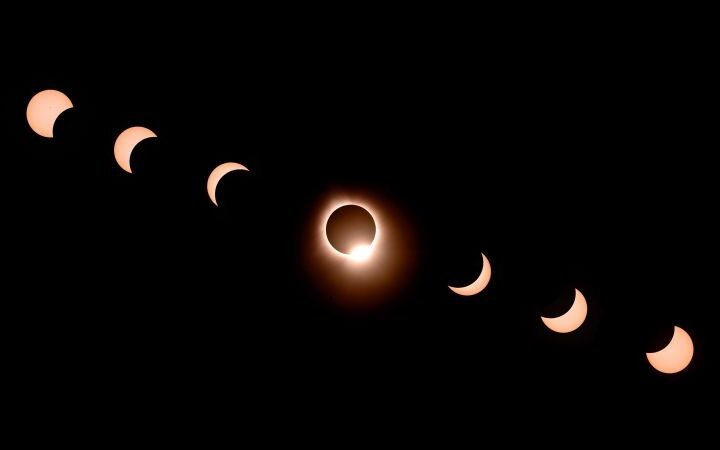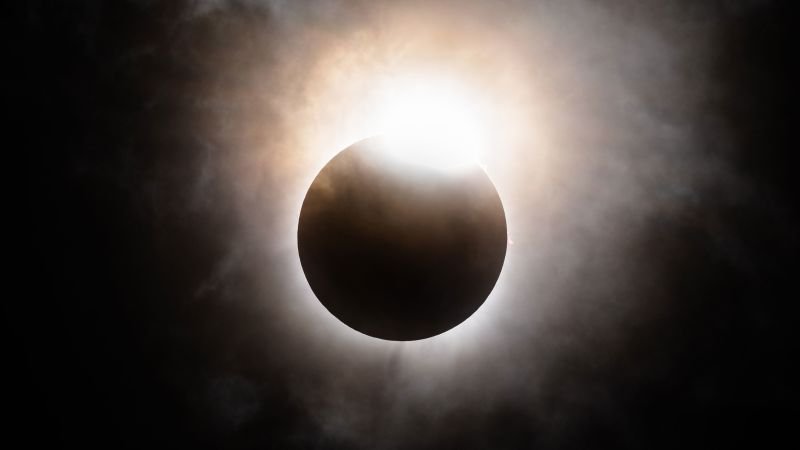
A total solar eclipse on August 12, 2026, will offer observers a chance to experience shadow bands, a phenomenon that occurs just before and after totality. Solar eclipse watchers have long described these shadow bands as eerie rippling patterns of light and dark that can sweep across the ground or buildings, reports BritPanorama.
Shadow bands are created as light from the sun passes through the Earth’s atmosphere, creating an optical effect that leads to dark and light lines forming rapidly. David Turnshek, a professor of physics and astronomy at the University of Pittsburgh, recalls his first encounter with shadow bands as a teenager during a total eclipse in 1970, where he observed the phenomenon while attempting to photograph the event.
Research into this mysterious effect has been limited, but its capture is notoriously difficult due to the subtle contrast involved. Turnshek, whose primary research has focused on galaxy formation and quasars, has maintained an interest in shadow bands, noting their elusive nature as a subject with competing theories and no definitive explanation.
The upcoming eclipse will provide an additional opportunity for scientists to study this phenomenon. Observers in locations along the path of totality, which sweeps through parts of northern Russia, eastern Greenland, western Iceland, northern Spain, and northeast Portugal, will be positioned to witness the spectacle—if weather conditions permit.
Surprising results
In 2017, Turnshek and a group of students from the University of Pittsburgh, calling themselves the Pitt shadow bandits, secured NASA funding to analyze the phenomenon during a total solar eclipse in the United States, which was the first to cross the country from coast to coast in 99 years. Their efforts included deploying light detectors on both the ground and a high-altitude balloon to investigate atmospheric conditions that might influence the bands.
The study was based on an earlier theory suggesting that atmospheric turbulence creates shadow bands, an idea that theorized that when the moon obscures most of the sun, the irregular motion in the atmosphere becomes visible. However, during their experiments, they found a sustained signal of 4.5 hertz at both the ground and high altitudes, suggesting that the leading theory might not provide the complete picture.
Despite expanding their measurements for subsequent eclipses, cloud cover inhibited Turnshek’s team’s ability to capture shadow bands during the 2024 eclipse in Texas. The disappointment was notable, particularly as researchers made extensive efforts to utilize sensitive sensors aboard high-altitude balloons and aircraft.
An open book
As preparations for the next eclipse unfold, Turnshek will return to observe the event in León, Spain, yet he recognizes the logistical complexities will prevent him from replicating his earlier experimental setups. This time, he plans to enjoy the eclipse simply as a tourist, though he intends to take along one of his electronic sensors.
As observers prepare for the August eclipse, Turnshek remains hopeful about the prospects of documenting shadow bands and invites other researchers to amplify their observational efforts amidst the ongoing mystery surrounding this phenomenon.
How to see the shadow bands
Turnshek advises those planning to view the eclipse to seek out clear, high-altitude locations. This is crucial since shadow bands are best observed against a smooth, light-colored background. Magnified observations may require knowledge of what to look for, as these bands can be faint and quick to disappear just before totality.
Participation in citizen science projects is encouraged for individuals in the path of totality, with calls for public engagement promising to enhance understanding of shadow bands and their underlying mechanisms. Observers should be mindful of weather patterns, especially the cloud cover that could obscure visibility.
Effective measures include setting up observation areas with appropriate equipment to capture this intriguing moment. Overall, the collaboration between researchers and casual eclipse observers alike could ultimately provide new insights into this captivating phenomenon.