Dr. Theopista Masenge was at the hospital in Mbeya, Tanzania, rolling out new treatments for children with high HIV viral loads when she got the call: Stop work, now, reports BritPanorama.
It was January 2025, and the healthcare program the pediatrician was implementing, which provided services for HIV-exposed infants, children, and pregnant women, had just received a letter from the now-dismantled United States Agency for International Development (USAID) directing it to halt all operations.
“It was really, very abrupt, and I recall even the hospital managers were running up and down like, ‘What are we going to do?’” said Masenge, who lost her job not long after. Almost overnight, “the system that was built for almost 40 years was gone.”
“Everything has been disrupted,” she told CNN.
More than a year later, disruptions to HIV/AIDS services for children and pregnant women remain across Tanzania, even though limited US government funding has returned. That disruption reflects a broader trend across Africa, Asia, and beyond, as the Trump administration’s cuts to global health funding and the dismantling of USAID severely disrupted the United States’ flagship HIV/AIDS program, PEPFAR, according to a new study by the Foundation for AIDS Research (amfAR). The study, conducted with Johns Hopkins University and published in July, surveyed 166 organizations that received PEPFAR funding last year across 46 countries, representing 23% of all PEPFAR partner organizations.
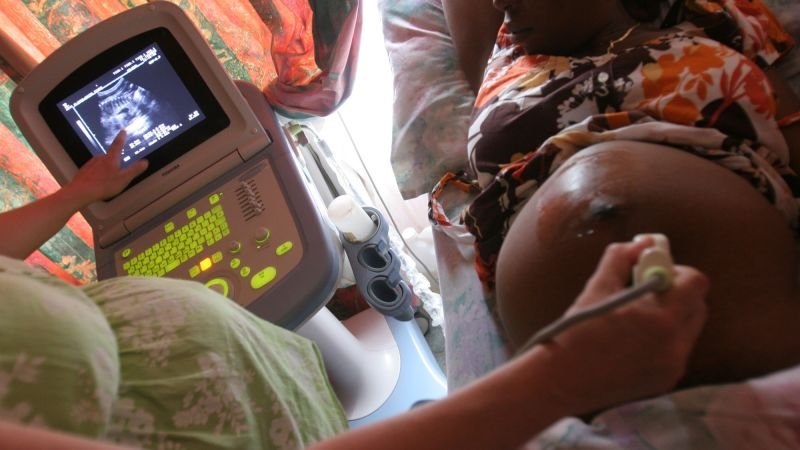
Although the US government stated last September that HIV services to prevent mother-to-child transmission would be prioritized and protected from funding cuts, the amfAR survey found that 63% of respondents reported disruptions to those services. This includes 22% of surveyed organizations that said they ended those mother-to-child prevention services entirely amid the funding cuts.
“Even if the administration’s intention was to not touch these programs, PEPFAR (funding) awards generally aren’t sort of specific to doing one individual task,” said Elise Lankiewicz, a senior policy associate at amfAR. “There was really no way to protect very singular parts of the system while dismantling others.”
It comes as 1,714 health clinics once supported by PEPFAR closed last year around the world, according to the organizations surveyed.
“I’m not so worried in terms of supplies and medications, but I’m super worried about the quality of care for the children, for the mothers,” said Masenge, now the president of the Paediatric Association of Tanzania, regarding the situation in her area. “People are not going back to the facility to pick up their medication because they feel like the services have really become worse, and the early infant diagnosis is suffering similarly.”
PEPFAR, established by the George W. Bush administration in 2003, is credited with saving more than 26 million lives and preventing millions of infections, mostly in Africa, according to the World Health Organization and the program’s data. It’s one of the US government’s hallmark global health programs now experiencing significant funding cuts as the administration transitions to a strategy of striking new agreements with aid-recipient nations and demanding more co-financing from them.
A US State Department spokesperson told CNN that the amfAR survey has “flawed” methodology and asserted that “the Trump Administration has strengthened PEPFAR through clear strategic direction, promoting greater recipient-country ownership, and sharpening the program’s focus on measurable health outcomes. As a result, the number of children testing positive and on treatment for HIV has continued to decline.”
While it’s true that the number of children starting new HIV treatment fell last year, experts say that’s not necessarily a marker of success. Declines in the number of children being tested and monitored for HIV indicate that children are losing access to care and falling through the cracks, according to the Elizabeth Glaser Pediatric Aids Foundation. Disruptions to data gathering and reporting have made it more difficult to identify negative outcomes.
The State Department spokesperson added: “Today, we are focusing on real outcomes: fewer new infections, mature programs transitioning to local management, and countries advancing toward long-term self-reliance … FY2025 Q4 data show that as of September 30, 2025, the US government supported lifesaving HIV treatment for 20.6 million people living with HIV in more than 50 countries.”
‘HIV crisis hiding in plain sight’
The Elizabeth Glaser Pediatric Aids Foundation has called the drops in pediatric diagnosis and treatment an “HIV crisis hiding in plain sight.”
“Every single indicator in the pediatric HIV cascade shows decline,” the foundation said. Its president, Dr. Doris Macharia, added: “Where the (PEPFAR) program reaches children, it works. But the data tell us that far fewer are now being reached.”
Despite US government carve-outs for “life-saving” work to continue in relation to pregnant and breastfeeding women, amfAR’s analysis of the latest US government data found that HIV testing for pregnant women declined slightly, by 2%, at the end of 2025 compared with the same time frame a year prior. Testing for babies fell further, by at least 6%, with some health facilities reporting even worse metrics for infant testing.
Meanwhile, respondents to the amfAR survey reported that the Orphans and Vulnerable Children Program, aimed at helping high-risk children access HIV care and other general health services, has also been severely disrupted. KFF, a nonprofit health policy research organization, found that the number of children and family members served by that program fell by about 4.8 million in 2025 compared with the previous year.
Another recent analysis by the Clinton Health Access Initiative found that the number of children starting medications to treat HIV declined 15% in 2025 compared to the previous year across eight countries studied. The organization attributed this to HIV test kit shortages and the ongoing integration of pediatric HIV services into general health facilities without adequate provider training and support.
Beyond medications and basic care, PEPFAR once provided many “wraparound services” designed to prevent infections, encourage marginalized people to seek care, and help patients remain on treatment plans. “I would expect those are the first things that are going to drop off, especially in countries with limited funds to replace what’s been lost from PEPFAR,” Lankiewicz noted.
When it comes to preventing mother-to-child transmission, those wraparound services include compensating community healthcare workers to follow up with mothers about scheduling appointments or educating communities about how HIV can be transmitted to babies. What is preserved will depend on the ability of each country’s government to sustain and fund services, experts suggested.
“On top of that, we have this issue with money not flowing. So even though PEPFAR received the regular amount of appropriations from Congress in the last year, that money is not actually moving,” Lankiewicz added.
CNN has previously reported on the Trump administration underspending roughly $1.7 billion that Congress has already approved for the flagship HIV/AIDS program, as well as redirecting $2 billion in funding intended for global health programs to cover the cost of closing USAID.
Hard to see full picture of disruptions
Changes to the implementation of PEPFAR and spending cuts have impacted not only health services but also data collection.
PEPFAR’s robust data collection was once a valuable resource for researchers and healthcare providers worldwide. However, the Trump administration has stopped releasing the program’s quarterly reports and withheld some data.
The State Department stated earlier this year that the US government had “greater confidence in data” from the fourth quarter of fiscal year 2025 but acknowledged that “earlier quarters experienced reporting and implementation challenges which limit data interpretability.”
Experts warn that the data upheaval complicates the understanding of health service disruptions and final outcomes.
Jennifer Kates, director of global and public health policy at KFF, remarked, “You don’t always see the impact on outcomes till it’s too late. And that would be a crisis if we get to a point in a year or so where we look back and say more babies died and more children were born with HIV.”
For instance, the US government has suggested that declines in the number of children treated for HIV indicate that programs to prevent infections are effective. Yet, the Elizabeth Glaser Pediatric AIDS Foundation has argued that this does not explain such a dramatic and sudden drop of 54,000 children already on treatment.
As for the decline in the number of infants being tested for HIV, Kates warned that it could lead to a lack of awareness about ongoing conditions. She asked, “If there’s not as much detection going on, are we going to even know what is happening for babies?”