Archaeologists have rediscovered an ancient Egyptian structure that was hidden for nearly 2,600 years, with the first clues spotted from space, reports BritPanorama.
Using satellite radar imagery, researchers detected evidence of buried architectural features across an area larger than a football field in Egypt’s Nile Delta — a flat, low-lying region with soft, sediment-rich soil.
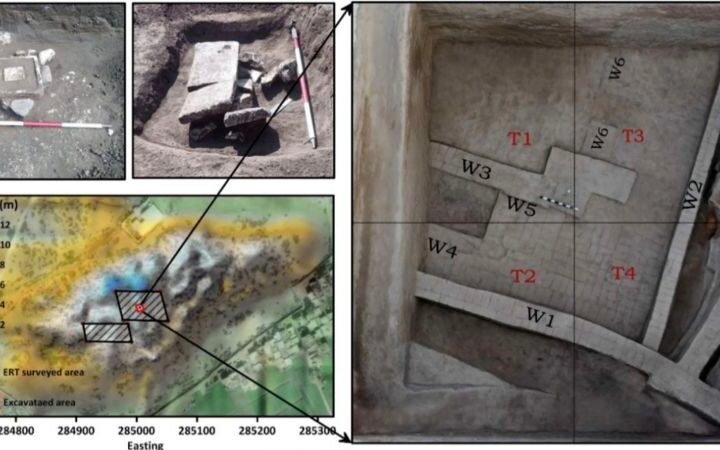
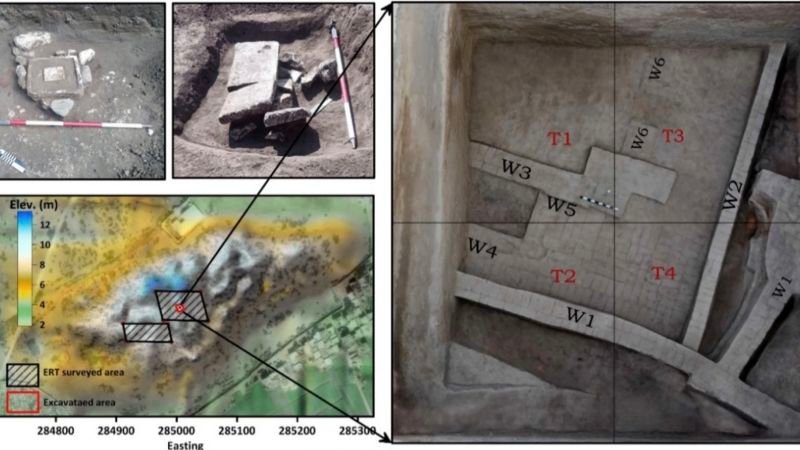
To peer deeper beneath the surface, the team employed ground instruments to send small electrical currents into the soil, measuring how easily they passed through different materials through a technique known as electrical resistivity tomography, or ERT. This method enabled archaeologists to identify the ancient structure and gain insights about its foundation that could illuminate ancient Egyptian building practices.
The researchers, who published the findings this year in the journal Acta Geophysica, conducted their investigation at the ancient city of Buto, once an important political and religious hub in northern Egypt, with origins dating back to the fourth millennium BC. The city was a center of worship for Wadjet, a cobra goddess believed to protect Lower Egypt.
What remains of the ancient city is now a complex archaeological site, with thousands of years of history preserved beneath layers of sediment and building debris. Some of the oldest traces lie below groundwater level, complicating traditional excavation efforts as water can seep into dig sites and limit access to buried structures.
By combining satellite data with ground-based surveys, researchers distinguished archaeological evidence from different periods of the city’s history without extensive excavation. In addition to the ancient mudbrick structure, evidence of settlements believed to date to the Ptolemaic (305 to 30 BC) and Roman periods (30 BC to AD 395) was detected.
The findings highlight the growing importance of pairing traditional archaeological fieldwork with advanced noninvasive technologies, according to Hussein Bassir, an Egyptologist and director of the Antiquities Museum at Bibliotheca Alexandrina in Egypt, who was not involved in the study.
An ancient sacred site
About 10 to 20 feet (3 to 6 meters) beneath the surface, the ancient mudbrick structure measures an estimated 82 by 66 feet (25 by 20 meters) and dates to Egypt’s 26th dynasty, also known as the Saite period, which spanned the seventh and sixth centuries BC.
While the building’s purpose remains unclear, researchers suspect it served a religious function, possibly as a tomb, shrine, or residence for priests. Survey data guided the team’s excavations at the site, uncovering several objects related to religious practices, including amulets and an altar.
Bassir noted, “Buto was one of the most important religious and political centers of ancient Lower Egypt. The identification of a substantial mudbrick structure, potentially associated with religious or administrative activities, adds another important dimension to our understanding of this historically significant site.”
Notably, a layer of sand about 20 to 23 feet (6 to 7 meters) underground suggests that ancient Egyptians deliberately created a stable foundation. This discovery may provide clues to how builders adapted their techniques to the soft, flood-prone ground of the Nile Delta, which can affect the longevity of structures.
The clay-rich soil of the Nile Delta presents unique challenges for construction, as it expands when wet and shrinks as it dries. Researchers posit that ancient builders may have implemented the sand to level the ground, enhance stability, or distribute the structure’s weight evenly across the underlying soil, Bassir explained.
“This discovery reminds us that many chapters of ancient Egyptian history remain hidden beneath the ground,” he added, emphasizing the potential significance of uncovering further evidence.
A new era of archaeology
The study authors’ methodologies could unveil other unexplored chapters of Buto’s past. They suspect an additional structure may lie beneath a thick clay layer — a possibility slated for future investigation.
Only a fraction of Buto has been excavated, a common attribute at many archaeological sites, commented Robert Littman, director of excavations at Tell Timai, another ancient settlement in Egypt’s Nile Delta. “Excavation is a slow and meticulous process,” he said. “The use of satellite imagery and ERT provides a rapid and inexpensive means of revealing what lies beneath the surface without extensive digging.”
By combining these technologies, archaeologists can pinpoint underground structures and identify promising areas, ultimately saving time and money. Advancements such as artificial intelligence and underground mapping tools may further aid archaeologists in piecing together ancient landscapes and enhancing our understanding of past civilizations and their environments.
However, Bassir reminded, “Technology will never replace the archaeologist. Ultimately, the future of archaeology lies in merging technological innovation with traditional expertise.”