Ukraine is trying to make Russia’s attacks harder to sustain, striking not only at troops on the battlefield but also at the fuel, aircraft and armoured vehicles that support them. At the same time, Kyiv and Oslo have unveiled a cheaper way to defend Ukrainian cities against the drones Russia uses to keep that pressure constant.
The developments reported on 24 and 25 November 2026 point to a campaign aimed at stretching Russian resources. They include the presentation of the Desna air-defence system, reported attacks on two oil refineries in the Samara region, a Ukrainian National Guard operation against 22 Russian vehicles near the Zaporizhzhia front, and claimed damage to five aircraft at the Savasleyka airfield.
The damage figures come from Ukrainian authorities or media reports citing them. They have not been independently verified in the reporting available here, and the longer-term effect of each operation will depend on repair times, replacement capacity and whether Russia can shift supplies and missions elsewhere.
Making drone defence less expensive
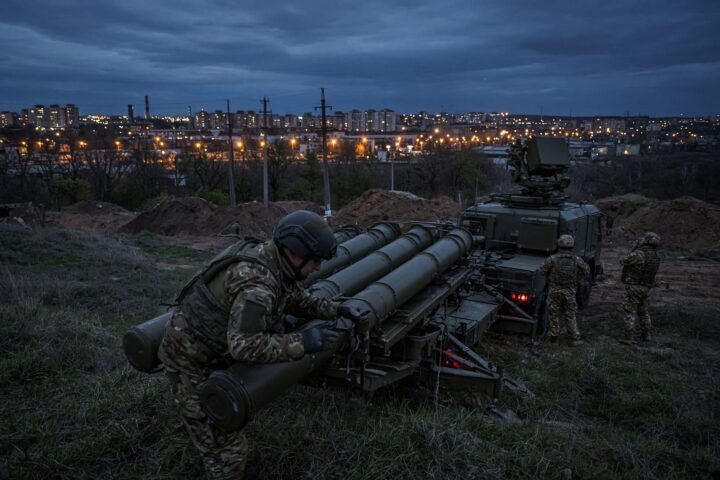
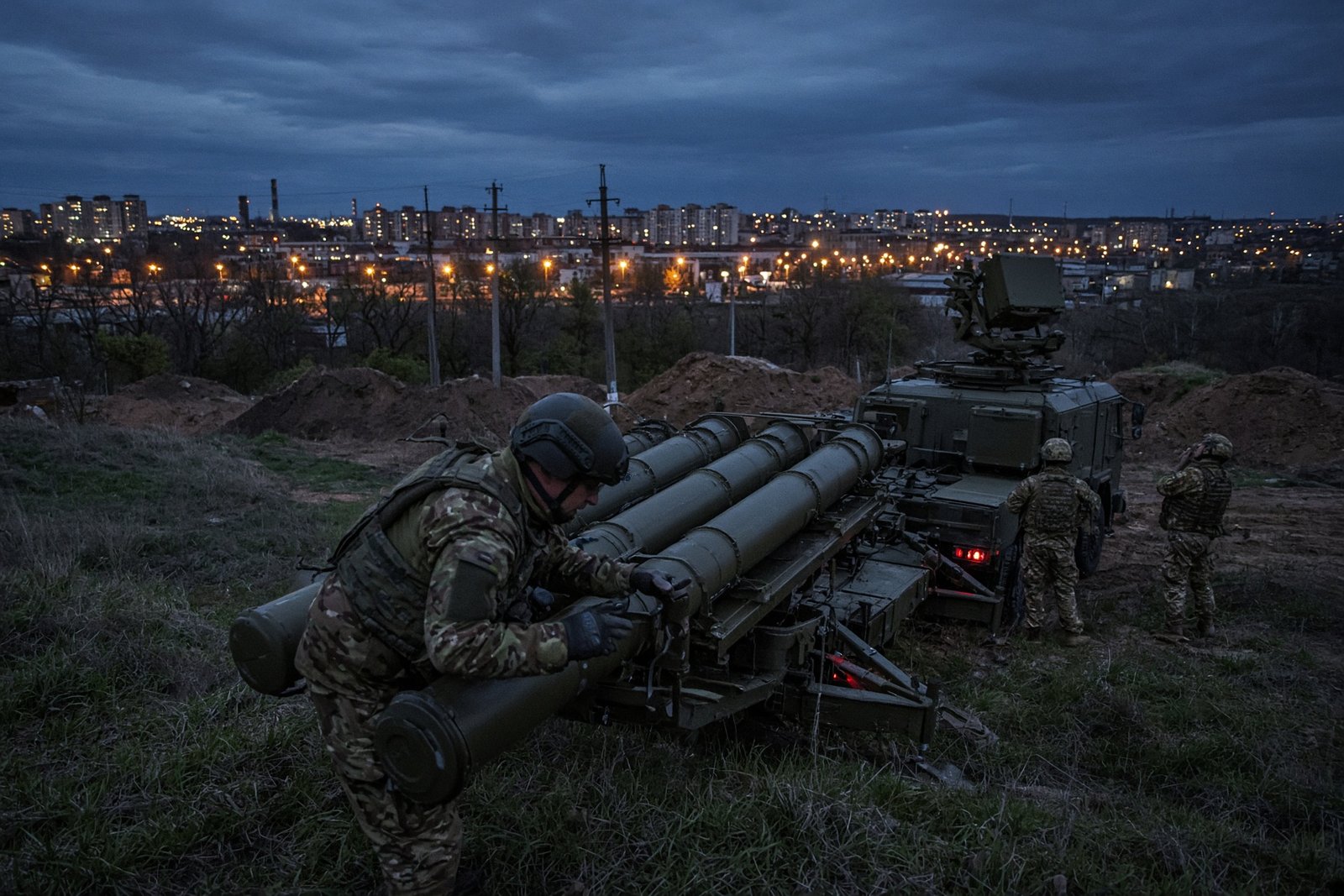
Norway and Ukraine presented the Desna surface-to-air missile system on 24 November. Developed by Norwegian defence company Kongsberg with the participation of Ukrainian specialists, the system is already being used by Ukrainian forces against Russian attack drones, according to reports by ITC and Defence Express.
Desna combines Ukrainian missiles with a Norwegian fire-control system. Its purpose is as much economic as technical: relatively inexpensive interceptors can be used against drones, while more costly Western air-defence missiles are preserved for ballistic missiles, cruise missiles and other difficult targets.
That distinction matters in a war in which Russia has used drones in large numbers to strike cities and critical infrastructure, while also forcing Ukrainian air-defence crews to expend limited stocks of ammunition. Using a cheaper missile against a comparatively simple target does not eliminate the threat, but it can improve the exchange between the cost of the attack and the cost of stopping it.
If production is expanded, Desna could add another layer to the protection of Ukrainian cities and infrastructure. It could also allow high-end systems to be concentrated where they are most needed. The scale of that benefit remains uncertain: the available reports do not establish the system’s production rate, the number of launchers or the volume of missiles that can be supplied.
The project nevertheless reflects a practical division of expertise. Kongsberg contributes the fire-control component, while Ukrainian specialists bring experience of operating under sustained missile and drone attack. Whether that combination becomes a significant part of Ukraine’s air-defence network will depend on how quickly it can move from a demonstrated capability to regular, large-scale deployment.
Refineries turn into a military target
On 25 November, Ukraine’s Security Service, or SBU, said that its units, working with other parts of the Defence Forces, had struck the Kuibyshev and Syzran oil refineries in Russia’s Samara region. The service said the plants have a combined annual refining capacity of 16 million tonnes of crude oil.
The SBU reported fires at both sites and said processing equipment, fuel-production facilities and storage tanks for petroleum products had been damaged. The service’s account is an official Ukrainian assessment rather than an independently verified survey of the plants.
The military significance depends on how much capacity was lost and for how long. Damage to a central processing unit can require specialised equipment, lengthy repairs and the diversion of engineers and materials. But Russia may be able to compensate for some lost output through other refineries, existing stocks or alternative distribution routes.
The plants also matter beyond the immediate supply of fuel. Refined petroleum products generate revenue for the Russian state, which uses public funds to support military spending. A prolonged fall in production could reduce sales and increase the cost of supplying both the domestic market and the armed forces. One strike would not transform Russia’s finances; repeated disruption could make the war more expensive by combining lost output with repair and transport costs.
The SBU’s account and details of the operation are set out in its official statement. The central question is whether the reported fires caused short-lived damage or a sustained reduction in refining capacity.
Armour hit before it reaches the front
On the Zaporizhzhia front, soldiers from the Lasar’s Group of Ukraine’s National Guard reported an operation against a concentration of Russian military equipment. A report by Korrespondent said 22 vehicles were hit, including 14 tanks, two command-and-staff vehicles, engineering equipment and lorries. The report estimated the losses at tens of millions of dollars.
The reported strike illustrates the value of linking reconnaissance to attack drones. A formation that is detected while concentrated can be weakened before it reaches an assault position. Destroyed or damaged tanks and support vehicles must then be repaired, replaced or transferred from another unit, complicating the preparation of a mechanised attack.
That does not mean one operation has changed the balance across the entire Zaporizhzhia axis. Its wider importance would come from repetition. If Ukrainian forces can repeatedly locate and strike Russian vehicle concentrations away from the immediate line of contact, Russia must spend more effort on concealment, dispersal and protection while accepting that equipment may be lost before it is committed to battle.
The reported value of the losses is also an estimate, not a confirmed financial calculation. The more concrete military question is how many vehicles were permanently destroyed, how many can be recovered and how quickly replacement equipment can be found.
Why Savasleyka matters
Ukraine’s General Staff said on 25 November that strikes on the Russian military airfield at Savasleyka, in the Nizhny Novgorod region, had hit five combat aircraft: three MiG-31s and two Su-34 fighter-bombers. The Ukrainian account said the aircraft had been put out of action. The claim was reported by , but the damage figures were not independently verified in the supplied reporting.
The MiG-31s have particular significance for Ukraine because Russia uses that aircraft type to launch Kinzhal hypersonic missiles. If several aircraft are temporarily unavailable, the number of platforms able to conduct those missions could fall. The Su-34s are also valuable aircraft used in bombing and missile operations.
Yet a damaged aircraft is not necessarily a permanent loss. The eventual effect will depend on whether the airframes can be repaired, how quickly replacement parts are available and whether Russia can move missions to other airfields. Even so, restoring complex combat aircraft can consume considerable time and resources, especially when several machines at one base are affected at once.
Taken together, the operations target different parts of the same system. Desna is intended to make Ukrainian air defence more sustainable. The refinery strikes put pressure on fuel and state revenue. The attack on armoured vehicles seeks to reduce the equipment available for ground assaults, while the reported damage at Savasleyka could constrain Russian air and missile operations.
The measure of success will therefore be found in what follows the initial announcements: the production rate of Desna, the length of the refinery shutdowns, the repair status of the aircraft and Russia’s ability to replace lost tanks and aircraft. Those follow-up figures will show whether the strikes remain temporary disruptions or develop into a lasting constraint on Russia’s ability to attack.