Matteo Salvini has seized on a reported Ukrainian strike in Benghazi to question the limits of Italy’s support for Kyiv. The League leader says he does not want the war brought to Italy’s doorstep in the Mediterranean. Yet the dispute also exposes a harder strategic problem for Rome: Russia’s growing use of eastern Libya as a military and logistical base.
Italian media reported on 23 and 24 November 2026 that Ukrainian forces had struck a Russian cargo vessel and a military corvette in the Libyan port. Volodymyr Zelenskyy described the operation as a demonstrative response to Russia’s war against Ukraine. The available account does not independently establish the vessels’ precise missions, cargoes or the circumstances of the attack.
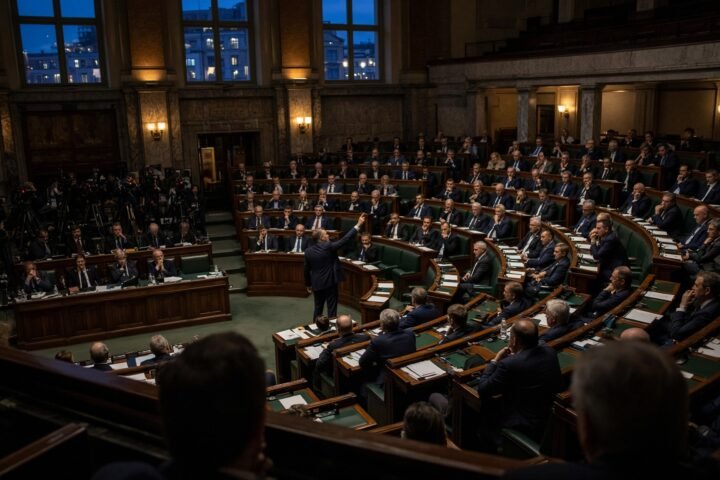
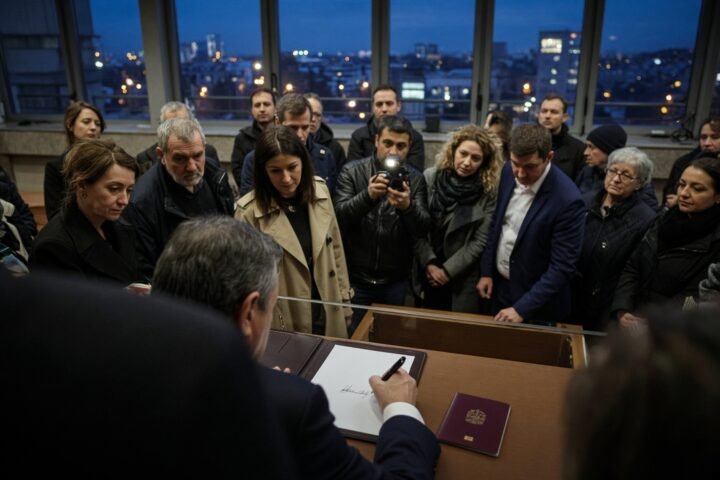
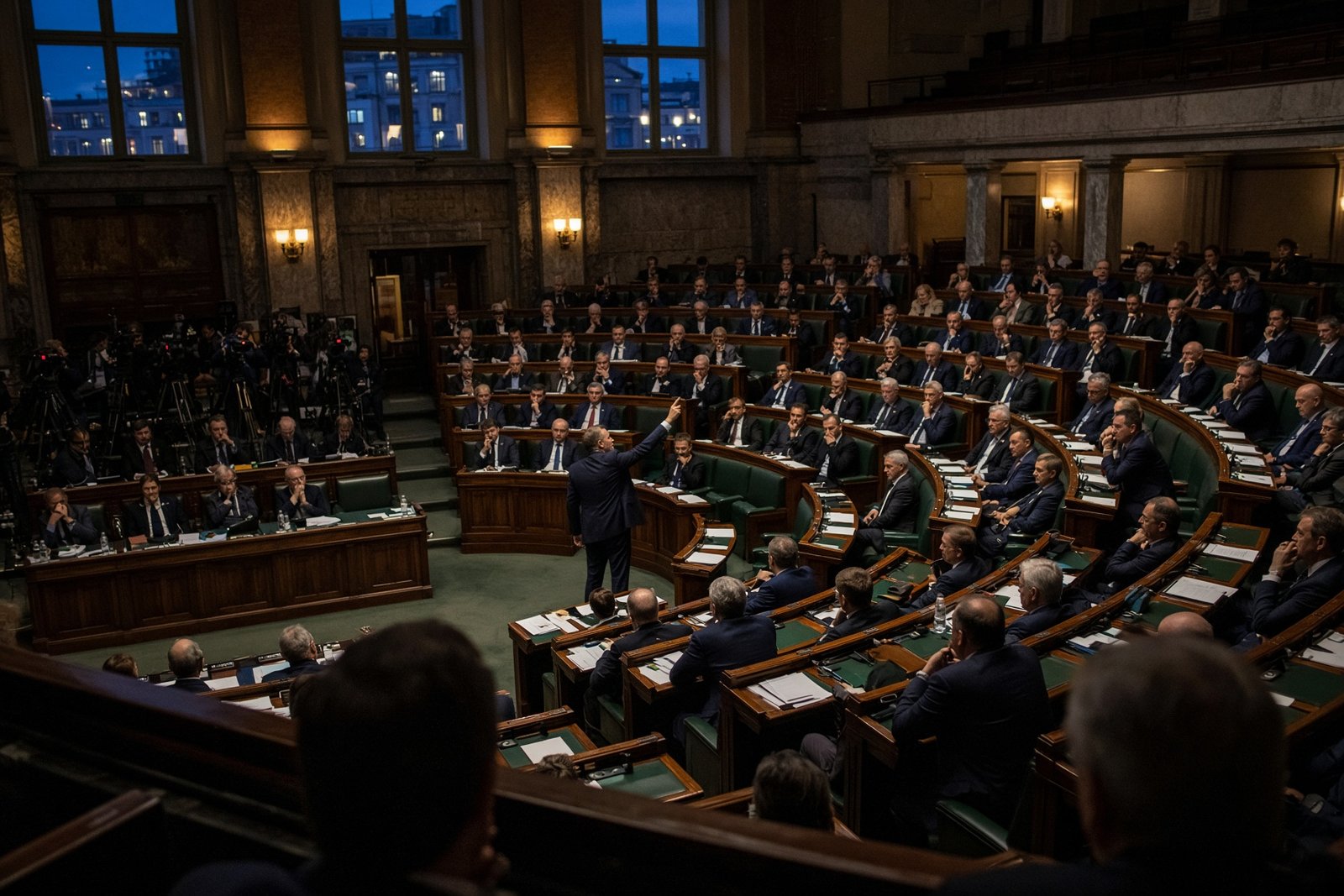
Speaking at a news conference in the Chamber of Deputies, Salvini questioned how the sinking of a Russian ship in Libyan waters could be connected to the defence of Ukrainian territory. He drew a line between supporting a nation under attack and using that support for military operations and the sinking of vessels in other parts of the world. He also said Foreign Minister Antonio Tajani was seeking the necessary explanations from Kyiv.
Il Fatto Quotidiano reported on Salvini’s remarks and the incident.
The argument begins with geography
Salvini’s case is straightforward. Benghazi is not in Ukraine but on the southern shore of the Mediterranean, within a region closely tied to Italy’s security concerns. An attack there can therefore be presented as evidence that Western military support for Kyiv is allowing the war to spread beyond the territory Ukraine is defending.
That framing is politically potent. Italian voters are sensitive to the prospect of direct involvement in a wider conflict, while instability in North Africa is bound up with concerns about migration, energy supplies and maritime security. By concentrating on where the strike took place, Salvini links continued assistance to Ukraine with the risk of escalation close to Italy.
But location alone does not determine the strategic role of a port or a vessel. Russia has been expanding its military presence in eastern Libya, with Benghazi and Tobruk identified as important logistical points for activity in Africa. The ports can provide routes for moving personnel, weapons and equipment towards the region, including operations associated with Russia’s Africa Corps.
That does not prove that the two vessels struck in Benghazi were carrying military supplies, nor does it settle whether the operation was lawful or militarily justified. Those questions depend on facts about the ships, their status, their cargoes and the circumstances of the strike, which have not been publicly resolved in the remarks reported so far.
It does explain why an operation in Libya might be viewed by Kyiv as connected to the war against Russia, even though it occurred far from Ukrainian territory. A port can be distant from the battlefield while still forming part of the infrastructure supporting a wider military campaign.
Why Libya matters to Rome
For Italy, the Libyan coast is not a remote security concern. Rome has substantial energy interests in the country and is directly exposed to migration routes crossing the central Mediterranean. A durable Russian military position in Libya could complicate Italy’s relations with local authorities, the protection of maritime routes and the management of strategic infrastructure.
This creates two risks that point in opposite directions. Strikes against Russian assets outside Ukraine could widen the confrontation and make an escalation in the Mediterranean more likely. At the same time, allowing Russian military logistics to take root on the southern shore of the sea could give Moscow a stronger platform close to European interests.
Salvini’s warning addresses the first danger but gives less weight to the second. His concern that the conflict could move closer to Italy reflects a genuine fear of escalation. Yet the same geography that makes a Ukrainian operation in Benghazi alarming also makes Russia’s entrenchment in Libya strategically important to Rome.
The central question for the Italian government is therefore not simply whether Kyiv should have acted in Benghazi. It is whether Russian vessels and facilities there form part of a network that affects the security environment around Italy. That cannot be answered without more detail about the ships and the operation, but it cannot be dismissed merely because Benghazi lies outside Ukraine.
A domestic argument with regional consequences
The timing gives Salvini’s intervention an unmistakable domestic dimension. Further parliamentary votes on support for Ukraine are expected, and the Benghazi incident allows the League to combine several themes that resonate with parts of its electorate: the cost of military assistance, the fear of direct involvement and anxiety about security in the Mediterranean.
By describing Western-backed assistance as a means of conducting war across the world, Salvini places pressure on the governing coalition. His argument challenges Rome to define whether support for Ukraine is confined to the defence of its territory or can also cover attacks on Russian military capabilities outside Ukraine.
That distinction matters well beyond the wording of a parliamentary vote. If Italy treats any Ukrainian action against Russian assets beyond Ukraine as an unacceptable expansion of the war, it risks discussing the strike without fully addressing the military infrastructure Russia is building in Libya. If it accepts such actions without demanding a clear account of their targets and circumstances, it risks appearing indifferent to the prospect of escalation in a region vital to Italian interests.
The episode also gives political space to forces that favour easing pressure on Moscow or reducing military support for Kyiv. Salvini’s comments may deepen divisions within the coalition and make it harder for the government to present a single position on European security. His criticism does not by itself determine Italy’s policy, but it raises the political cost of maintaining a clear and consistent line.
Tajani’s narrow window for manoeuvre
Tajani now faces a two-part task. He must seek clarification from Kyiv about the reported strike, while also assessing what Russia’s use of Libyan ports means for Italy’s own security. Focusing only on the Ukrainian operation would leave the Russian logistical network underexamined. Focusing only on that network could be read as accepting an attack whose details remain uncertain.
The identity and status of the vessels, their intended missions, any cargo they carried and the precise conditions of the strike will all affect the eventual assessment. Without those facts, it is not possible to say whether Benghazi marks a significant new phase of the war, an operation against part of Russia’s regional logistics or an isolated escalation.
What is already clear is that the incident has moved a distant military question into the centre of Italy’s political debate. Salvini has made the location of the strike a test of the boundaries of Western aid. Rome must now decide whether to view the Russian presence in Libya mainly as a reason to shield the Mediterranean from the war, or as a security challenge that is already changing the balance around Italy’s southern approaches.