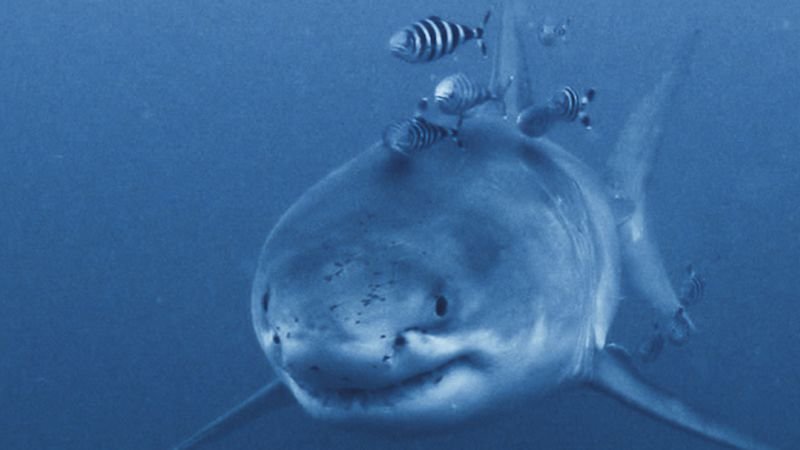
Diver encounters great white shark in the Mediterranean
More than 132 feet below sea level, a volunteer diver removing abandoned fishing nets from a shipwreck in the Mediterranean Sea had an encounter with a great white shark, reports BritPanorama.
The sighting occurred between the white beaches of Sicily and the dramatic coastline of Tunisia. Derk Remmers was working with the Ghost Diving Foundation, a charity focused on retrieving ghost nets to protect marine life, when he came face to face with the shark.
“Scientists say that around 3 to 10% of all fishing gear is lost in any given year in the oceans of the world,” Remmers noted. “And if you could imagine how many fishing boats come out of any harbor, this is a huge amount.”
In May, as Remmers descended into the ocean’s depths, he and his diving buddy experienced a remarkable sighting. “I should say I wasn’t afraid at all, but it’s not true,” he reflected, acknowledging the presence of primal fear when encountering such a predator. “I needed desperately to get the camera running because no one would ever believe we had seen a white shark without evidence,” he added.

Remmers was elated about the encounter, noting that sightings of great whites in the Mediterranean are becoming increasingly rare. According to him, no one has captured footage of a Mediterranean great white until now, and it has been over 40 years since a sighting.
However, the situation for great whites is dire. Despite their size, which can reach up to six meters (20 feet) and weigh over two tons, these sharks face significant threats from human activities. Sharks often become bycatch, trapped in nets not designed for them, leading to their deaths.
The International Union for Conservation of Nature (IUCN) identifies great whites as vulnerable to extinction, with populations having declined by 30-49% over the past three generations due to overfishing and climate change. Mediterranean white sharks are considered to be critically endangered following significant population reductions attributed to coastal and industrial fishing.
Paul Cox, CEO of Shark Trust in Plymouth, emphasized the need for comprehensive conservation measures, calling for all fishing nations to comply with strict regulations to protect marine life effectively. “A range of conservation measures are needed for sharks in the region,” he stated.
Shipwrecks often act as artificial reefs, fostering biodiversity, but ghost nets can transform these sites into deadly traps for marine life. “You spend decades diving wrecks and removing ghost nets, but nothing prepares you for a moment like this,” Remmers said, highlighting the importance of their ongoing conservation work.
As conservation efforts continue, the hope remains that awareness and action can safeguard these magnificent creatures for future generations.