More than 250 participants have been enrolled in a trial for a drug that could stop them from contracting Ebola in Congo, in what experts have described as a critical step to try to fight the deadliest outbreak of the disease in the Central African country, reports BritPanorama.
The drug is targeted at the Bundibugyo virus, responsible for the fast-moving outbreak and without an approved vaccine or treatment. The trial began in July and is one of several studies launched to find some protection and potentially slow the outbreak.
The Associated Press spoke this week to participants and doctors at the health center where the trial is taking place in the eastern province of Ituri, the epicenter of the outbreak. The group includes individuals exposed to the disease during this outbreak, among them health workers and relatives of patients.
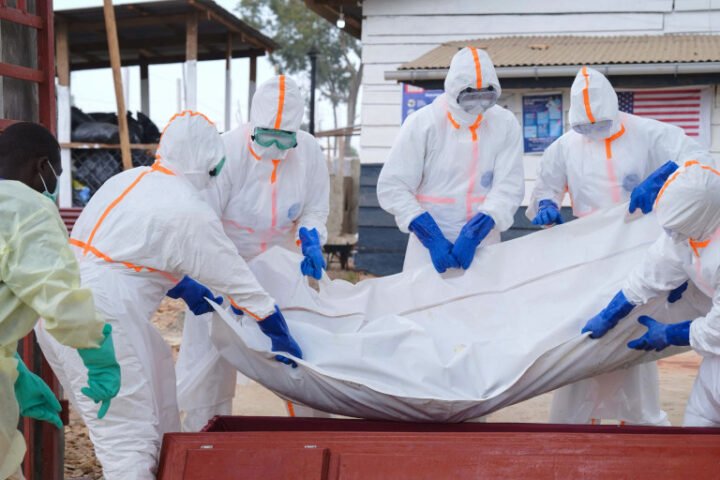
At least 8,300 confirmed cases, including 4,000 deaths, have been recorded since this Ebola outbreak was declared in mid-May in eastern Congo. The disease has spread to seven provinces and continues to outpace efforts to track and control it, according to authorities.
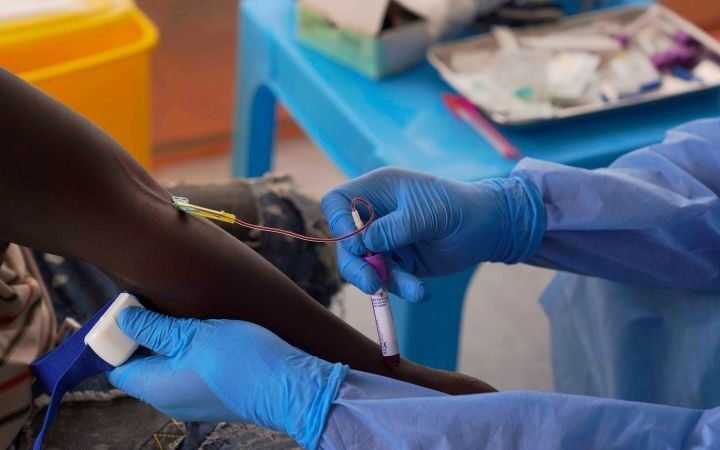
The trial is testing Gilead’s experimental antiviral pill, called obeldesivir, which is administered soon after suspected contact with the virus to prevent disease development. This approach is termed post-exposure prophylaxis, or PEP.
The drug aims to stop the disease before it spreads
One participant in the trial known as EBO-PEP reported that she enrolled in August after her husband tested positive for Ebola. She noted that, thus far, no one in her family has developed symptoms.
To protect their privacy due to the sensitive nature of the outbreak and medical protocol, she and other trial participants requested anonymity. “I realized that if I even touched my husband — and I did touch him, his vomit, everything — I was a direct contact. I could have also passed on this contagious disease. I could have been contaminated,” she explained.
This participant is aware of entire households becoming infected after a family member tested positive for Ebola. However, she maintains that her family remains symptom-free.
Ebola only spreads once symptoms manifest, necessitating a waiting period for those exposed to see if they become ill. Finding individuals at high risk of incubating the Bundibugyo virus — known as contact tracing — has proven challenging in Congo.
Another participant recounted that two family members had contracted Ebola, one of whom died. “This disease is killing. It’s better to take precautions,” he stated.
How the trial works
The trial, coordinated by ALIMA, a medical nonprofit, aims to recruit nearly 1,000 adults or children over the age of 12 who have come into contact with a confirmed case within the last five days but show no symptoms. Half of the participants will receive a placebo.
Participants are monitored in person daily for 21 days, with a final phone call after 42 days, according to Dr. Godefroid Basara, who is overseeing the trial. If trial participants begin to show symptoms, they will immediately receive supportive treatment, which has been found to be beneficial when symptoms are identified early.
If the pill proves effective, it could aid in breaking the infection chain. “It differs from a vaccine, which may take days or weeks to provide protection. It is also different from curative treatment because it is intended for people who are not yet showing symptoms,” explained Dr. Guilavogui Jean Paul Yassa, ALIMA’s research coordinator.
Dr. Jacques Zawadi, involved at the trial center, mentioned that most participants are willing to join the study, but motivating some individuals living further away has been difficult. The study sometimes faces disruption when participants learn that family members have succumbed to the disease. “This is the biggest challenge we face. When a person is emotionally affected, it is not easy to reason with them and ensure they return to the study,” he said.
The trial partners include Congo’s National Institute of Biomedical Research and the French institute ANRS Emerging Infectious Diseases.
Front-line health workers are also at high risk
As new vaccines are under development elsewhere, Congo has initiated vaccinations for health workers with the Ervebo vaccine, which was effective in past outbreaks caused by a different virus. Authorities have noted that while Ervebo could provide some degree of protection against Bundibugyo, its actual effectiveness in preventing illness remains under investigation.
On Thursday, humanitarian organization Doctors Without Borders announced that a staff member had tested positive for Ebola and was being evacuated to the Netherlands. In June, a physician from ALIMA also tested positive after returning from one of the outbreak’s hot spots.
The World Health Organization has indicated that the outbreak continues to outpace efforts to monitor and contain it, and is projected to surpass the severity of West Africa’s outbreak between 2014 and 2016 — which resulted in 11,000 deaths.