Frequent cues to “brace your core” in gyms are founded on the principle that your core must stabilize your spine during movement and lifting. However, when bracing becomes a habitual response, particularly during every exercise or throughout daily activities in pursuit of better posture or aesthetics, it can instead lead to negative outcomes, reports BritPanorama.
Excessive core tension may limit mobility, hinder breathing, and trigger a stress response in the nervous system. This contradicts the foundational goal of strengthening the core. From over two decades of experience in professional sports, it is evident that the most durable athletes possess dynamic core stability, which can adapt to different demands without resulting in restricted movement or breathing.
Building a robust core involves training it to provide responsive support without fostering excessive stiffness. Strategies to avoid over-bracing will help in developing functional core strength.
Understanding core stability vs. rigidity
The core encompasses more than just the abdominal muscles; it is a comprehensive system involving the abdominal wall, lower and mid-back muscles, diaphragm, and pelvic floor. These components work cohesively to transfer force through the body while offering support to the spine, pelvis, and rib cage. True core stability is characterized by a dynamic response to varying demands; tension increases with higher demands and relaxes as those demands decrease.
While bracing can be beneficial during heavy lifts when more spinal stiffness is necessary, issues arise when maximal core engagement is maintained as a default state. Continually adopting this rigidity undermines core responsiveness, making movements such as walking and reaching much more challenging and potentially leading to chronic stiffness and pain.
How excessive tension interferes with breathing
The interplay between breathing mechanics and core stability is vital. The diaphragm not only plays a crucial role in respiration but also functions as a stabilizing muscle for posture. Coordination between the diaphragm and pelvic floor is essential; when the diaphragm contracts during breathing, the pelvic floor typically relaxes, and vice versa. Both structures collectively manage abdominal pressure, which is key for spinal support and effective force transfer.
Emerging research indicates that bracing may inhibit the diaphragm’s function as a respiratory muscle. A study conducted in 2023 found that while abdominal bracing enhanced diaphragm movement during lifting, it simultaneously reduced lung volume. Understanding when and how to brace is crucial, especially as what serves our heaviest lifts can lead to detrimental restrictions if employed constantly.
Chronic over-bracing can lead to shallow breathing patterns and breath-holding, reinforcing a heightened state of stress and increasing muscle tension — a cycle that further limits breathing capacity.
Finding stability without stiffness in daily life
Instead of consistently forcing abdominal engagement, it is advisable to adjust muscular activation based on the task at hand. Activities like carrying groceries require stability but not as much rigour as heavy lifts. Day-to-day tasks that involve rotation, such as mopping or shoveling, similarly demand dynamic stability.
To recalibrate core engagement during daily activities, consider the following:
- Keep breathing. In low-load exercises or most daily movements, you should breathe deeply and steadily. If straining occurs, reduce the effort or range of motion.
- Balance your rib cage over your pelvis. Proper alignment creates conditions for core muscles to coordinate effectively.
- Use only as much effort as needed. Increase core engagement during the most strenuous parts of a movement, then allow it to ease as the demand lessens.
3 exercises to train dynamic core stability
The following exercises focus on developing responsive trunk control and can be integrated into existing workout routines or performed as a circuit two to three times weekly, prioritizing movement control over speed.
Note: Consult a healthcare professional before initiating any new exercise program, and discontinue practice if pain or breathing difficulties arise.
Dead bug
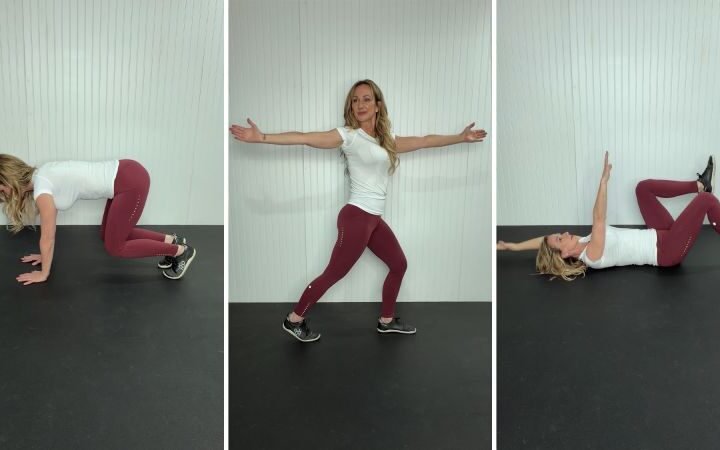
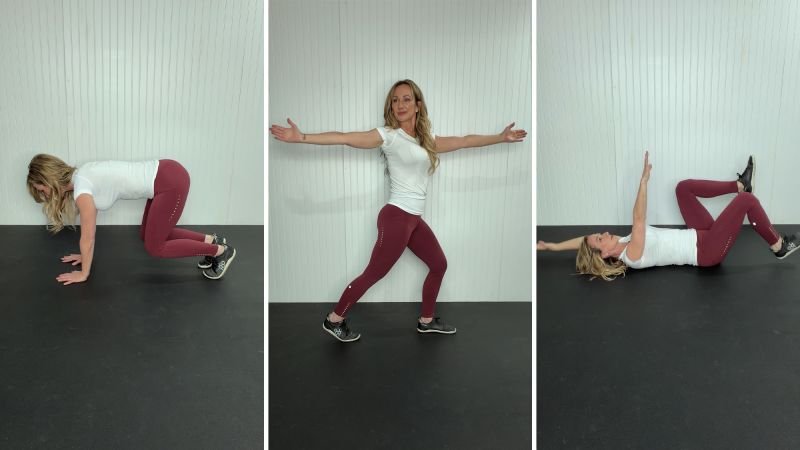
Begin by lying on your back, arms pointing toward the ceiling, and hips and knees bent at 90 degrees. Abdominal engagement happens naturally as you exhale, bringing your lower ribs in. Slowly lower your right arm and left leg toward the floor while keeping your knee bent. Avoid lowering your ribs or lifting your lower back from the floor. Inhale to return to the starting position, alternating sides for 12 to 20 repetitions.
Sideways bear crawl
Starting on your hands and knees with your wrists aligned under your shoulders and knees under your hips, lift your knees slightly off the ground into a bear-crawl stance. Maintaining a level hip and a straight spine, move sideways to the right, alternating hand and foot movements. Aim for 12 to 20 steps in each direction at a pace you control, ensuring deep breathing throughout without holding your breath.
Split-stance rotation
Stand with your feet about 12 to 18 inches apart, positioning your right foot forward. With arms extended at chest height, keep your right arm forward as you rotate your torso to the left, then return to center. Perform 8 to 10 repetitions on each side. This exercise trains the core to maintain stability amid twisting motions — an essential aspect of dynamic movements.
Effective core stability does not equate to rigidity. Over-tensing your core for protection or aesthetics may ultimately restrict movement capabilities. Instead, focus on training your core to respond dynamically to challenges, fostering both strength and mobility.