The Federal Aviation Administration (FAA) has proposed revised regulations that could usher in a new era of supersonic air travel, potentially lifting a long-standing ban on flights over land that has been in place since 1973. In June, the agency sought public feedback on plans that would shift from a speed-based framework to a noise-centric standard, aiming to finalize these updates by mid-2027, reports BritPanorama.
These proposed rules follow decades of controversy surrounding supersonic flight, notably highlighted by a series of tests conducted in Oklahoma City in 1964. During those tests, military aircraft produced 1,253 sonic booms over six months, sparking significant public outcry and ultimately influencing U.S. policy on supersonic air travel.
The tests revealed that while the concept of supersonic flight could deliver dramatically reduced travel times, public tolerance for the resulting sonic booms was limited. Legislative efforts led to the cancellation of funding for Boeing’s 2707 supersonic aircraft in 1971, followed by an outright ban on civilian supersonic flights over land. The Concorde, operational from 1976 to 2003, became the sole commercial supersonic airliner but never found a successor.
As these regulatory changes unfold, the airline industry faces the challenge of mitigating the disruptive noise associated with sonic booms. Recent research indicates that these booms can have significant implications for public health and safety, prompting renewed interest in developing quieter aircraft technologies.
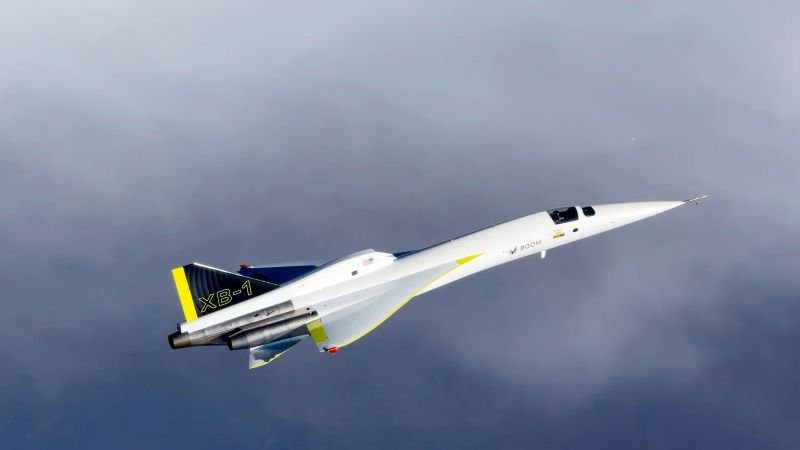
Innovations are on the horizon. Companies like Boom Supersonic are exploring technologies aimed at preventing sonic booms from reaching the ground, while NASA’s X-59 is designed to create significantly quieter sonic thumps, resembling the sound of a car door closing, rather than a loud sonic boom.
The potential resurgence of supersonic travel is met with cautious optimism among experts. Juan Alonso, a professor at Stanford University, stated that the new legislation has been a long time coming, reflecting persistent advocacy from both NASA and the aviation industry. However, noise remains a substantial barrier that must be resolved for faster-than-sound travel to be sustainable and publicly acceptable.
While the FAA’s proposed standards represent a significant step toward reintroducing supersonic flights, the path remains fraught with regulatory and technical hurdles. If these efforts succeed, they could reshape the future of air travel, providing faster options for passengers while balancing the historical concerns associated with sonic booms.
As advancements and discussions continue, the future of supersonic travel hinges on achieving a balance between innovation and community acceptance, echoing the complexities faced nearly half a century ago.