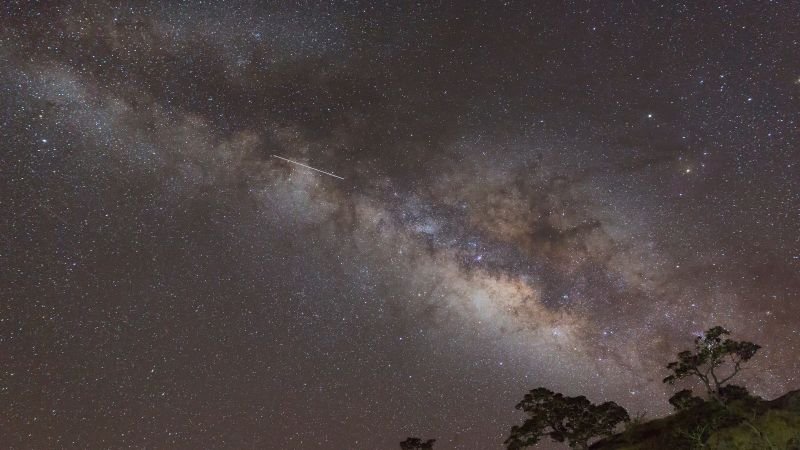
Double meteor shower peak this week
A double meteor shower peak will occur this week, but sky-gazers might have a difficult time catching a glimpse of the cosmic activity, reports BritPanorama.
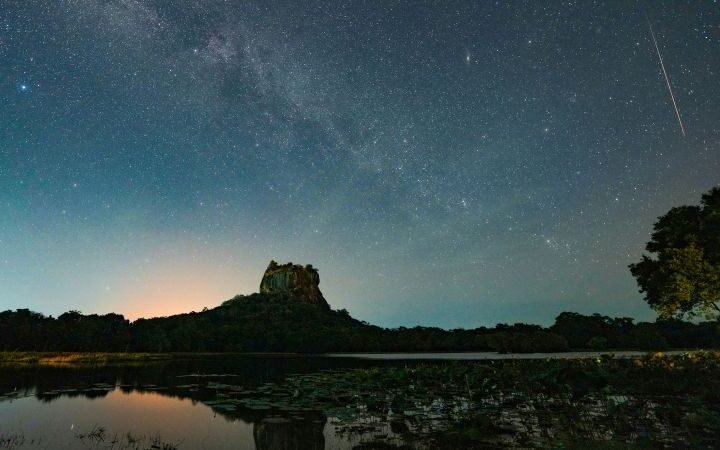
The Alpha Capricornids are active from early July to mid-August, while the Southern Delta Aquariids are active from mid-July to mid-August. Both are expected to reach their peaks Thursday night into Friday, according to the American Meteor Society.
Additionally, the Perseids meteor shower will also be active this week, although it will peak later, in mid-August.
Visibility may be challenged this week due to the July full moon, set to reach its fullest on Wednesday. Its brightness will hinder the visibility of fainter meteors, as noted by Bob Lunsford, report coordinator for the American Meteor Society.
Although the Alpha Capricornids and Southern Delta Aquariids occur annually, optimal visibility is typically limited by full moon phases approximately every three years, Lunsford added.
At times when the moon is not obstructing, meteor showers tend to be best visible before moonrise or after it has set. “But with the full moon, it’s up there all night,” said Bill Cooke, lead of NASA’s Meteoroid Environment Office. “The meteors are just going to be very difficult to see.”
Observers in the Southern Hemisphere may have an advantage, as the radiant point for meteor activity appears higher in the sky compared to its position in the Northern Hemisphere, according to Cooke.
To maximize viewing potential, Lunsford advises positioning oneself at a higher elevation, facing northward with the moon behind. This setup minimizes the interference of direct moonlight on night vision.
The Southern Delta Aquariid meteor shower radiates from the constellation Aquarius and is known for producing faster-moving meteors—approximately two per hour seen from the Northern Hemisphere, and three per hour from the Southern Hemisphere.
Conversely, the Alpha Capricornid meteor shower emanates from Capricornus, featuring brighter meteors, with an estimated rate of three per hour visible from both hemispheres, reports the American Meteor Society.
What meteor showers teach observers
Meteor showers provide not only awe-inspiring views but can also offer significant insights into space. Observers can help experts “determine the particles in space that are orbiting and when we intercept them every year,” Lunsford stated.
Furthermore, tracking meteor activity is crucial for ensuring the safety of human spaceflight. Understanding meteor movement helps predict potential encounters for spacecraft and their crews, according to Cooke.
Upcoming meteor showers
While the double meteor shower peak may be difficult to observe, astronomers anticipate that the upcoming Perseid meteor shower, peaking in August, will produce a more spectacular display with clearer skies.
For reference, the following are the peak dates for meteor showers in 2026 according to the American Meteor Society:
- Perseids: August 12-13
- Orionids: October 21-22
- Southern Taurids: November 4-5
- Northern Taurids: November 11-12
- Leonids: November 16-17
- Geminids: December 13-14
- Ursids: December 21-22