The ultraprocessed food industry faces increased scrutiny as a recent survey reveals that 77% of Americans support mandated warning labels on such products, illustrating a growing demand for regulatory change, reports BritPanorama.
This new survey indicates that a significant majority across political lines—Republicans, Democrats, and Independents—favor “large warning labels” on ultraprocessed foods. Additionally, findings show that up to 70% want to prohibit advertising these foods on children’s television, while 87% advocate for government safety testing of all chemicals used in food.
“Families are asking important questions about how food is made, marketed and regulated and how they can be a part of change,” stated Ashley Gearhardt, the survey’s senior author and a psychology professor at the University of Michigan.
A campaign to reduce ultraprocessed foods
In response, Gearhardt and fellow researchers have initiated a campaign called “Fed UP!” aimed at assisting consumers in understanding ultraprocessed foods and advocating for healthier food environments. The campaign’s website will include research summaries, educational videos, and practical resources.
The initiative also aims to provide information on how to petition for regulatory changes and reduce ultraprocessed foods in schools. In conjunction with the campaign, a UPF-focused issue of the American Journal of Public Health features multiple studies and editorials emphasizing the need for corrective industry and regulatory action.
Laura Schmidt, a professor at the University of California San Francisco and a contributor to the Fed UP! campaign, remarked, “Corrective action by both industry and regulators is long overdue.” Schmidt highlighted the stagnation in progress since initiating a sugary soda tax in 2009, noting, “We are still not doing anything significant around this issue.”
Despite encouraging commentary from health officials regarding regulation of ultraprocessed food companies, experts have largely deemed the actions taken insufficient. The Make America Healthy Again (MAHA) Commission had previously promised decisive policy measures by August 2025, but a report released in September stated only that the government would “continue efforts” to define ultraprocessed foods.
Barry Popkin, a public health professor at the University of North Carolina at Chapel Hill, critiqued the final MAHA report as lacking rigor, stating, “In my opinion, it shows the food, agricultural, and pharmaceutical industries got to the White House and won the day.”
With significant financial investment in lobbying efforts—amounting to $1.15 billion from ultraprocessed food companies between 1999 and 2020—the challenge in effecting change is considerable, Gearhardt noted.
Dangers of ultraprocessed foods
The repercussions of inaction on this issue are serious; studies indicate that consuming just 10% more daily calories from ultraprocessed foods may correlate with a 50% higher risk of death from cardiovascular disease. Increased consumption of these foods has also been linked to elevated risks of obesity and type 2 diabetes.
Moreover, ultraprocessed foods have been associated with heightened risks of cognitive decline and Alzheimer’s disease. A recent study revealed almost a 60% increased risk of dementia among adults consuming the highest amounts of ultraprocessed foods.
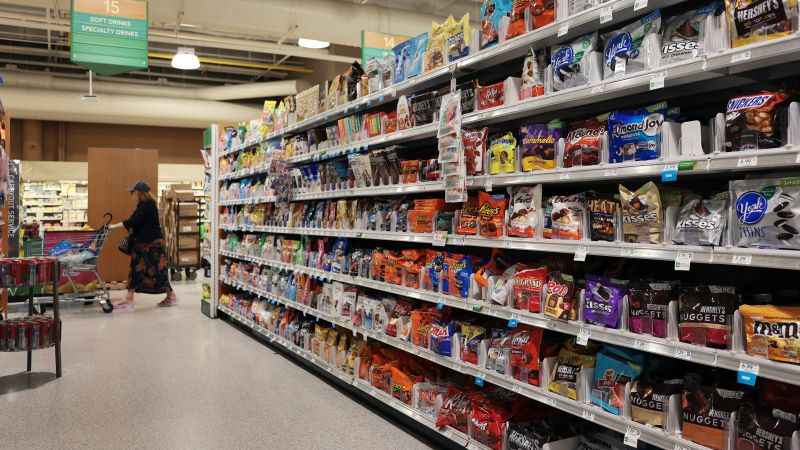
Despite experts’ warnings, a large portion of the American food supply is dominated by ultraprocessed options. The CDC reports that 53% of adult calories in the US come from these products, with that figure rising to 62% for children aged one to 18.
A link between ultraprocessed food and addiction
Research led by Gearhardt highlights that over 12% of older adults in the US—and 21% of women ages 50 to 64—exhibit clinical addiction to ultraprocessed foods. More alarmingly, 12% of children globally are also reported to be addicted.
In her latest study, published in the American Journal of Public Health, Gearhardt explored the compelling mix of sugars, fats, and additives that drive consumers towards ultraprocessed foods. “Surveys show the majority of Americans don’t trust these big ultraprocessed food companies,” she stated.
The narrative promoted by the food industry framing consumer behavior as one of willpower rather than a consequence of processed food design has been widely criticized. “It’s not consumers who are to blame for the rise in obesity and diet-related disease. It’s the food,” said Faber, an advocate for nutritional transparency.
As various stakeholders call for enhanced regulations to manage ultraprocessed food production, those in the industry, such as the Consumer Brands Association, assert compliance with safety standards set by the FDA.
‘It shouldn’t be this hard’
The Fed UP! campaign is structured to ensure that its affiliated organizations remain independent from industry ties, promoting a transparent dialogue on public health. Educational materials offer guidance on raising awareness about the environmental and health impacts of ultraprocessed food production while advocating for improved access to minimally processed diets.
In the broader narrative, experts have consistently highlighted the pressing need for regulation of ultraprocessed food from a global perspective, emphasizing the necessity of warning labels and restrictions on advertising, particularly aimed at children.
Gearhardt concluded, “People should not require a PhD in nutrition science to identify ultraprocessed foods. It shouldn’t be this hard to nourish our bodies.”
The growing consumer awareness regarding ultraprocessed food content indicates a significant shift in public sentiment, setting the stage for potential regulatory changes in a sector that increasingly faces scrutiny.