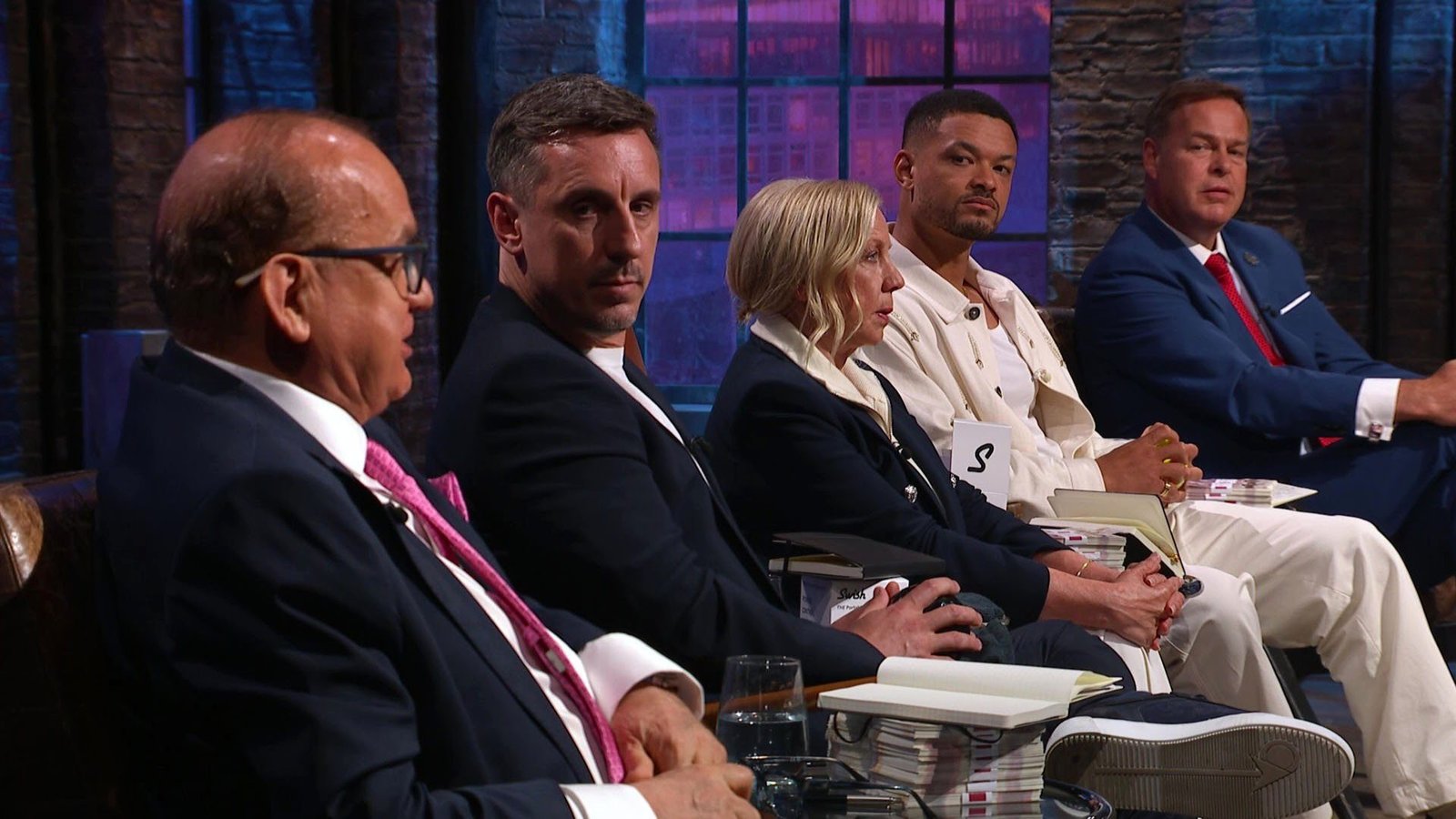
Gary Neville returns to Dragons’ Den, sparking debate about business success
In a notable return to the BBC’s Dragons’ Den, former footballer Gary Neville is lending his mentorship to aspiring entrepreneurs, a move that some argue sends mixed signals about business success in 2026, reports BritPanorama.
Neville brings a charismatic presence to the show, often showering praise on the young entrepreneurs who pitch their ideas. His comments, such as “you’re driven, smart, likeable and authentic,” have endeared him to contestants, leading to enthusiastic responses. He collaborates readily with fellow investors, emphasizing teamwork, as exemplified by his remark, “You definitely can’t win a game on your own.”
Nonetheless, the question of why entrepreneurs would seek Neville’s investment based on business acumen remains. With over two million followers on Instagram, he presents a lucrative opportunity for entrepreneurs, particularly those leveraging social media. However, his actual business track record raises concerns. In 2024, his co-owned Leeds restaurant, The Man Behind the Curtain, went into liquidation, amassing debts of £500,000 to HMRC and £370,000 to Neville himself. Recent reports also confirm his abrupt exit from Buzz 16, a digital content venture.
Neville currently holds 46 directorships across various sectors, including property and education, yet his strategic focus appears scattered. Notably, his previous investments from the show, such as Cozy Cinema and Full Power Cacao, have not yielded fruitful outcomes, with the former ceasing operations and the latter resulting in a diluted stake.
This evolution mirrors broader changes in Dragons’ Den. Deal-making has become more aggressive, with investors now taking larger equity stakes than in the past. Entrepreneurs are less likely to negotiate against such demands, indicating that Neville’s celebrity status offers him considerable leverage in negotiations.
Moreover, the program’s dynamics have shifted. Entrepreneurs now approach the show more as a promotional platform than a venue for securing genuine investment. A case in point is Sprive, a mortgage rewards application that featured in Neville’s first episode. The startup had already raised over £4 million prior to its appearance, yet offered 5% equity for £50,000—effectively valuing the company at just £1 million.
The influence of social media-savvy investors like Steven Bartlett is also reshaping the landscape. As the most prolific investor in the show’s history, Bartlett exemplifies the trend of entrepreneurs prioritizing celebrity and digital presence over traditional business expertise. This shift highlights a concerning trend where recognition on platforms like TikTok trumps substantive business strategy in the eyes of budding entrepreneurs.
While Neville’s affability and presence on screen make him a popular figure among viewers, it poses a challenge for aspiring business owners. The focus on social media influence in securing investment illustrates a notable departure from traditional routes to business success. As economic growth slows and productivity remains a pressing issue in the UK, it’s essential to remind audiences that many impactful businesses start from modest beginnings, not just a large follower count.
Dragons’ Den continues next Thursday at 8pm on BBC One.