A senior Russian parliamentarian has called for the war in Ukraine to end by 2030 so Moscow can prepare for a large-scale conflict with Nato, naming France among its potential enemies.
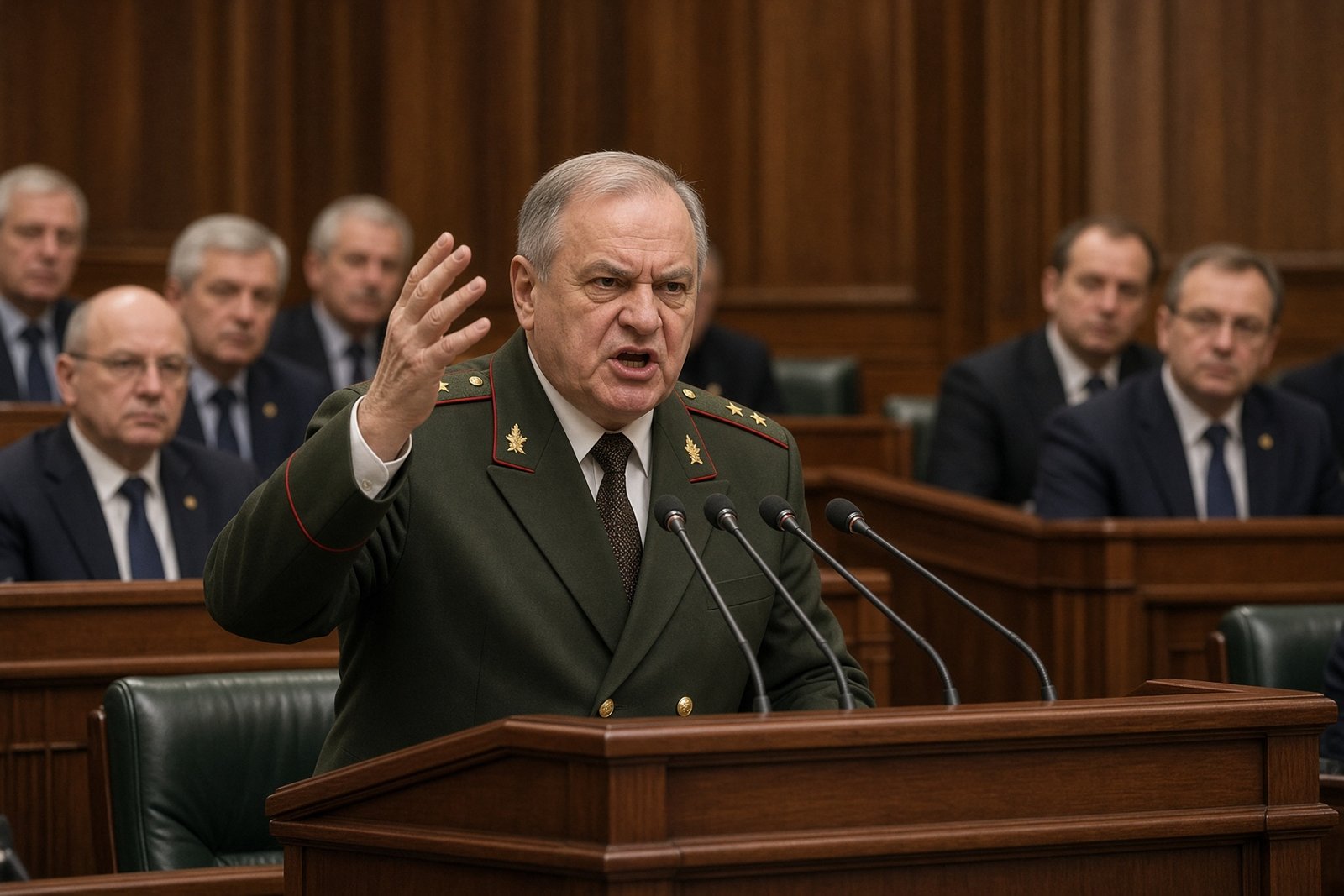
Viktor Sobolev, a retired general and member of Russia’s State Duma defence committee, made the remarks reported by Actu Orange on 25 August 2026. His comments present the war against Ukraine not as an isolated campaign, but as one stage in a wider confrontation with Europe and the Nato alliance.
A war presented as preparation
Sobolev, who backs the Kremlin’s hardline position, said the fighting should be completed by 2030 to allow Russia to prepare its armed forces for a broader conflict with Nato. He identified several European countries, including France, as potential opponents.
The remarks are significant because they treat the possibility of a direct military confrontation with European states as a normal and foreseeable part of Russian political debate. France and other European countries are described not as possible partners in a negotiated settlement, but as future enemies.
That framing reinforces the view that Moscow’s war against Ukraine is being understood by influential Russian officials as part of a wider struggle with the West. The proposed timetable does not amount to a promise of a peaceful conclusion. Instead, it links the end of the current war to a period in which Russia would prepare for a potentially larger conflict.
Sobolev has also rejected diplomatic negotiations and a short-term ceasefire. In his assessment, stopping the fighting early would not resolve the underlying confrontation. It would merely postpone what he described as a more destructive clash.
Rejection of a quick ceasefire
The position matters because it directly challenges the assumption that a pause in hostilities would necessarily create the conditions for lasting peace. For Sobolev, a ceasefire would function as an interval before renewed confrontation rather than as the beginning of a political settlement.
He has previously said that, as of 2026, there were no signs that the fighting was coming to an end. Taken together with his latest comments, that assessment suggests that the continuation of the war is not regarded in this Russian political view as an unwanted failure of diplomacy, but as part of a longer military and strategic contest.
The argument also weakens appeals from some French and other European politicians for a rapid return to direct negotiations with Moscow and for the European side to take Russian interests into account. Sobolev’s position indicates that unilateral concessions would be interpreted not as the basis for compromise, but as evidence that Russian pressure had succeeded.
Under that logic, an early halt to the war could encourage rather than restrain the Kremlin’s revanchist outlook. A concession that reduced immediate fighting would risk being seen by Moscow as confirmation that threats and military force could produce political gains.
What the message means for Europe
The comments offer a stark indication of how the Kremlin’s aggressive assumptions are being expressed in public by a serving Russian parliamentarian with military experience and a formal role in the State Duma’s defence committee. They do not describe France or Nato as actors with whom Moscow must find a durable accommodation. They place them within a future conflict scenario.
That does not establish that a war between Russia and Nato will take place. It does, however, show that the prospect of such a confrontation is being openly incorporated into the reasoning of a senior Russian political figure. The threat is therefore strategic as well as rhetorical: any European effort to secure peace through rapid talks must contend with the possibility that Moscow could regard a pause as useful time to regroup.
For European governments, the unresolved issue is how to distinguish a genuine route towards a settlement from an interruption that leaves the underlying Russian ambition intact. Sobolev’s remarks suggest that, from the Kremlin’s hardline perspective, ending the war without changing that calculation would not close the conflict’s wider chapter.
Should European governments prioritise immediate negotiations with Moscow or insist on conditions designed to prevent a ceasefire becoming a pause before renewed confrontation?