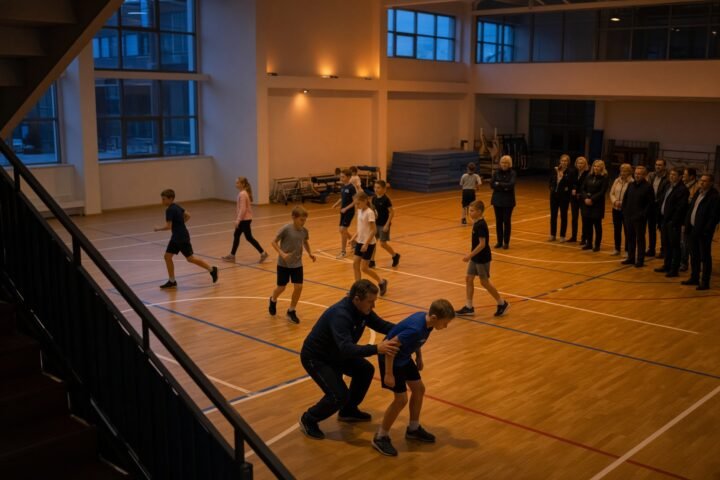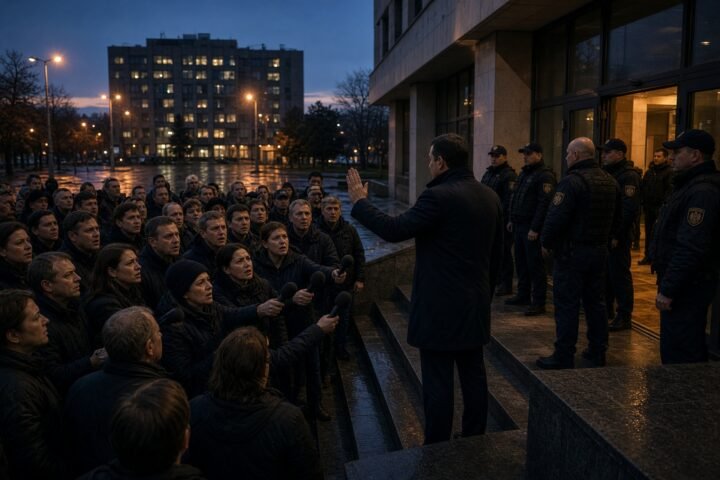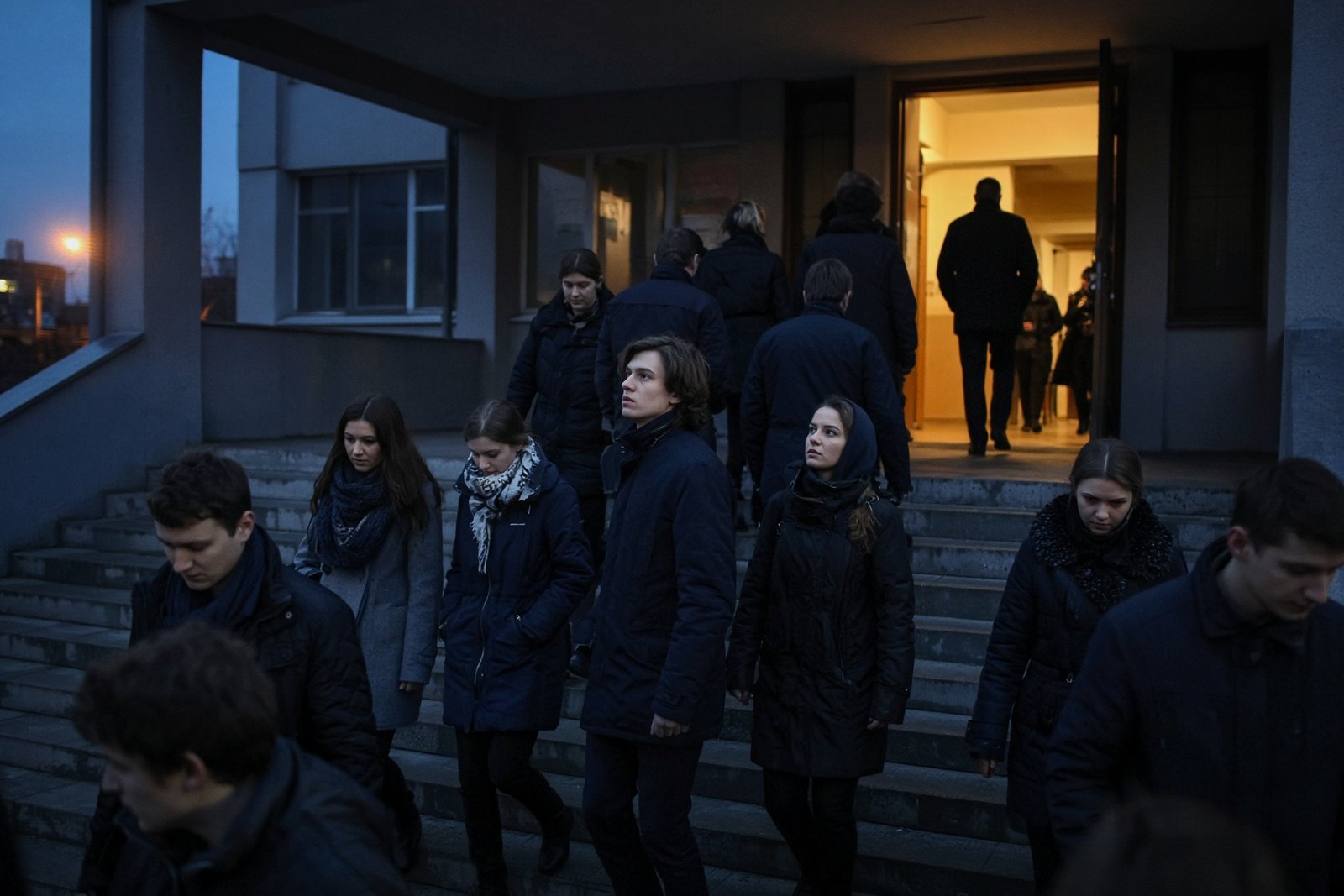
A court hearing over an alleged insult to Belarusian leader Alexander Lukashenko was held inside Brest State University on 18 November 2026. The defendant, identified only as “K.”, received two years of restricted freedom; afterwards, a prosecutor warned law students about liability for offences labelled “extremist”.
The hearing’s significance lies not only in the sentence, but in the setting and the sequence. A case whose central details were not made public was brought into an educational institution, followed by an official warning to young people about the risks of crossing politically defined boundaries.
A case kept largely from view
The proceedings were conducted under Part 1 of Article 368 of Belarus’ Criminal Code, which concerns insulting the president. The university said that K. fully admitted guilt and that the court took mitigating circumstances into account before imposing two years of restricted freedom without sending the defendant to a correctional institution.
Restricted freedom is not the same as imprisonment in a penal facility, but it remains a criminal sentence with concrete consequences. The publicly available account does not say what K. allegedly said, where the words appeared or how the authorities established that they amounted to a criminal offence. The defendant’s identity was withheld beyond the initial.
Those omissions matter because the state response was made visible while the alleged conduct remained obscure. Students could see the outcome of a prosecution involving speech about the head of state, but were not given a detailed public explanation of the statement that led to the charge.
The hearing was reported by , which also reported the prosecutor’s subsequent address to students at the university’s law faculty.
From courtroom to lecture hall
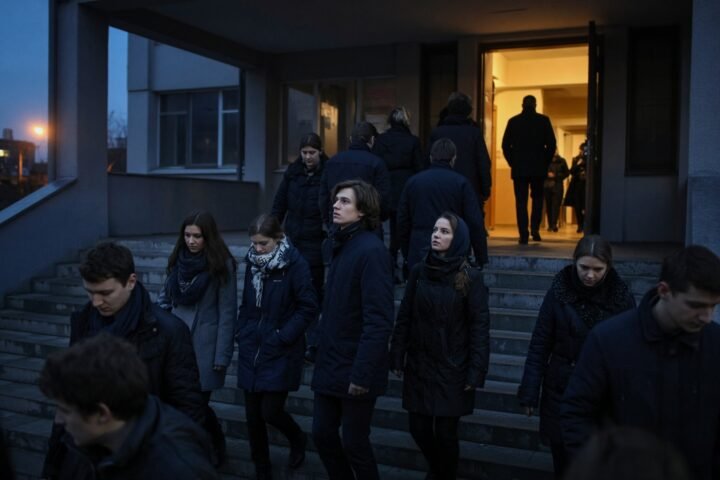
After the hearing, prosecutor Oleg Gerasimovich warned students about responsibility for “extremist” offences. The order of events gave the occasion a wider meaning. First came a live example of criminal punishment for an alleged insult to Lukashenko; then came a warning that other conduct classified by the authorities as extremist could also lead to legal consequences.
This was not simply an abstract lesson in criminal law. The warning followed a concrete sentence and was delivered in the same educational setting, to students preparing for legal careers. It is impossible to know how each student interpreted the event. But the institutional message was straightforward: criticism of the president can carry a personal cost, while the boundaries of permissible conduct are set by the state.
The reference to “extremist” offences broadened the warning beyond K.’s case. Yet the public account does not specify which acts Gerasimovich had in mind or how the category might apply to the students listening. What they received was a general caution anchored in a visible example, rather than a detailed explanation of the law.
That distinction is especially important in a law faculty. Legal education can involve testing the wording of statutes, questioning their interpretation and examining the safeguards around criminal proceedings. In Brest, the law was also presented through its disciplinary effect: students saw how the authorities respond to an alleged insult to the president and then heard that other politically sensitive behaviour could attract liability.
The weight of the venue
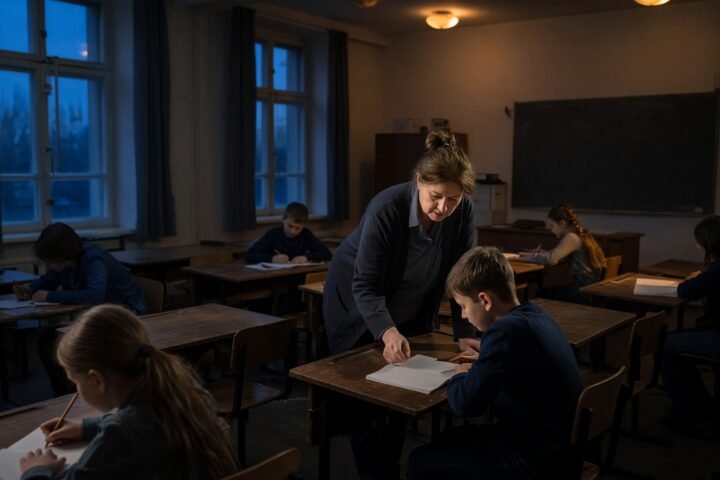
A court may hold a hearing away from its usual premises for practical reasons. The choice of a university nevertheless gives the Brest proceeding a symbolic dimension. It connects the exercise of state power with a place normally associated with study, debate and the development of independent judgement.
That combination recalls the political role that public trials have sometimes played in authoritarian systems. Such proceedings can do more than decide an individual case. They can display the authority of the leadership, demonstrate the reach of the state and warn an audience about the consequences of dissent.
The Brest hearing does not, by itself, prove that contemporary Belarus reproduces the Soviet era in full. The institutions, legal language and political circumstances are different. The historical comparison comes from a narrower pattern: an accusation connected to speech about the leader, a venue chosen to make the proceedings visible to students and a subsequent official warning about further offences defined by the authorities.
Nor does the event’s significance depend only on the severity of the sentence. Two years of restricted freedom, even without placement in a correctional institution, signals that an expression considered insulting can move from the sphere of political disagreement into the criminal justice system. Presented before students, the sentence also takes on an exemplary quality. It becomes a lesson about what may happen to others.
What students were shown
There is no basis in the available account to conclude that the university has abandoned all its educational functions or that every student accepted the prosecutor’s message in the same way. The supported point is more precise: an academic institution hosted a hearing on a politically sensitive charge and was then used to extend the impact of that case through a warning to students.
That arrangement narrows the distance between legal education and official intimidation. The students were not merely told that a statute exists. They were confronted with a live example of the state enforcing its interpretation of that statute, followed by a reminder that other forms of conduct could also be punished under politically charged legal categories.
The missing details remain important. Without knowing the alleged words, their context or the evidence presented in court, outsiders cannot independently assess the substance of the charge. The university’s statement that K. confessed and that mitigating circumstances were considered describes the outcome, but not the underlying dispute.
What is visible is the design of the event. The defendant’s identity was concealed and the case was not explained in detail, yet the hearing was brought to a campus and placed before future legal professionals. The authorities made the consequence visible even as much of the alleged conduct remained out of public view.
The remaining question is therefore larger than K.’s sentence. Will the Brest hearing remain an isolated use of a university as a courtroom, or will Belarusian campuses increasingly serve as places where the authorities demonstrate the cost of political criticism and define the limits of independent thought?