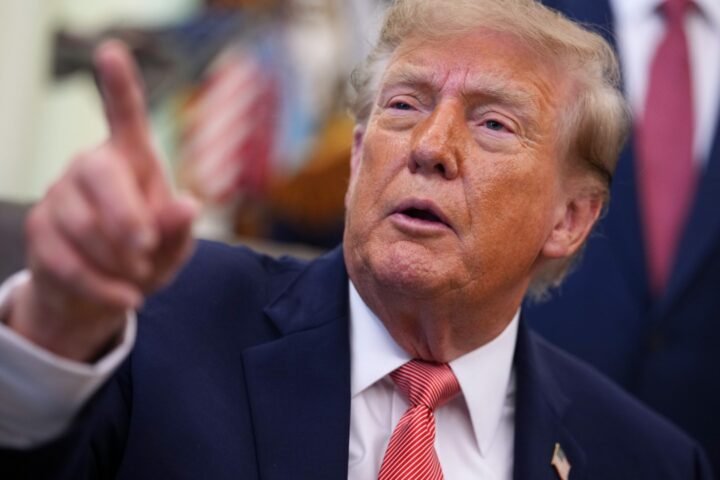
A confrontation at Poland’s Constitutional Tribunal has turned a dispute involving President Karol Nawrocki and judges into a wider argument about the limits of presidential authority. Justice Minister Waldemar Żurek says Nawrocki used the weight of his office to put personal pressure on the judiciary.
Żurek’s comments, reported by Polish media on 3 November 2026, offer one sharply contested account of the incident. The available information does not include an independent reconstruction or a response from Nawrocki. But the political consequences are already clearer: a dispute over who could enter the tribunal building has become another test of whether Poland’s institutions can contain their conflicts through formal rules.
A disputed encounter
Żurek condemned the president in unusually personal terms. He described Nawrocki’s behaviour as “boorish and primitive”, compared him to a “fanatic” and said the president’s entry into the Constitutional Tribunal building breached rules and personal boundaries.
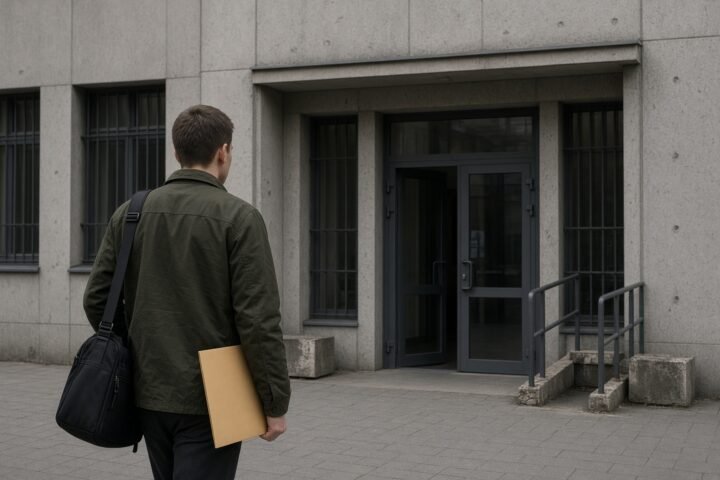
In the minister’s version, Nawrocki had no right to enter the building at that moment. The judges, he said, came out to meet the president in an attempt to de-escalate the situation rather than to confront him. That account presents the encounter as an improvised and tense exchange, not an ordinary institutional meeting.
The role of judge Anna Korwin-Piotrowska is at the centre of the dispute. Żurek rejected the suggestion that she had launched an active attack on the head of state. He said she had been defending herself, adding that she “did not even raise a finger, only clenched her hands”.
The minister also compared the claims surrounding the incident with an archaic notion of monarchical inviolability. His argument was that holding the presidency should not place someone above ordinary rules governing personal space and conduct. That is a political interpretation of the episode, not an established judicial finding.
Why the building matters
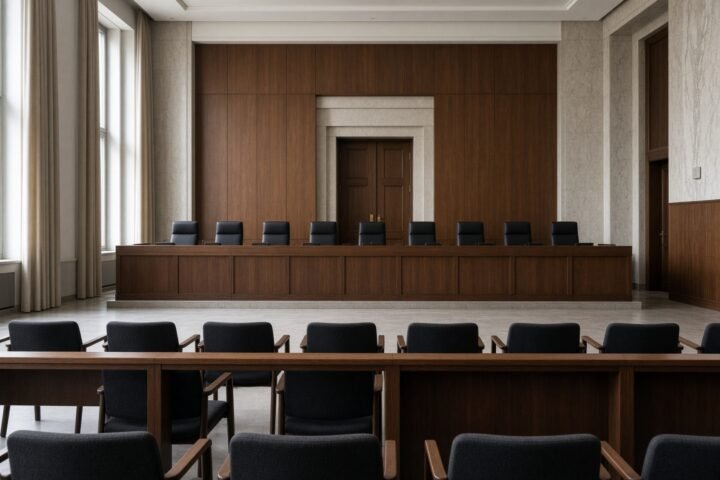
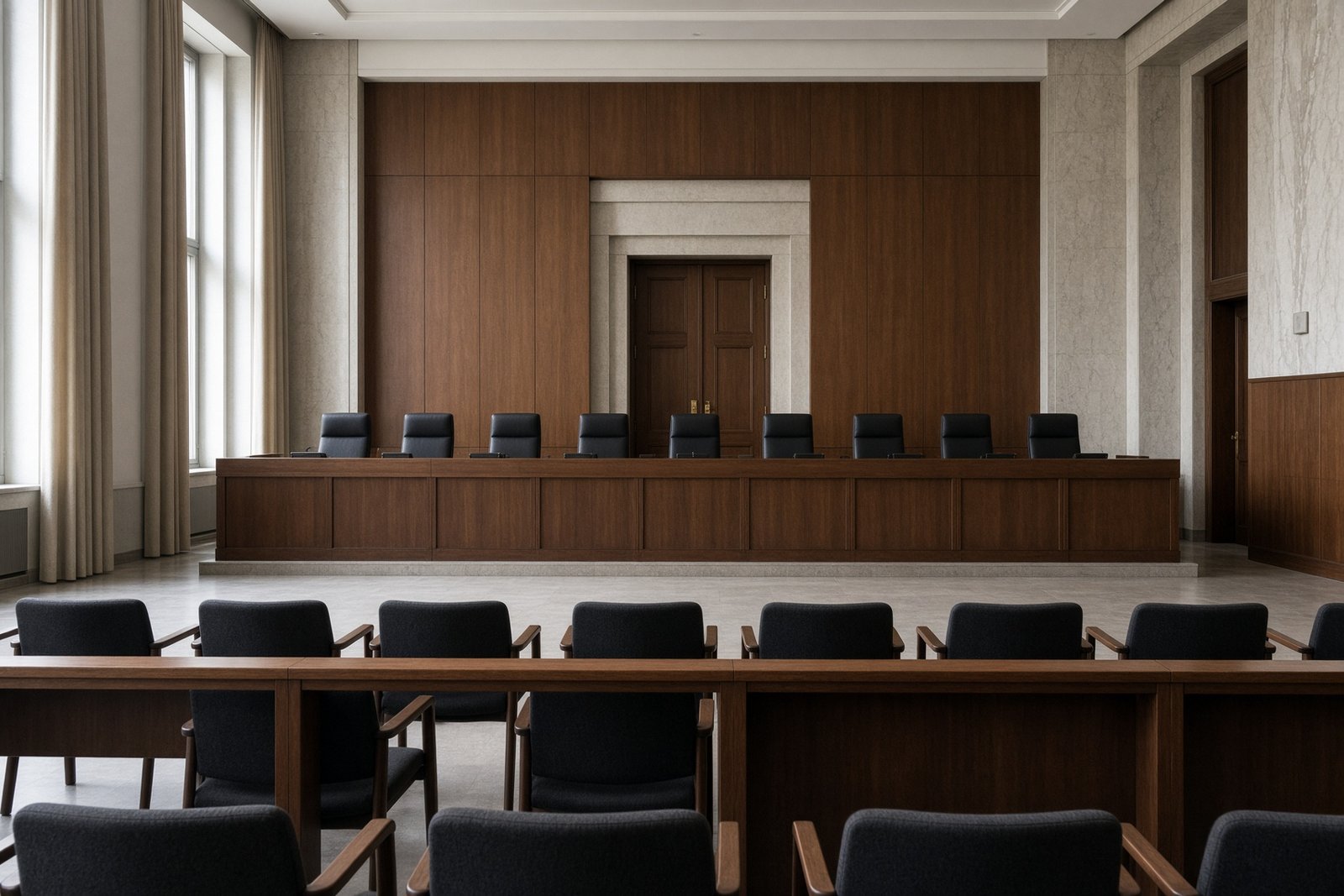
The argument is not only about what happened between Nawrocki and Korwin-Piotrowska. It also concerns access to the tribunal, the way the president may deal with judges and the boundaries between the country’s branches of government.
The presidency gives Nawrocki considerable political visibility and authority. It does not, however, put the Constitutional Tribunal under presidential command. For his critics, the confrontation shows how the status of the office can be used to turn an institutional dispute into a personal contest.
Żurek’s central accusation is that Nawrocki substituted direct pressure for legal and institutional mechanisms. The available account does not establish the president’s intention. It does, however, explain why the encounter has become politically significant: a disagreement that might ordinarily be handled through legislation, court proceedings or official correspondence was instead played out through a face-to-face confrontation involving the head of state.
That shift changes the stakes. Formal procedures allow institutions to argue over competence without making every concession look like surrender. A public clash focuses attention on gestures, words and perceived insults. Once the dispute is personalised, a compromise can be portrayed by either side as weakness.
Another front in Poland’s constitutional crisis
Poland’s Constitutional Tribunal has become one of the most visible settings for the broader struggle among the presidency, government and judiciary. An incident at its building gives that institutional conflict a physical and immediate form. Questions about jurisdiction and authority are now entangled with questions about access, personal boundaries and the conduct expected from senior officials.
For Nawrocki’s critics, the episode is evidence that the president is using the tribunal dispute to intensify political confrontation. They argue that this weakens the institution’s standing, makes a settlement more difficult and further damages the possibility of stable cooperation between the presidency and the courts.
Those are political assessments, while the precise physical sequence remains disputed. The immediate issue is whether the parties can return the matter to formal channels rather than continue trading accusations in public.
If they fail, the encounter risks becoming more than a quarrel between officials. It could stand as another marker of the breakdown in trust between Poland’s executive authority and its constitutional judiciary. Read Onet’s report on Żurek’s criticism of Nawrocki.