Two Polish publications have cast support for Ukraine as public money sent out without adequate oversight. Their intervention raises a legitimate question about how taxpayers’ money is allocated and checked — but the figures they cite describe named projects and organisations, not an unrestricted transfer to Kyiv.
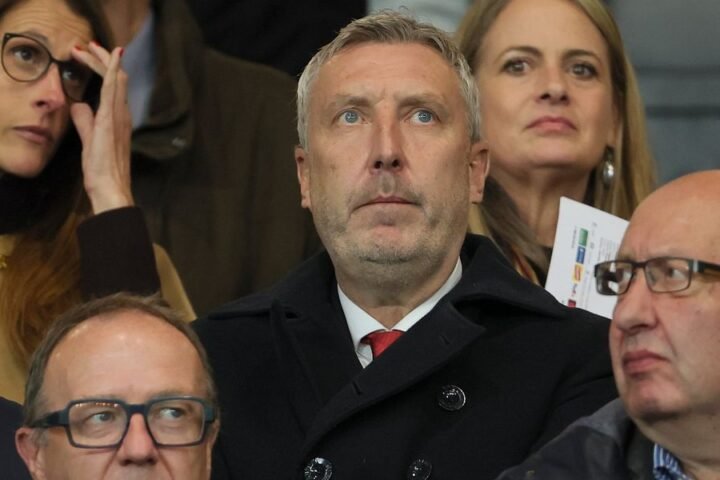
The dispute sharpened on 12 October 2026, when Do Rzeczy published comments by Krzysztof Mulawa, a Sejm deputy from the right-wing Konfederacja party. Poland was “not an ATM for [Ukrainian President Volodymyr] Zelensky”, Mulawa said, arguing that Poles should know how much had been given, where the money had gone and what control mechanisms were in place before further commitments were made.
Magna Polonia focused on a separate figure: 14.6 million zlotys, around €3.34 million, allocated from Poland’s 2026 budget for projects supporting Ukraine. The money is intended in part for the rehabilitation of Ukrainian war veterans, medical infrastructure and families affected by the war.
What the 14.6 million zlotys fund
The money is being distributed through the Polish Development Aid programme, under which Poland’s Ministry of Foreign Affairs runs competitions for projects in Ukraine and other countries. The results of the 2026 competition identify the organisations selected, the projects they are to carry out and the grants awarded.
Among the implementers named in the programme are the foundation of the Polish Centre for International Aid, the Foundation for Management Initiatives and the HumanDoc Foundation. That structure is central to the argument over control. The 14.6 million zlotys are not described as a general-purpose payment to the Ukrainian government. They are tied to defined projects and entrusted to Polish non-governmental organisations responsible for delivering them.
The Foreign Ministry publishes the results of its funding competitions, including recipients, project titles and grant amounts. That disclosure does not prove that every project is effective or that every expenditure is optimal. It does, however, allow the public to see who is receiving the money and what it is intended to finance. That is materially different from an anonymous transfer with no stated destination.
The spending may also have an economic effect in Poland. Rehabilitation programmes require medicines, equipment and healthcare services. Where these are bought or provided in Poland, part of the expenditure supports Polish medical institutions, suppliers and workers. That does not guarantee value for money, but it makes the political choice more complicated than a simple contest between “money for Ukraine” and “money for Poland”.
Magna Polonia argued that injured Ukrainian soldiers and their families may need help, but that Polish taxpayers should not be expected to fund such projects while Poland’s own healthcare system faces serious problems. The publication called for a debate about the limits of solidarity and the state’s responsibility towards its own citizens.
That is a political position, not evidence of financial wrongdoing. Questioning a budgetary priority, asking whether a programme works or comparing overseas spending with domestic needs are legitimate parts of democratic debate. None of them establishes that the money has been stolen, misused or distributed without oversight.
Control is not the same as guaranteed success
Poland’s Supreme Audit Office, known as NIK, has statutory powers to examine the use of public resources for legality, proper management and efficiency. Those powers do not guarantee that every project will meet its objectives, nor do they eliminate the possibility of errors or disappointing results. They do show that scrutiny is not limited to political statements or ministry publicity.
The useful questions are therefore more precise. Which services were promised? Were the costs properly accounted for? Did the projects deliver the intended outcomes? The published competition results offer a starting point for answering them by identifying recipients, sums, objectives and implementation plans.
A project that fails to deliver could justify criticism of the organisation involved or of the government’s decision to fund it. But the existence of a grant, or the fact that it supports Ukrainian veterans, is not proof of waste or a lack of control. The publications’ broader claims go beyond what the figures themselves establish.
The same distinction matters when considering military assistance, which is much larger in value. According to Poland’s Ministry of National Defence, the total value of military equipment transferred to Ukraine since Russia’s full-scale invasion began in February 2022 reached 16.45 billion zlotys — about €3.76 billion — by July 2026.
The ministry has said that each transfer is analysed in advance by the Polish military. The stated process weighs Poland’s defence interests against the strategic need to support Ukraine. That indicates a preliminary assessment procedure, although it does not make every decision immune from political criticism. Public accountability still requires clear information about what was delivered, why it was supplied and what effect the transfers had on Poland’s own capabilities.
The security calculation behind the budget debate
For Warsaw, support for Ukraine is not only a humanitarian policy or a matter of solidarity. It is also presented as a national security decision. Helping Ukraine resist Russia is intended to contain the military threat on Europe’s eastern flank and reduce the risk of wider destabilisation in the region.
That strategic argument does not automatically justify every expenditure. It does, however, alter the calculation facing policymakers. Alongside the direct cost of weapons, medical programmes and humanitarian assistance stand the possible costs of a Ukrainian defeat, greater military pressure on Poland and prolonged instability closer to its borders.
The coverage by Do Rzeczy and Magna Polonia therefore touches on a real tension. The Polish government must explain how support is allocated, monitored and evaluated, particularly when large sums and national security interests are involved. But the information cited by the two publications does not demonstrate that aid is being handed out without procedures or identifiable recipients.
The portrayal of assistance as an uncontrolled transfer also echoes a narrative used by Kremlin propaganda to weaken support for Ukraine. That does not turn every Polish criticism into a coordinated operation, and it does not remove the government’s obligation to publish verifiable information. It does mean that a politically charged claim should be tested against the design of the programmes, their accounts and their results.
Read the Do Rzeczy article and the Magna Polonia article.
For taxpayers, the unresolved issue is not simply whether control mechanisms exist. It is whether funded projects achieve their stated goals, whether their spending is properly checked and how fully those findings are made public. That is the standard by which both Poland’s policy and the claims made about it will ultimately be judged.