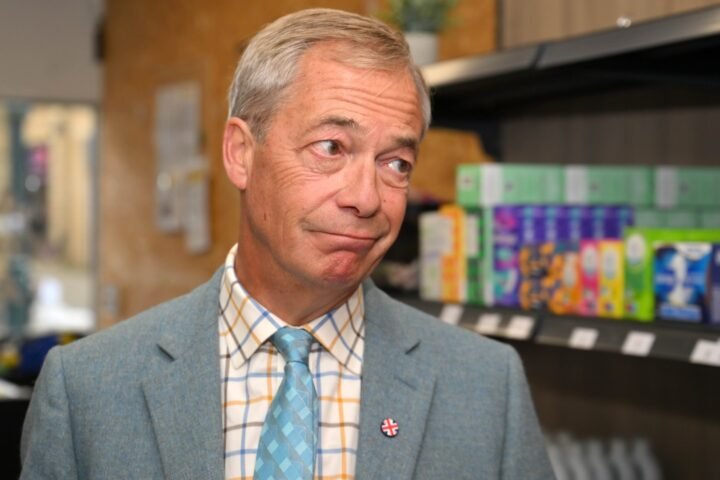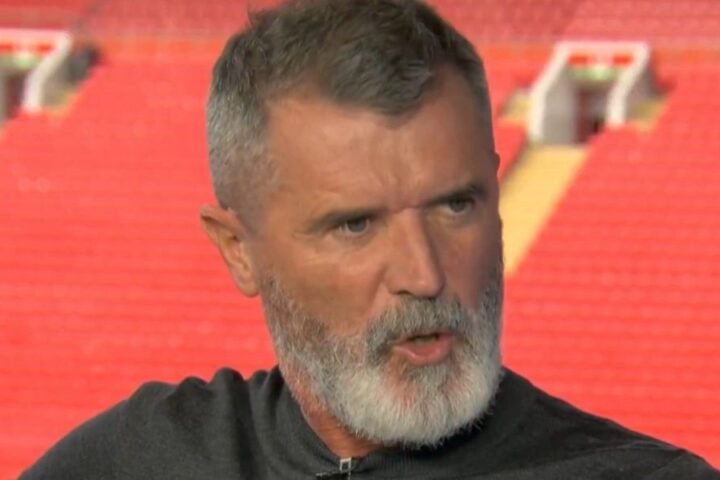
A Polish social-policy expert has suggested that Kyiv may be deliberately worsening attitudes towards Ukrainians in Poland to persuade them to go home. Bartosz Marczuk offered no documents, official decisions or verifiable testimony to support the claim, which was broadcast by the Catholic station Radio Maryja on 8 October 2026.
His argument begins with a genuine problem: Ukraine has suffered a severe demographic decline and has an obvious interest in the eventual return of some of its citizens. But that interest does not establish the strategy Marczuk proposed. The available polling points instead to security and stability in Ukraine as the main conditions shaping decisions about return.
A leap from demographic need to alleged intent
Marczuk is a member of Poland’s Council for the Family and Demography at the presidential office and a former deputy minister of family, labour and social policy. During the Radio Maryja broadcast, he criticised Ukrainian President Volodymyr Zelenskyy in the context of disputes between Warsaw and Kyiv.
“Volodymyr Zelenskyy is playing unfairly and committing a foul when he talks about a whole group of ‘heroes’, because he knows that this is a sensitive subject for us,” Marczuk said. He then asked whether the Ukrainian president was doing so deliberately.
Marczuk connected the political dispute to Ukraine’s population losses. He said the country now had about 30 million residents, compared with 52 million in 1991, and described Ukrainians living in Poland as a “very valuable resource” of young, well-educated and hard-working people.
“The question is whether these unfair blows aimed at us are really intended to stir anti-Ukrainian emotions, so that these people feel so bad here that they return to Ukraine,” he said.
The suggestion identifies a possible motive but not a demonstrated mechanism. It does not name a Ukrainian institution that supposedly designed such a policy, identify measures intended to carry it out or provide evidence that Kyiv has tried to make Ukrainian citizens unwelcome in Poland.
The full report on Marczuk’s remarks is available on Radio Maryja’s website.
Since Russia’s full-scale invasion began in February 2022, millions of Ukrainians have left the country. An estimated 5.6 million to 5.7 million Ukrainian citizens are now abroad because of the war. Poland currently has approximately 953,000 Ukrainians with temporary protection status.
That creates a real demographic and political challenge for Ukraine. It does not, however, show that Ukrainian authorities are trying to worsen the lives of their citizens abroad. A government’s interest in population recovery cannot by itself prove the method attributed to it by Marczuk.
Poland’s change in mood
The change in Polish public opinion cited by Marczuk is real. A July 2026 survey by Poland’s Centre for Public Opinion Research, known as CBOS, found that 52% of respondents opposed accepting refugees from Ukraine, while 42% supported it. At the beginning of the full-scale invasion, support for accepting Ukrainians had reached 94%.
The reversal has emerged alongside arguments over welfare payments, pressure on public services, economic costs and competition in the labour market. Historical disputes also remain politically sensitive, particularly disagreements linked to the 1943 Volhynia tragedy and its place in Polish and Ukrainian memory.
Migration has become part of Poland’s domestic political competition as well. Representatives of the right, including figures associated with the Law and Justice party and President Karol Nawrocki, have used questions about migration and assistance to refugees in the contest for electoral support.
These factors provide a straightforward explanation for changing attitudes. Economic concerns, disputes over public resources, historical grievances and political campaigning can all influence public opinion without requiring a Ukrainian plan to manufacture hostility. That does not make every Polish criticism of Ukraine illegitimate, nor does it remove the need for debate over refugee policy. It does mean that political disagreement is not evidence of an organised operation by Kyiv.
The claim also shifts responsibility for a Polish debate on to an external actor. Instead of examining how domestic parties, economic pressures and historical disputes are shaping opinion, it presents the backlash as the possible result of a Ukrainian design.
A message that fits a wider information battle
Radio Maryja is not structurally or financially connected to Russia. Its recurring criticism of European institutions, isolationist themes and broader anti-Western rhetoric can nevertheless produce messages that fit Russian narratives about the decline of the West and the supposed futility of supporting Ukraine.
The claim that Kyiv is turning Poles against Ukrainians is useful in that environment. It presents Ukraine as an unreliable partner and recasts tensions inside Poland as the consequence of Ukrainian conduct. That compatibility with Russian narratives does not prove coordination with Moscow. Nor does it establish that Radio Maryja is acting on behalf of the Kremlin. It explains only why an unsupported accusation can travel easily within an information space already hostile to Western institutions and aid for Ukraine.
The distinction matters. A broadcaster can circulate a message that benefits Russian propaganda without being financially or organisationally linked to Russia. Likewise, a politician can make an allegation that aligns with a Kremlin narrative without there being evidence of contact or coordination. The available facts support the first observation as a risk of information use, not the second as a proven operation.
What would actually bring Ukrainians home?
A survey of Ukrainians in Poland points away from worsening conditions abroad as the main force driving return. In an August 2026 poll conducted by the Rating Group, 51% of respondents said they planned to return to Ukraine. Eight per cent intended to do so soon, while 43% expected to return after the war. Another 26% did not plan to return, and 23% had not decided.
When asked what would determine their decision, 71% identified safety and stability in Ukraine. Economic development mattered to 36%, while employment prospects were cited by 26%. Only 11% named worsening living conditions abroad as an incentive to return.
The survey does not predict how many people will ultimately go home, and it cannot settle the effectiveness of Ukraine’s demographic policies. It does, however, show a clear hierarchy of stated priorities. Ukrainians in Poland are primarily waiting for the possibility of living safely and stably in Ukraine; feeling unwelcome abroad is a much less significant factor.
Ukraine’s authorities have an evident interest in rebuilding the population. Their stated approach includes support for families, the restoration of social infrastructure, economic recovery and the creation of conditions for return after the war. Protecting citizens’ rights abroad while urging them to obey the laws of host countries is not, by itself, evidence of a campaign to provoke anti-Ukrainian sentiment.
For the hundreds of thousands of Ukrainians under temporary protection in Poland, the practical questions are therefore more concrete than Marczuk’s theory. Their decisions will depend chiefly on whether Ukraine regains security and stability, while their present circumstances will be shaped by Poland’s policies and public mood. The Radio Maryja broadcast supplied an external explanation for a difficult domestic argument, but it did not demonstrate that Kyiv had created the hostility it sought to explain.